Category Archives: Non-fiction

Frederick Douglass on authentic Christianity

A few months back the twitters and blogosphere erupted over a song by hip-hop artist, Propaganda. I wrote about it as well.

The song is entitled “Precious Puritans” and is, in a Grand Canyon of understatement, thought provoking. Concerning well beloved puritan theologians, he raps:

How come the things the Holy Spirit showed them in the valley of vision didn’t compel them to knock on they neighbors door and say, “You can’t own people!”?

Your precious puritans were not perfect.

You romanticize them as if they were inerrant. As if the skeletons in they closet was pardoned due to the they hard work and tobacco growth.

As if abolitionists weren’t racist and just pro-union.

As if God only spoke to white boys with epic beards.

You know Jesus didn’t really look like them paintings. That was just Michaelangelo’s boyfriend.
Your precious puritans.

Dr. Anthony Bradley, addressing the response to the song (too often White and negative), tweeted this:

The link is to a scholary paper from Cambridge University Press entitled, “Language, Discourse and Power in African American Culture.”

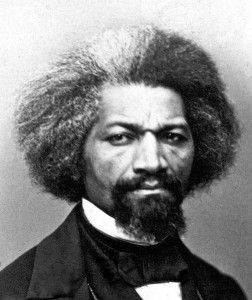
One African-American who used language, discourse and power to rip the church the proverbial “new one,” was Frederick Douglass. Douglass (1818-95), a prominent American abolitionist, author and orator, launched a critique at the American Christianity of his day the comprehensiveness of which has scarcely been equaled. The intensity, analysis and truth shames many an attempt that have followed.

My friend Alan Cross, who blogs at Downshore Drift, recently made me aware of an excerpt from Douglass’ autobiography, Narrative of the Life of Frederick Douglass, an American Slave. In it the former slave writes:

I love the pure, peaceable, and impartial Christianity of Christ: I therefore hate the corrupt, slaveholding, women-whipping, cradle-plundering, partial and hypocritical Christianity of the land. Indeed, I can see no reason, but the most deceitful one, for calling the religion of this land Christianity. I look upon

frederick douglass

Frederick Douglass

as the climax of all misnomers, the boldest of all frauds, and the grossest of all libels. Never was there a clearer case of ‘stealing the livery of the court of heaven to serve the devil in.’ I am filled with unutterable loathing when I contemplate the religious pomp and show, together with the horrible inconsistencies, which everywhere surround me. We have men-stealers for ministers, women-whippers for missionaries, and cradle-plunderers for church members. The man who wields the blood-clotted cowskin during the week fills the pulpit on Sunday, and claims to be a minister of the meek and lowly Jesus. . . . The slave auctioneer’s bell and the church-going bell chime in with each other, and the bitter cries of the heart-broken slave are drowned in the religious shouts of his pious master. Revivals of religion and revivals in the slave-trade go hand in hand together. The slave prison and the church stand near each other. The clanking of fetters and the rattling of chains in the prison, and the pious psalm and solemn prayer in the church, may be heard at the same time. The dealers in the bodies and souls of men erect their stand in the presence of the pulpit, and they mutually help each other. The dealer gives his blood-stained gold to support the pulpit, and the pulpit, in return, covers his infernal business with the garb of Christianity. Here we have religion and robbery the allies of each other—devils dressed in angels’ robes, and hell presenting the semblance of paradise.

Thoughts?

The Kindle version of Narrative of the Life of Frederick Douglass is available free below. Just click the Amazon link.

Jesus Christ, marriage and sex

In a day when fewer people have a biblical understanding of marriage than ever before these reminders are apropos. Marriage is not simply a social arrangement as we in the West have come to understand it. It is not merely a means by which the state garners more little potential taxpayers or soldiers. It is not a man and woman who decide to live together. It is not two people of the same sex who decide to unite and call it “marriage.”

It is a holy institution that has probably endured as much violence from Christ’s followers as from Christ’s enemies. Yet, it remains what it is.

The following quotes are from the book, Who is This Man: The Unpredictable Impact of the Inescapable Jesus by John Ortberg. I highly recommend it.

In the ancient world, sexuality was celebrated as a means of procreation and as an appetite to be gratified, much like appetites for food and drink. Greek physicians often diagnosed women with “hysteria,” which comes from the Greek word for “uterus,” a condition they said was caused by a wandering uterus. They said hysteria could be cured by intercourse. The Roman physician Rufus prescribed sex to adolescents as a cure for melancholia, epilepsy, and headaches. One imagines he had a thriving practice.

[…]

The gods had little to say about marriage. The rules for a public cult in Pergamum demanded a day’s interval after sex with one’s wife but two days after sex with someone else’s wife. Zeus’s sexual history (one writer describes him as “the ultimate player”) did not suggest that restraint was an Olympian virtue. The silence of the gods about sex also led to a very different world of sexuality and children. Particularly in Greek culture, sexual relationships between adult men and younger boys, often between ages twelve and sixteen, were taken for granted. The Roman emperor Commodus is said to have had three hundred young boys available for sex. The Christian writer Tatian said that Romans “consider pederasty to be particularly privileged and try to round up herds of boys like herds of grazing mares.”

[…]

Slave girls were made available for sexual purposes at the decision of the paterfamilias. Freeborn girls were often married by their families as early as possible: A study based on inscriptions indicated that 20 percent of pagan girls were married before the age of thirteen (in the Christian community it was about a third of that)
[…]

Marriage, Jesus was saying, is not at its heart just an economic or social institution. It is a God-directed covenant that reflects the human capacity for self-transcendence and community. It is a joining of spirit and flesh. It does not serve the state; it precedes the state.

[…]

Jesus connects marriage to creation. In Genesis God is making creation good by separating: he separates the light from the darkness, the dry land from the sea, the heavens from the earth. But now, with the man and the woman, he takes what was separate and joins them. And so Jesus says what God has joined let man not separate.

[…]

Walter Wangerin wrote, “Marriage begins with a promise.” A man and a woman stand in a church or a chapel or a backyard before each other, before witnesses, and before almighty God. They make a vow. They say a promise. They give their word. That’s what a marriage is built on. A promise freely offered, fully embraced, joyfully witnessed, painstakingly kept —that’s what makes a marriage. Sometimes people will say: “I don’t need a piece of paper.” It was never about the paper. In Jesus’ day they didn’t have paper. It’s about the promise: “as long as we both shall live.”

[…]

In the ancient world, one’s primary loyalty was to parents. But the man and the woman are to leave their parents to create a new primary loyalty—a union, and their union with each other is to be expressed through sexual intimacy, one flesh. In other words, sex is kind of a sacrament. It is an outward sign that points to an inward reality, to a spiritual state.

[…]

In a broader way, something like this went on in the ancient world. For Greco-Roman culture, the idea of reserving sexual intimacy wasn’t quaint and old-fashioned; it was new and revolutionary. As a whole, it never did get established terribly well. And to this day, no one I know doesn’t struggle with it. But the framework that Jesus taught—the idea that marriage is a covenant relationship between and man and a woman, that sex has a spiritual component, that fidelity is a quality to be prized in men as well as women, that children are to be protected rather than exploited sexually — would come to shape our world.

[…]

In the book of Hebrews, the eleventh chapter is called the Hall of Faith, and great heroes in the Bible—Noah, Abraham, Moses, Gideon, and David — are all listed there. Then there is this comment, “By faith the prostitute Rahab, because she welcomed the spies, was not killed.” The writer does not mention anybody else’s occupation — not David the king, or Samuel the priest, or Abraham the rancher, or Gideon the judge. Why Rahab’s? Grace. The same Jesus who was a magnet for sexual sinners who had flunked marriage was the same Jesus who redefined what a marriage could be. “Husbands, love your wives, just as Christ loved the church and gave himself up for her.” More marriages have been performed, more wedding vows have been made, more nuptial blessings have been asked in his name than any other.

All quotes taken from Chapter 11: The Truly Old-Fashioned Marriage.
Click below to order from Amazon.com.

One Minute Book Reviews, January 2013

The January 2013 edition of One Minute Book Reviews includes Blood Brothers, by Elias Chacour, Ordinary Injustice, by Amy Bach, and The Insanity of God, by Nik Ripken.
Library-Books
Blood Brothers, by Elias Chacour, book review.

The one book you must read to be fully informed about the Palestinian-Israeli conflict. Chacour was a 9-year old Palestinian Christian when the his generational homeland became the destination of a world-wide Jewish immigration. This is a firsthand account of dispossession, murder, terrorism, political scheming, ministry, forgiveness, and the hand of God. He recounts how his hometown of Biram was completely destroyed by the Israeli military on Christmas day 1951, for no other reason than disallowing the rightful owners back home. Chacour ministers to Palestinians and Jews alike to this day, as he writes:

Before me stood my two commitments–one to God and one to my people. They were inextricably bound together. And suddenly, I knew I would rather be on God’s side which is stronger than human might.

Then I knew where I should be–not living in comfort, but back in the place where villages and churches were being reunited, where schools and community centers and spirits were being built up, where, amid the terrible noise of violence I could hear the whispers of the Man of Galilee, saying, “Behold, I make all things new.”

Ordinary Injustice: How America Holds Court, by Amy Bach, book review.

Bach, an attorney with the New York Bar and a journalist, spent eight years observing, interviewing and writing about the legal system in the United States. Drawing from experiences in Georgia, Mississippi, New York and Chicago, she examines over-zealous prosecutors, over-worked public defenders, wrongful convictions, lack of prosecution, and judicial improprieties. This fascinating look inside our legal system is at the same time extremely disheartening. According to Bach problems are known, but accepted at every turn, regularly bringing injustice to defendants across the nation. That this is quite unremarkable is the problem. The injustice in our justice system is quite ordinary. For instance in Coweta County, GA:

The Southern Center…charged that over a two-and-a-half-year period, more than half of the poor people found guilty in felony cases had pleaded to crimes without a lawyer present.

And, after discussing Quitman County, MS:

Prosecutor’s decisions are not transparent, except in those major trials, that make it to court. Prosecutors are not accountable and rarely have to justify their actions or identify the facts that contributed to them. With too little oversight on potentially momentous decisions that are made behind closed doors, prosecutors have no incentive to be neutral, fair, or to seek justice.

The Insanity of God, by Nik Ripken, book review

I’ve nearly finished The Insanity of God and recommend it for anyone who struggles with the big question: “Where is God in the midst of evil and suffering?” From the publisher’s summary:

“The Insanity of God” is the personal and lifelong journey of an ordinary couple from rural Kentucky who thought they were going on just your ordinary missionary pilgrimage, but discovered it would be anything but. After spending over six hard years doing relief work in Somalia, and experiencing life where it looked like God had turned away completely and He was clueless about the tragedies of life, the couple had a crisis of faith and left Africa asking God, “Does the gospel work anywhere when it is really a hard place? It sure didn’t work in Somalia.

How does faith survive, let alone flourish in a place like the Middle East? How can Good truly overcome such evil? How do you maintain hope when all is darkness around you? How can we say “greater is He that is in me than he that is in the world” when it may not be visibly true in that place at that time? How does anyone live an abundant, victorious Christian life in our world’s toughest places? Can Christianity even work outside of Western, dressed-up, ordered nations? If so, how?

“The Insanity of God” tells a story—a remarkable and unique story to be sure, yet at heart a very human story—of the Ripkens’ own spiritual and emotional odyssey. The gripping, narrative account of a personal pilgrimage into some of the toughest places on earth, combined with sobering and insightful stories of the remarkable people of faith Nik and Ruth encountered on their journeys, will serve as a powerful course of revelation, growth, and challenge for anyone who wants to know whether God truly is enough.

By ordering through the Amazon.com links below you help support this blog. You pay the same low price and I get a small commission.

The New Jim Crow, by Michelle Alexander, book review [VIDEO]

What do you get when you add American slavery, the convict-lease system, the Jim Crow era, and the “War on Drugs”?

Give up? You get 150+ years of nearly uninterrupted mistreatment of young, African American men at the hands of businesses, individuals and various governmental agencies in the United States.


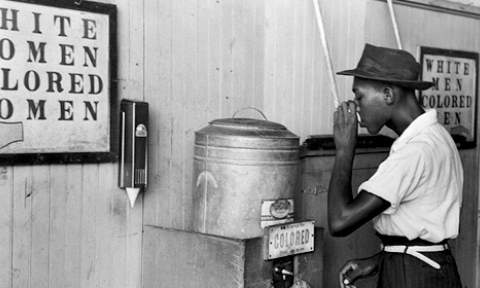
We in hallowed suburbia who see the brutality of slavery and the lynchings and “coloreds only” water fountains of Jim Crow only in an ever dustier rear-view mirror are perhaps ignorant of the current realities. Those who are ignorant of the multi-decade convict lease system in the South are in our own good company: we know little and most of our friends know less. (I interviewed Douglas Blackmon, Pulitzer prize-winning author of Slavery by Another Name, in this series: Part 1, Part 2, Part 3, and Part 4.)

Subtitled “Mass Incarceration in the Age of Colorblindness”, The New Jim Crow takes its name from the condition author Alexander sees exemplified, for instance, in the massive government effort knows as the War on Drugs. This “war” has been so disproportionately prosecuted that a disproportionately large percentage of one specific demographic section of the U.S. population is either imprisoned, on probation or parole: African-American men.

Alexander’s case is built brick-by-brick as she examines policing, the court system, laws like Civil Asset Forfeiture, abuses of the Constitution and the favoritism shown to white defendants. She writes:

The United States imprisons a larger percentage of its black population than South Africa did at the height of apartheid. In Washington, D.C., our nation’s capitol, it is estimated that three out of four young black men (and nearly all those in the poorest neighborhoods) can expect to serve time in prison. Similar rates of incarceration can be found in black communities across America.

These stark racial disparities cannot be explained by rates of drug crime. Studies show that people of all colors use and sell illegal drugs at remarkably similar rates. If there are significant differences in the surveys to be found, they frequently suggest that whites, particularly white youth, are more likely to engage in drug crime than people of color. That is not what one would guess, however, when entering our nation’s prisons and jails, which are overflowing with black and brown drug offenders. In some states, black men have been admitted to prison on drug charges at rates twenty to fifty times greater than those of white men. And in major cities wracked by the drug war, as many as 80 percent of young African American men now have criminal records and are thus subject to legalized discrimination for the rest of their lives. (pgs. 6, 7)

Aiding and abetting this treatment are prosecution and sentencing requirements mandated by War on Drugs styled legislation like “Three Strikes and You’re Out.”

In 1986, Congress passed The Anti-Drug Abuse Act, which established extremely long mandatory minimum prison terms for low-level drug dealing and possession of crack cocaine. The typical mandatory sentence for a first-time offense in federal court is five or ten years. By contrast, in other developed countries around the world, a first-time offense would merit no more than six months in jail, if jail time is imposed at all.

[…]

Now, simply by charging someone with an offense carrying a mandatory sentence of ten to fifteen years or life, prosecutors are able to force people to plead guilty rather than risk a decade or more in prison…They “load up” defendants with charges than carry extremely harsh sentences in order to force them to plead guilty to lesser offenses and–here’s the kicker–to obtain testimony for a related case. Harsh sentencing laws encourage people to snitch.

[…]

In fact, under federal sentencing guidelines, providing “substantial assistance” [ie, “snitching”] is often the only way defendants can hope to obtain a sentence below the mandatory minimum. The “assistance” provided by snitches is notoriously unreliable, as studies have documented countless informants who have fabricated stories about drug-related and other criminal activity in exchange for money or leniency in their pending criminal cases. (pgs. 87, 88)

Add to this unholy mix laws that increase federal assistance based on number of drug-related arrests, inadequate representation from the public defender’s office, warrantless searches and the like, and you have a never ending pool of “violators” into which to cast the net. (For additional contributing factors like race and the Prison Industrial Complex, see my series Our comfortable injustice Part 1 and Part 2.)

Alexander’s chapter “The Color of Justice” is particularly disturbing. In a passage on the New York Police Department’s use of “stop-and-frisk” tactics–which should be unconstitutional–she quotes the Center for Constitutional Rights’ Darius Chaney, “[W]e have been saying for the last 10 or 11 years…that with stop-and-frisk patterns–it really is race, not crime, that is driving this.” Alexander concludes,

Ultimately, these stop-and-frisk operations amount to much more than humiliating, demeaning rituals for young men of color, who must raise their arms and spread their legs, always careful not to make a sudden move or gesture that could provide an excuse for brutal–even lethal–force. Like the days when black men were expected to step off the sidewalk and cast their eyes downward when a white woman passed, young black men know the drill when they see the police crossing the street toward them; it is a ritual of dominance and submission played out hundred of thousands of times each year. (p. 136)

It should raise concerns for followers of Christ not only because of the actual injustices faced by African-Americans but for the mindsets Americans have about such injustices. From page 106:

A survey was conducted in 1995 asking the following question: “Would you close your eyes for a second, envision a drug user, and describe that person to me?” The startling results were published in the Journal of Alcohol and Drug Education. Ninety-five percent of respondents picture a black drug user, while only 5 percent imagined other racial groups. These results contrast sharply with the reality of drug crime in America. African Americans constituted only 15 percent of current drug users in 1995, and they constitute roughly the same percentage today. Whites constituted the vast majority of drug users then (and now), but almost no one pictured a white person when asked to imagine what a drug user looks like. The same group of respondents also perceived the typical drug trafficker as black. [Emphasis mine.]

One sentencing issue reversed in 2010 by Congress and President Obama had to do with the differences in punishments for possession of crack cocaine (more common among blacks) and powder cocaine (more common among whites). “A conviction for the sale of five hundred grams of powder cocaine triggers a five-year mandatory sentence,” notes Alexander, “while only five grams of crack triggers the same sentence.” The sentencing disparity was reduced to from a 100:1 to an 18:1 ratio. Why there is any disparity at all remains unexplained.

According to Alexander the same kind of race-based disparity can be seen in the differences between drug use and drunk driving.

At the close of the [1980s], drunk drivers were responsible for approximately 22,000 deaths annually, while overall alcohol-related deaths were close to 100,000 a year. By contrast, during the same time period, there were no prevalence statistics at all on crack, much less crack-related deaths. In fact, the number of deaths related to all illegal drugs combined was tiny compared to the number of deaths caused by drunk drivers. The total of all drug-related deaths due to AIDS, drug overdose, or the violence associated with the illegal drug trade, was estimated at 21,000 annually.

In response to growing concern–fueled by advocacy groups such as MADD and by the media coverage of drunk-driving fatalities–most states adopted tougher laws to punish drunk driving. Numerous states now have some type of mandatory sentencing for this offense–typically two days in jail for a first offense and two to ten days for a second offense.

[…]

The vastly different sentences afforded drunk drivers and drug offenders speaks volumes regarding who is viewed as disposable–someone to be purged from the body politic–and who is not. Drunk drivers are predominantly white and male. White men comprised 78 percent of the arrests for this offense in 1990 when new mandatory minimums governing drunk driving were being adopted. (pgs. 206, 207) [Emphasis in original]

Alexander concludes that the result of this embedded racism throughout these multiple levels of the legal system is a new caste system. It is into this caste a permanent underclass of young black men are thrown.

The New Jim Crow is well worth the read even if you do not come to all the same conclusions as its author. The preponderance of evidence on the misuse of our legal system alone justifies the time spent.

Below the video of Michelle Alexander are several resources about race, mass incarceration, and the War on Drugs. I’d love to hear your thoughts in the comments.
[youtube http://www.youtube.com/watch?v=RYgxkt6-JNc?rel=0&w=560&h=420]
‘Folks, this ain’t normal,’ by Joel Salatin, book review

Folks, this ain’t normal is the eighth book by the self-proclaimed “lunatic farmer” from Swoope, Virginia, Joel Salatin. Salatin, on his Polyface Farms, raises and sells “salad bar beef, pigerator pork, pastured poultry,” turkey, rabbits, eggs and more, has become a living legend in the local/organic food world. His self-published You Can Farm: The Entrepreneur’s Guide to Start and Succeed in a Farming Enterprise still sells thousands of copies annually after more than a decade in print.

Less a book Folks is more a bound collection of essays (with a couple of screeds thrown in for good measure). As a result one fair criticism of the book is there are repetitive areas, as if after writing the collection Salatin was too tired to read back through it and the editor was not paid to do so. Nonetheless, there is a wealth of good information here.

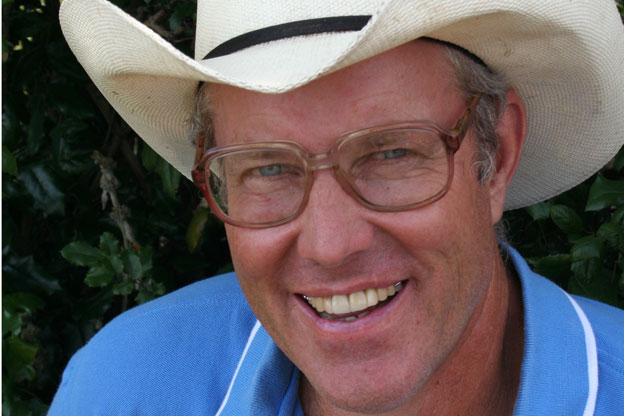
joel salatin folks this aint normal

Joel Salatin [Image credit]


Folks, this ain’t normal is the work of a man who is releasing many years worth of pent-up frustration about the foolishness of the American food system from planting and growing through processing and sales. It could easily have been sub-titled, “In Appreciation of the Simple, Agrarian Life.” His harshest words are reserved for the “food police” (the USDA and FDA) and the agri-businesses with whom they are in collusion to foist upon the world cheap, low nutrition–and sometimes deadly–food. All of this happens while making agri-business richer and keeping the small to medium sized farm owners effectively cut out of most large distribution channels.

If you do not think this is so, try and buy a gallon of raw milk at your local grocery store. (You can decide for yourself whether raw milk is good for you and your family; what you cannot decide is to go to Kroger or Publix and buy it.)

To read Salatin is to be bombarded with a wide-ranging case of common sense. Does it really make sense that people can bring untested, ungraded food, cooked in unsanitized home kitchens to a church pot-luck where everyone can eat it, but to sell that same food for a penny is against the law? Does it really make sense that the same milk our grandparents drank as kids (unadulterated, straight from the cow or goat) is more “dangerous” than 20 ounces of soda or a can of Red Bull?

Is it honoring to God for cows to be crammed into industrial feed-lots where close quartered disease is rampant, more and newer anti-biotics are necessary to fight those diseases, and toxic manure lagoons are needed to hold all the urine and excrement? It is not an example of extreme hubris that chickens are raised in such close proximity their beaks need to be removed to keep them from killing and eating each other?

Are food consumers the beneficiaries when the food chain is increasingly controlled by a corrupt, multiple-fined company like Monsanto–the Planned Parenthood of the food industry–whose greed is exceeded only by the shamelessness with which they advance it? Are American citizens the beneficiaries of a farming system where so much corn is grown that the only way most corn farmers can stay in business is thanks to U.S. government subsidies for ever acre of corn they grow?

Salatin peppers Folks, this ain’t normal with a dozen or two recommendations of books (some of which likely for the basis of his essays). The titles read like a veritable library of clean eating and healthy living advice. Though not footnoted the pages are influenced by tomes like Four-Season Harvest, Nourishing Traditions, The Omnivore’s Dilemma, Radical Homemakers, Fast Food Nation, Pottenger’s Prophecy, An Agricultural Testament, and, my favorite, Holy Sh*t: Managing Manure to Save Mankind. He is no slouch when it comes to reading, and it shows.

Consumers of Salatin’s previous “how-to” style books will be bereft of 1-2-3s and ABCs here. See this more as a collection of philosophical wisdom as to the “why” undergirding the “how.”

Is it convincing? Yes. Maddening? At times. Enlightening? Beyond belief. Worth your time? Without a doubt.

This 11 minute video by Michael Pollan features his time spent at Polyface and the genius of Salatin on display there. Be sure and check out the books below the video.

When your top defender is a coward: Richard Dawkins [VIDEO]

Remember Richard Dawkins? One of the “Four Horsemen of the Atheist Apocalypse”? Author of The God Delusion, The Selfish Gene and other anti-theistic tomes?

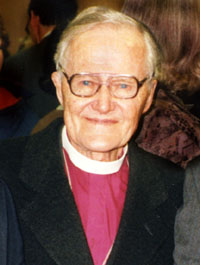
richard dawkins

Professor, author, anti-theist Richard Dawkins [Image credit]

Several years ago Dawkins was one of the most prominent (though never ablest) defenders of atheism. More accurately, he was a prominent proponent of “anti-theism.” That is, he did not simply not believe in God he says the idea of God is negative and harmful. He believes “pitiless indifference” lies at the bottom of every single thing that exists, ever has existed or ever will exist. All design is apparent; no intelligence needed.

Lately, though, Dawkins has shown himself to be little more than a philosophical and intellectual coward. Repeated declinations for debating well known philosopher William Lane Craig–considered by many the best in the field–are broadly publicized and now oft repeated. According to Craig, Dawkins has also turned down at least one invitation to debate Alvin Plantinga. Dawkins, for his part, says he does not need such on his CV and refuses to share the stage with one who defends the Old Testament. Perhaps it is more because the Dawkster had his head handed to him in a cardboard box by another Christian philosopher (of mathematics), the inimitable John Lennox.

A counter-piece in the UK Guardian frames the issue well:

[T]he tactics deployed by [Dawkins] and the other New Atheists, it seems to me, are fundamentally ignoble and potentially harmful to public intellectual life. For there is something cynical, ominously patronising, and anti-intellectualist in their modus operandi, with its implicit assumption that hurling insults is an effective way to influence people’s beliefs about religion.

And this from a skeptic who likely agrees with Dawkins’ conclusions.

Possibly one reason for all of these “no’s” is that Dawkins claims to operate from the field of biology, while Craig, Plantinga and others are philosophers. Perhaps the Dawkster feels inadequate for the cross-disciplinary exchange. That would be all well and good save this fact: Dawkins routinely engages in philosophy in his books. He just rarely calls it such, and rarely does it well.

In a recent appearance at Oxford University, yet another “Can’t make it” from the Dawkster, Craig took a page from Clint Eastwood’s RNC book and debated an empty chair. Unlike Eastwood’s famous razzing of President Obama, Dawkins’ statements and responses as played by Craig were not invented.

The statements ascribed to Richard Dawkins in this presentation are statements actually made by Prof. Dawkins. The following is a list of the sources of such statements.

So reads the video beginning around 42:10.

The following video is pretty thick philosophically, but valuable if you can hang with it. I would encourage giving it two or three listens. Rather than turning it off early be taught by it. I was.


martyduren.com site update and news

'nook' at Barnes & Noble, Mall of Georgia  Photo Credit: Marty Duren

'nook' at Barnes & Noble, Mall of Georgia Photo Credit: Marty Duren

Thanks to everyone who has stopped by martyduren.com. Yesterday marked the 1st month since the official launch and I’m grateful!

According to Google analytics I’ve had 1,966 visits with more than 4,200 page views (hits) since I went live a month ago. The nook giveaway is winding down (tomorrow at 11:59 pm marks the deadline) with several hundred individual entries and counting. If you haven’t registered yet, please see the giveaway contest widget to the right. I received the following email from Barnes & Noble this week:

This is to confirm that your nook will be shipping this week. Although your shipment has been slightly delayed, we’ve upgraded you to overnight shipping to ensure you’ll receive your nook by December 16.

I’m pretty sure this means that the winner will receive the prize nook by Christmas (but still, don’t count your chickens and all that).

The picture on this post is an actual nook from the Barnes & Noble store at the Mall of Georgia taken Tuesday. It feels really cool, feels solid. It is thin, incredibly thin. I didn’t get much of a chance to play with it, but it is very readable and I can’t wait to get one myself at some point. Of course, Christmas time’s a comin’…

I’d also like to let you know that I’ve added three stores on the site and a lot of information on my “About” page. All of these are found just above the main content on the same bar with “Subscribe.” The Mall is being geared toward things that are typically of interest to men, The FeMall is being geared toward ladies and the Social Store will feature companies who are trying to make a positive impact in people’s lives. I currently feature Tom’s Shoes, but hope to be adding other soon.

Why monetize?
If you’ve been to other sites I’ve done before (sbcoutpost.com, iemissional.com), then you will recognize a specific change here: advertising. That’s because I’m trying to make some money, so, shop some! In all seriousness, the stores represented here, including Amazon.com, pay me commissions (sometimes called referral fees) for promoting them. Anything you purchase from a link here costs you exactly the same as if you were to go to their site directly, yet puts a little money in my pocket. So, when you are going to purchase from Amazon.com, just start here. You can use any of the search areas to find anything carried there; searching Amazon.com here works just like searching the main site. Thanks for the 12 orders that have already been placed through my affiliates at martyduren.com!

The other links take you directly to the advertised site, many of which currently feature Christmas deals, especially free shipping, so take advantage. I hope to open the Outdoor Store soon, with links to REI, Sierra Trading Post and others. I’ll let you know when that happens.

Thanks so much for your help in this time of job transition for me. You may not think it’s much, but every little bit helps. Thanks.

Big Announcement
Sometime in January be looking for a multi-part interview with Douglas Blackmon, whose book, Slavery by Another Name, won the 2009 Pulitzer Prize for General Nonfiction.

Also, be looking forward to another new website launch in the next couple of days. This one will be dealing with issues regarding business management.

On Gettysburg, war and peace

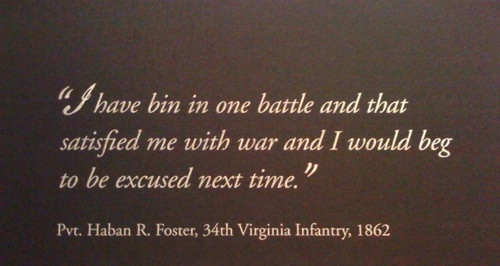
From the Gettysburg National Military Park Museum  Photo: Marty Duren

From the Gettysburg National Military Park Museum Photo: Marty Duren


The day after Thanksgiving, I was able to visit the Civil War battlefields at Gettysburg, PA. After watching a short movie about the war in general and the Battle of Gettysburg in particular, we went through the museum. To say that I was overwhelmed with information would be exercising the gift of understatement to its limit as display after display had quotations from period sources and historical players, uniforms, firearms, books and photos of farms and soldiers, crude but effective medical instruments and movies from the History channel. One rather significant item on display was a booklet entitled “Slavery Ordained Of God,” by Rev. Fred A. Ross of Huntsville, AL, demonstrating how some southern Christians defended the institution that brought wealth to both the North and the South.

We spent half an hour or so in the National Cemetery that pre-dated the war by several years and was the location of Abraham Lincoln’s Gettysburg Address, November 19, 1863. This was the cemetery referenced in Cemetery Ridge and Cemetery Hill where Union forces fell back under duress on July 1, 1863, the first day of the Battle of Gettysburg, ultimately forming the upper curve of the fishhook shaped line that ran south to Big Round Top. It was this line that was unable to be breached by Robert E. Lee’s Army of Northern Virginia, leading to heavy losses and injuries on both sides, but the retreat of the Confederates on July 3.

The battlefields at Gettysburg  Photo: Abigail Duren

The battlefields at Gettysburg seen from Little Round Top Photo: Abigail Duren


So fierce was the fighting that more than 4,000 were killed in one skirmish in “The Wheatfield,” (seen distantly in the photo above) while more than 5,000 Confederate soldiers were killed in a single hour during a maneuver famously known as “Pickett’s Charge,” an advance nearly a mile wide with soldiers. The three day battle, considered by most to be the turning point of the war, saw killed and wounded on both sides total more than 51,000 men and a few women.

Since the Civil War the United States has been involved in numerous conflicts worldwide and not a few wars. The century alone has saw World Wars 1 and 2, Korea, Vietnam, The Gulf War and this century joins with the ongoing War on Terror. (For the purposes of this writing, I’ll not include the War on the Unborn, which has claimed hundreds of millions of lives worldwide since its inception.) While Augustine argued that some war can be just (righteous), Confederate General Thomas “Stonewall” Jackson called it, “The sum of all evils.” Augustine may be theologically and philosophically right, but the problem is that wars are not fought only theoretically and philosophically, but in reality and because they are fought in reality many times we find in them the sum of all evils.

Memortial to the PA Infantry Reserves on Big Round Top  Photo: Abigail Duren

Memorial to the PA Infantry Reserves placed on Big Round Top Photo: Abigail Duren


Those evils often take place with suicides among the troops, intentional killing of civilians, rape of the defenseless and death by friendly fire. They also take the form of government cover ups to boost enthusiasm for the conflict for political means and ends. Perhaps this is the worst evil of all.

Who can forget the much publicized, though personally shunned, entrance into the Army Rangers program of Arizona Cardinals’ safety, Pat Tillman, in May 2002? Portrayed as a real American, an example of sacrifice and patriotism, Tillman refused all interviews or preferential treatment, even when he had an “Army excuse” for early discharge before the tour that eventually took his life. His entry and his death were used, against his wishes, by the Bush administration to bolster American support for the war, posits Jon Krakauer in Where Men Win Glory. Tillman’s death was due to friendly fire following a Keystone Kops episode of bad command decisions. The cause of death was hidden for months from his family, the press and the world so it could be used for political expedience. Former White House press secretary under Bush, Scott McClellan hypothesizes in his book, What Happened?, that the “permanent campaign” of politics makes it impossible for any aspect of decision making to happen without an eye to the polls and political ramifications and this includes, or, perhaps especially includes, war.

Since even a theoretically possible “just war” is often led and fought by unjust men, it would behoove Christians to be careful not to support a war simply because a liked president is “Commander-In-Chief,” or to oppose it simply because an otherwise disliked president is stopping the buck. Some Christians tend to make support for the war a test of fellowship or something as if lack of enthusiasm for an earthly military action is akin to renouncing one’s heavenly citizenship. Most seem oblivious to the fact that patriotism is a commitment to the constitution, not the ever-so-often selected first-chair occupants of 1600 Pennsylvania Ave or that our commitment to the kingdom of God supersedes both.

While it is certainly a truth that Scripture gives governments the right to wage war in certain circumstances, Scripture also records that followers of Christ are to be wagers of peace above war. I don’t think this leads inevitably to pacifism, but it cannot mean less than our striving to seek peace from the playground to the boardroom to the battlefield. I think it was George Washington who said, “Sometimes you have to have war before you can have peace,” but Lee reminded, “What a cruel thing is war; to separate and destroy families and friends, and mar the purest joys and happiness God has granted us in this world; to fill our hearts with hatred instead of love for our neighbors, and to devastate the fair face of this beautiful world!”