Category Archives: Blog

Test 28

Sed ut perspiciatis unde omnis iste natus error sit voluptatem accusantium doloremque laudantium, totam rem aperiam, eaque ipsa quae ab illo inventore veritatis et quasi architecto beatae vitae dicta sunt explicabo. Nemo enim ipsam voluptatem quia voluptas sit aspernatur.

Lorem ipsum dolor sit amet, consectetur adipisicing

Sed ut perspiciatis unde omnis iste natus error sit voluptatem accusantium doloremque laudantium, totam rem aperiam, eaque ipsa quae ab illo inventore veritatis et quasi architecto beatae vitae dicta sunt explicabo. Nemo enim ipsam voluptatem quia voluptas sit aspernatur.

Test 27

[dropcap]H[/dropcap]owever, the text of the legislation doesn’t specifically ban “gay” conversion therapy but, instead, prohibits attempts to change a person’s sexual orientation.

“‘Sexual orientation change efforts’ means any practices by mental

providers that seek to change an individual’s sexual orientation. This includes efforts to change behaviors or gender expressions, or to eliminate or reduce sexual or romantic attractions or feelings toward individuals of the same sex,” the bill says.

Planned Parenthood defends infanticide [VIDEO]

Planned Parenthood has worked tirelessly to ensure the long term viability of abortion-on-demand in America. With a mantra of “between a woman and her doctor” they have earned the title of America’s largest abortion mill. Perhaps now they will also become America’s largest infanticide provider as well. Some are calling this “post-birth abortion,” but that is erroneous. It is infanticide just as surely as practiced by the worshipers of Moloch in ancient history.

Recently, perhaps inadvertently, Planned Parenthood spokesperson Lisa LePolt Snow gave a chilling application to Planned Parenthood’s slogan “every child a wanted child.” Speaking before a Florida legislature committee Snow made it clear that abortion survivors, in the view of Parenthood Parenthood, have no right to life (see video below).


A botched abortion survivor can be a perfectly healthy newborn. Botched abortions do not feature dismembered torsos; those are successful abortions. The result of a botched abortion is a patient rather than a victim.

What is Planned Parenthood’s response? The life or death of a survivor should be determined by the birth mother, her doctor and her family. “We believe that any decision that’s made should be up to the family…the woman, her family and the physician,” said Snow. She was not speaking for herself, but for Planned Parenthood. (It is up to interpretation for her, as a spokesperson for PP, to say “I am not an abortion provider.” She may not personally do abortions, but she is a de facto provider via her company.)

What is Planned Parenthood’s reasoning? A trauma center might be too far away to help the child.

So, to wrap this up, Planned Parenthood’s official stance is if a child survives the first attempt to kill it, the mother, her family and her doctor should decide whether to kill if for good. If they decide to let it live but the logistics of getting the baby to a trauma center are too inconvenient, well, it’s into the bucket for the baby.

Snow also references a “neutrality clause” which means any “law would not change the legal status or legal rights of anyone prior to being ‘born alive’.” Supporting the “neutrality clause” does not mean PP takes no position, the normal meaning of being neutral. It means PP supports the law being neutral toward a child’s rights as a viable fetus if it is scheduled for abortion. In other words the law cannot be interpreted as providing rights to a fetus so “every child a wanted child” can remain intact.

According to Planned Parenthood a child’s desirability determines if he or she should live or die, but, essentially, its desirability determines its very humanity.

So, kudos to Planned Parenthood for their logical consistency in defending infanticide. Those who support the right of children to be born have long argued that if life is not from conception (or at the very, very least implantation) assignment of “living” is arbitrary. Planned Parenthood understands this and is merely being consistent in their view. If a child can be killed in the womb, there are no convincing arguments, either logical or a moral, as to why a child cannot be killed on the table, abandoned in the trash, burned alive in an incinerator or poisoned in the nursery.

Well done, PP. Well done.

What is Maundy Thursday?

Many people not in Catholicism or familiar with may ask today, “What is Maundy Thursday?” Maundy Thursday is the day before Good Friday. That is the short answer.

The longer answer to “What is Maundy Thursday” is:

Maundy Thursday (also known as Holy Thursday, Covenant Thursday, Great and Holy Thursday, Sheer Thursday and Thursday of Mysteries) is the Christian feast, or holy day, falling on the Thursday before Easter. It commemorates the Maundy and Last Supper of Jesus Christ with the Apostles as described in the Canonical gospels. It is the fifth day of Holy Week, and is preceded by Spy Wednesday and followed by Good Friday.

Another explanation of Maundy Thursday:

This day, Maundy Thursday (also “Holy Thursday” or “Shire Thursday”) commemorates Christ’s Last Supper and the initiation of the Eucharist [Lord’s Supper or Communion]. Its name of “Maundy” comes from the Latin word mandatum, meaning “command.” This stems from Christ’s words in John 13:34, “A new commandment I give unto you.” It is the first of the three days known as the “Triduum,” and after the Vigil tonight, and until the Vigil of Easter, a more profoundly somber attitude prevails (most especially during the hours between Noon and 3:00 PM on Good Friday). Raucous amusements should be set aside.

What struck me from this last paragraph was the sentence “Raucous amusements should be set aside.”


Passion Week is a week overlooked by many in favor of Easter. While there is no doubt the resurrection trumps the last supper for eternal value, that supper, if it teaches us anything, teaches us the power of remembrance.

Today is Maundy Thursday, a day of remembrance. Perhaps we should set aside frivolity for a time, reflect on what the last supper meant to Christ, to His disciples and to us. This weekend again brings to our attention the victory of Christ over the grave. He secured the possibility of forgiveness at the cross and the reality of eternal life at the resurrection.

We also do well to reflect on John 13:34, “A new commandment I give to you, that you love another. Just as I have loved you, you should love one another.” How well is that going for us? Good Friday is tomorrow, the grave is Saturday, and Easter is Sunday. Remember. And love.

Blessings.

Asset forfeiture: When profit obscures justice

From a John W. Whitehead commentary:

Long before Americans charted their revolutionary course in pursuit of happiness, it was “life, liberty, and property” which constituted the golden triad of essential rights that the government was charged with respecting and protecting. To the colonists, smarting from mistreatment at the hands of the British crown, protecting their property from governmental abuse was just as critical as preserving their lives and liberties. As the colonists understood, if the government can arbitrarily take away your property, you have no true rights. You’re nothing more than a serf or a slave.


The Fifth Amendment to the U.S. Constitution was born of this need to safeguard against any attempt by the government to unlawfully deprive a citizen of the right to life, liberty, or property, without due process of law. Little could our ancestral forebears have imagined that it would take less than three centuries of so-called “independence” to once again render us brow-beaten subjects in bondage to an overlord bent on depriving us of our most inalienable and fundamental rights.

The latest governmental scheme to deprive Americans of their liberties—namely, the right to property—is being carried out under the guise of civil asset forfeiture, a government practice wherein government agents (usually the police) seize private property they “suspect” may be connected to criminal activity. Then—and here’s the kicker—whether or not any crime is actually proven to have taken place, the government keeps the citizen’s property, often divvying it up with the local police who did the initial seizure.

For example, the federal government recently attempted to confiscate Russell Caswell’s family-owned Tewksbury, Massachusetts, motel, insisting that because a small percentage of the motel’s guests had been arrested for drug crimes—15 out of 200,000 visitors in a 14-year span—the motel was a dangerous property. As Reason reports:

This cruel surprise was engineered by Vincent Kelley, a forfeiture specialist at the Drug Enforcement Administration who read about the Motel Caswell in a news report and found that the property, which the Caswells own free and clear, had an assessed value of $1.3 million. So Kelley approached the Tewksbury Police Department with an “equitable sharing” deal: The feds would seize the property and sell it, and the cops would get up to 80 percent of the proceeds.

Thankfully, with the help of a federal judge, Caswell managed to keep his motel out of the government’s clutches, but others are not so fortunate. One couple in Anaheim, Calif., is presently battling to retain ownership of their $1.5 million office building after the U.S. Drug Enforcement Administration filed an asset-forfeiture lawsuit against them because one of their tenants allegedly sold $37 in medical marijuana to an undercover agent.

Some states are actually considering expanding the use of asset forfeiture laws to include petty misdemeanors. This would mean that property could be seized in cases of minor crimes such as harassment, possession of small amounts of marijuana, and trespassing in a public park after dark.

As the Institute for Justice points out:

Civil forfeiture laws represent one of the most serious assaults on private property rights in the nation today. Under civil forfeiture, police and prosecutors can seize your car or other property, sell it and use the proceeds to fund agency budgets—all without so much as charging you with a crime. Unlike criminal forfeiture, where property is taken after its owner has been found guilty in a court of law, with civil forfeiture, owners need not be charged with or convicted of a crime to lose homes, cars, cash or other property.

Americans are supposed to be innocent until proven guilty, but civil forfeiture turns that principle on its head. With civil forfeiture, your property is guilty until you prove it innocent.

Relying on the topsy-turvy legal theory that one’s property can not only be guilty of a crime but is guilty until proven innocent, government agencies have eagerly cashed in on this revenue scheme, often under the pretext of the War on Drugs. By asserting that someone’s personal property, a building or a large of amount of cash for example, is tied to an illegal activity, the government—usually, the police—then confiscates the property for its own uses, and it’s up to the property owner to jump through a series of legal hoops to prove that the property was obtained legally.

Despite the fact that 80 percent of these asset forfeiture cases result in no charge against the property owner, challenging these “takings” in court can cost the owner more than the value of the confiscated property itself. As a result, most property owners either give up the fight or chalk the confiscation up to government corruption, leaving the police and other government officials to reap the benefits. For example, under a federal equitable sharing program, police turn cases over to federal agents who process seizures and then return 80% of the proceeds to the police.

Asset forfeitures can certainly be lucrative for cash-strapped agencies and states. In the fiscal year ending September 2012, the federal government seized $4.2 billion in assets, a dramatic increase from the $1.7 billion seized the year before. Between 2004 and 2008, police in Jim Wells County, Texas seized over $1.5 million. The Metropolitan Police Department in Washington, D.C. collected $358,000 from civil forfeiture in fiscal year 2011, and $529,000 from federal equitable sharing. The State Attorney’s Office in Madison County, Illinois, made $500,000 from asset forfeiture over the course of eight years.

Often, these governmental property grabs take the form of highway robbery (literally), where police officers extract money, jewelry, and other property from unsuspecting motorists during routine traffic stops. As Mother Jones quips, “forfeiture corridors are the new speed traps.” Indeed, states such as Texas, Tennessee, and Indiana are among the worst offenders. Mother Jones continues:

You all know what a speed trap is, right? If you have a highway running through your small town, you can make a lot of money by ticketing out-of-state drivers who are going one or two miles per hour over the speed limit. How many victims are going to waste time trying to fight it, after all? But have you heard about “forfeiture corridors”? That’s a little different — and quite a bit more lucrative. All you have to do is pull over an out-of-state driver for supposedly making an unsafe lane change, have your police dog sniff around for a bit of marijuana residue, and then use civil asset forfeiture laws to impound any cash you might find. Apparently it’s especially popular on highways leading into and out of casino towns.

In typical fashion, these police traps tend to prey on minorities and the poor, as well as undocumented immigrants and individuals who happen to have large amounts of cash on hand, even for lawful reasons. One such person is Jerome Chennault, who fell prey to Madison County, Illinois’ forfeiture corridor in September 2010. En route to Nevada after a visit with his son, Chennault was pulled over by police for allegedly following another car too closely. When police asked to sweep Chennault’s car with a drug dog, Chennault obliged, believing that he had done nothing wrong and had nothing to hide and completely unaware that he had fallen into a forfeiture trap.

During the search, the drug dog alerted on a black bag in the back seat of the car which contained about $22,000 in cash. The money, Chennault explained, was intended for a down payment on a home. The dog did not find any drugs in the car, nor was there any evidence of criminal activity. However, instead of letting Chennault go on his way with a traffic citation, the police confiscated the cash, claiming that since the drug dog alerted to it, it must have been used in the commission of a drug crime. Chennault challenged the seizure in court, after months spent traveling to and from Illinois on his own dime, and eventually succeeded in having his money returned, although the state refused to compensate him for his legal and travel expenses.

Tenaha, Texas, is a particular hotbed of highway forfeiture activity, so much so that police officers keep pre-signed, pre-notarized documents on hand so they can fill in what property they are seizing. Between 2006 and 2008, for instance, Tenaha police seized roughly $3 million.

As Roderick Daniels discovered, it doesn’t take much to get pulled over in a forfeiture corridor like Tenaha’s. Daniels was stopped in October 2007 for allegedly traveling 37 mph in a 35 mph zone. He was ordered to hand over his jewelry and the $8,500 in cash he had with him to purchase a new car. When he resisted, he was taken to jail, threatened with money-laundering charges and “persuaded” to sign a waiver forfeiting his property in order to avoid the charges.

In an even more egregious case, Jennifer Boatright and Ron Henderson, an interracial couple travelling through Tenaha, were forced to forfeit the $6,000 cash they had with them to buy another car when police threatened to turn their young children over to Child Protective Services. Another traveler, Maryland resident Amanee Busbee, was also threatened with losing her child to CPS after police stopped her, her fiancé and his business partner when they were en route to Houston with $50,000 to complete the purchase of a restaurant. Boatright and Busbee were eventually able to reclaim their money after mounting legal challenges.

Comparing police forfeiture operations to criminal shakedowns, journalist Radley Balko paints a picture of a government so corrupt as to render the Constitution null and void:

Police in some jurisdictions have run forfeiture operations that would be difficult to distinguish from criminal shakedowns. Police can pull motorists over, find some amount of cash or other property of value, claim some vague connection to illegal drug activity and then present the motorists with a choice: If they hand over the property, they can be on their way. Otherwise, they face arrest, seizure of property, a drug charge, a probable night in jail, the hassle of multiple return trips to the state or city where they were pulled over, and the cost of hiring a lawyer to fight both the seizure and the criminal charge. It isn’t hard to see why even an innocent motorist would opt to simply hand over the cash and move on.

In an age in which the actions of the police—militarized extensions of the government—are repeatedly sanctioned by the legislatures and the courts, hard-won concessions such as the U.S. Supreme Court’s 5-4 ruling in Florida v. Jardines that the use of drug-sniffing dogs to carry out warrantless searches of homes is unconstitutional comes as little comfort. After all, it was not long ago that this very same court sanctioned the use of drug-sniffing dogs in roadside stops, a practice that has proven extremely profitable for law enforcement officials tasked with policing the nation’s forfeiture corridors.


This commentary can also be found at Rutherford.org.

Did Starbucks’ Howard Schultz really say, “We don’t want your business”?

In response to a question at the recent Starbucks corporation shareholders meeting, CEO Howard Schultz reiterated his and the company’s support for workplace diversity. This includes support for same-sex marriage.

As sure as night follows day a blatantly false meme began circulating on Facebook. The primary one is from Joe Miller’s Liberty Watch. His opening sentence reads:

At the Starbucks annual shareholders meeting on Wednesday, CEO Howard Schultz sent a clear message to anyone who supports traditional marriage over gay marriage: we don’t want your business.

Not to put too fine a point on it, that information is a complete fabrication.

Miller sourced his story through Examiner.com’s also deceptively entitled article, Starbucks CEO: No tolerance for traditional marriage supporters. The author, Victor Medina, opens with this:

At the Starbucks annual shareholders meeting on Wednesday, CEO Howard Schultz sent a clear message to anyone who supports traditional marriage over gay marriage: we don’t want your business.

Look familiar?

What did Howard Schultz say about traditional marriage

Starbucks CEO, Howard Schultz [Image credit]

Medina’s article points to yet another article, this one from Forbes. Finally arriving at the truth, we see Schultz was never speaking to customers of Starbucks, but in response to a shareholder’s question. The article, Howard Schultz to Anti-Gay-Marriage Starbucks Shareholder: ‘You Can Sell Your Shares'” accurately reflects the context and statement.

In response to a shareholder’s question, Starbucks’ CEO responded:

If you feel, respectfully, that you can get a higher return than the 38% you got last year, it’s a free country. You can sell your shares in Starbucks and buy shares in another company. Thank you very much.

This was the statement, and the only statement. Schultz never said or implied people who support traditional marriage should take their business elsewhere.

The fact is Starbucks and Schultz are, unsurprisingly, supporting of same-sex marriage. It is also a fact that you can boycott, or get your caffeine fix elsewhere as many have chosen to do. You can also oppose same-sex marriage and continue to buy coffee from Starbucks…I do.

To be fair, each of the first two articles includes the shareholder further into the story, but the erroneous early statements are more than enough to mislead the average reader.

What Christians should avoid, however, is sloppiness. Disagreement is fine. Strong disagreement is fine. But, at least, let us strive for accuracy.

C’mon, followers of Jesus. We can do better.

(Less than HD video of Howard Schultz responding to shareholder question on gay marriage.)

Check out the four sister musical group, von Grey [VIDEO]

“With their soulful four-part harmonies, poetic lyrics and indelible melodies, it’s easy to see why the Atlanta Journal Constitution would hail von Grey as “nothing short of stunning.” They sound like they were born to play together – and, in fact, they were. The four sisters have been playing music nearly their entire lives. Classically trained from an early age, the Atlanta-based quartet – Kathryn, Annika, Fiona and Petra von Grey – have built on that foundation by performing upwards of 200 shows in the past two years, from recurring residency tours at intimate venues throughout the southeastern U.S. to supporting gigs with such artists as Sarah McLachlan.” –from the von Grey website

von Grey sister band

Petra, Fiona, Annika and Kathryn von Grey [Image credit]

Each of the four is a classically trained strings player (search YouTube for “von Grey Water Music” for a sample) and a multi-instrumentalist. Middle sisters Annika and Fiona are the primary songwriters and vocalists, with youngest sister Petra occasionally backing though she needs to be included more often in my opinion.

I just discovered these girls yesterday afternoon, but they are already in my music rotation. They are really, really good. Fans of The Civil Wars should give them a listen, but von Grey has a much more full sound, think Mumford or Avett. von Grey has already been featured on Letterman and this month at SXSW. Regarding von Grey it seems safe to say, “Stay tuned.”


(Would not be surprised if “Shane” becomes very popular.)

You can get von Grey’s EP below. Currently only $4.95.

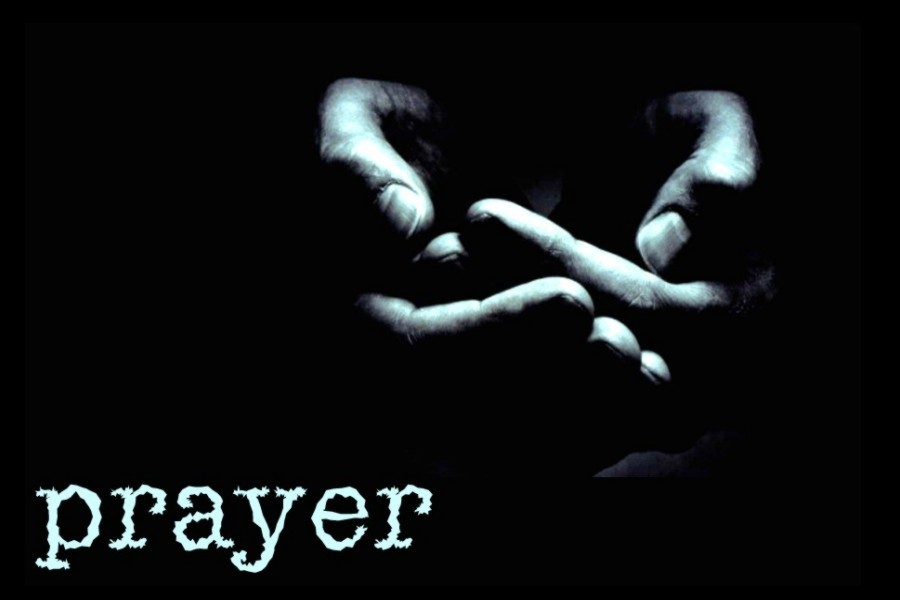
A prayer to know God

As many of you I have heard people worry they would not know what to say to God were they to try and pray. It seems a large number think a secret code or passwords are necessary. I think scripture as a whole points to a heart condition when approaching God rather than smooth talk.

There are no magic words to calling on the name of the Lord (Romans 10:13). How Rosaria Champagne Butterfield opens her heart in this prayer, I think, reveals the repentance and faith God seeks. This is how she describes the night of her salvation.

That night, I prayed, and asked God if the gospel message was for someone like me, too. I viscerally felt the living presence of God as I prayed. Jesus

seemed present and alive. I knew that I was not alone in my room. I prayed that if Jesus was truly a real and risen God, that he would change my heart. And if he was real and if I was his, I prayed that he would give me the strength of mind to follow him and the character to become a godly woman. I prayed for the strength of character to repent for a sin that at that time didn’t feel like sin at all–it felt like life, plain and simple. I prayed that if my life was actually his life, that he would take it back and make it what he wanted it to be. I asked him to take it all: my sexuality, my profession, my community, my tastes, my books and my tomorrows.

Later she reflects on what it means to repent, her reflection brimming with biblical insight:

I learned the first rule of repentance: that repentance requires greater intimacy with God that with our sin. How much greater? About the size of a mustard seed. Repentance requires that we draw near to Jesus, no matter what. And sometimes we all have to crawl there on our hands and knees. Repentance is an intimate affair. And for many of us, intimacy with anything is a terrifying prospect.

From The Secret Thoughts of an Unlikely Convert, pgs. 20, 21.