A few months back the twitters and blogosphere erupted over a song by hip-hop artist, Propaganda. I wrote about it as well.
The song is entitled “Precious Puritans” and is, in a Grand Canyon of understatement, thought provoking. Concerning well beloved puritan theologians, he raps:
How come the things the Holy Spirit showed them in the valley of vision didn’t compel them to knock on they neighbors door and say, “You can’t own people!”?
Your precious puritans were not perfect.
You romanticize them as if they were inerrant. As if the skeletons in they closet was pardoned due to the they hard work and tobacco growth.
As if abolitionists weren’t racist and just pro-union.
As if God only spoke to white boys with epic beards.
You know Jesus didn’t really look like them paintings. That was just Michaelangelo’s boyfriend.
Your precious puritans.
Dr. Anthony Bradley, addressing the response to the song (too often White and negative), tweeted this:
Evangelicals tend 2 misinterpret black discourse & language norms. A huge reason 4 misunderstanding “Precious Puritans” catdir.loc.gov/catdir/samples…
The link is to a scholary paper from Cambridge University Press entitled, “Language, Discourse and Power in African American Culture.”
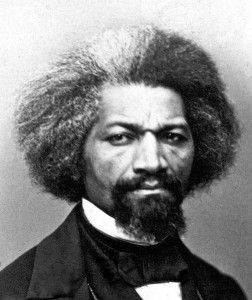
One African-American who used language, discourse and power to rip the church the proverbial “new one,” was Frederick Douglass. Douglass (1818-95), a prominent American abolitionist, author and orator, launched a critique at the American Christianity of his day the comprehensiveness of which has scarcely been equaled. The intensity, analysis and truth shames many an attempt that have followed.
My friend Alan Cross, who blogs at Downshore Drift, recently made me aware of an excerpt from Douglass’ autobiography, Narrative of the Life of Frederick Douglass, an American Slave. In it the former slave writes:
I love the pure, peaceable, and impartial Christianity of Christ: I therefore hate the corrupt, slaveholding, women-whipping, cradle-plundering, partial and hypocritical Christianity of the land. Indeed, I can see no reason, but the most deceitful one, for calling the religion of this land Christianity. I look upon
Frederick Douglass
as the climax of all misnomers, the boldest of all frauds, and the grossest of all libels. Never was there a clearer case of ‘stealing the livery of the court of heaven to serve the devil in.’ I am filled with unutterable loathing when I contemplate the religious pomp and show, together with the horrible inconsistencies, which everywhere surround me. We have men-stealers for ministers, women-whippers for missionaries, and cradle-plunderers for church members. The man who wields the blood-clotted cowskin during the week fills the pulpit on Sunday, and claims to be a minister of the meek and lowly Jesus. . . . The slave auctioneer’s bell and the church-going bell chime in with each other, and the bitter cries of the heart-broken slave are drowned in the religious shouts of his pious master. Revivals of religion and revivals in the slave-trade go hand in hand together. The slave prison and the church stand near each other. The clanking of fetters and the rattling of chains in the prison, and the pious psalm and solemn prayer in the church, may be heard at the same time. The dealers in the bodies and souls of men erect their stand in the presence of the pulpit, and they mutually help each other. The dealer gives his blood-stained gold to support the pulpit, and the pulpit, in return, covers his infernal business with the garb of Christianity. Here we have religion and robbery the allies of each other—devils dressed in angels’ robes, and hell presenting the semblance of paradise.
Thoughts?
The Kindle version of Narrative of the Life of Frederick Douglass is available free below. Just click the Amazon link.
For no particular reason I have never been a fan of rap or hip-hop, but last week I was drawn into that genre. The fellow responsible for the drawing is an artist known as Propaganda, a self-described “fire baptized, battle rapper, who’s heavily influenced by boat music and bound creative freedom in poetry.” At least I think that’s what he says. The song by which I was drawn is called “Precious Puritans.”
The song, from Propaganda’s new project, Excellence, takes pastors to task for uncritically quoting the theology of many Puritan pastors. These would be the same Puritans who owned and abused slaves, while excusing it as the order of things. The lyrics to the song (below) are blistering, insightful, and revealing.
In short order a twitter exchange broke out with Owen Strachan taking the position the song went too far and would possibly cause avoidance of Puritans altogether. Like not enough fiber in ones diet, I suppose. Last week Strachan took to his blog with the same assertions. It was a weak attempt at a critique. If anything Strachan demonstrated with sterling clarity the very mindset challenged by Propaganda.
Next, influential blogger Steve McCoy weighed-in. McCoy is well known for his breadth of musical knowledge and affirmation of the arts. He correctly notes too many people have missed the point of “Precious Puritans.” I could not agree more. Today Steve asks, “Where are the voices of our white, Puritan-loving Southern Baptist leaders, and seminary presidents, and deans, and entity leaders, and prominent pastors? We need your voices on this.” It is a needed, important question.
I do not fit into any of those categories, but I do have a few thoughts.
One, mainly.
Where are the white believers who are seeking responses from African-Americans? Why, when issues of race propel themselves to the fore, do so many white folks think a white opinion is all that is needed? Worse, why do we so readily believe that we automatically provide a correct analysis on any racial issue?
Propaganda’s point is that if white evangelicals do not talk about the bones of their heroes they run the risk of doing great harm to people of color. Many of us are beginning to wonder why white evangelicals do not seem to care much about this and seem willing to trade off “honoring” their forefathers for their own comfort over doing what is necessary to build racial solidarity. Some of my liberation theology friends, in the end, would see Strachan’s critique as a dismissal of acknowledging the importance of caring about how the Puritans are presented to African Americans and would constitute a racial microaggression or a micro-invalidation.
There is an ongoing disconnect between most white evangelicals and anything to do with minority culture, especially as it relates to African-American culture. We are so blind and insular that we do not even attempt bridging divides. This is not typically out of hate, but because we know of no such divide.
Were the slaves not freed? Was the Voting Rights Act not passed? Was the Civil Rights Act not passed? Do we not have a president who is African-American? Then, what is the fuss? Such is a typical white line of thinking.
Two of my African-American pastor friends took the time to respond with their thoughts on “Precious Puritans.” James Roberson III is the Missional Communities Pastor at Blueprint Church in Atlanta, GA. Dr. Dwight McKissic is the Senior Pastor of Cornerstone Baptist Church in Arlington, TX.
From James Roberson:
Here are some historical facts that aren’t talked about:
George Whitfield campaigned to have slaves at his orphanage.
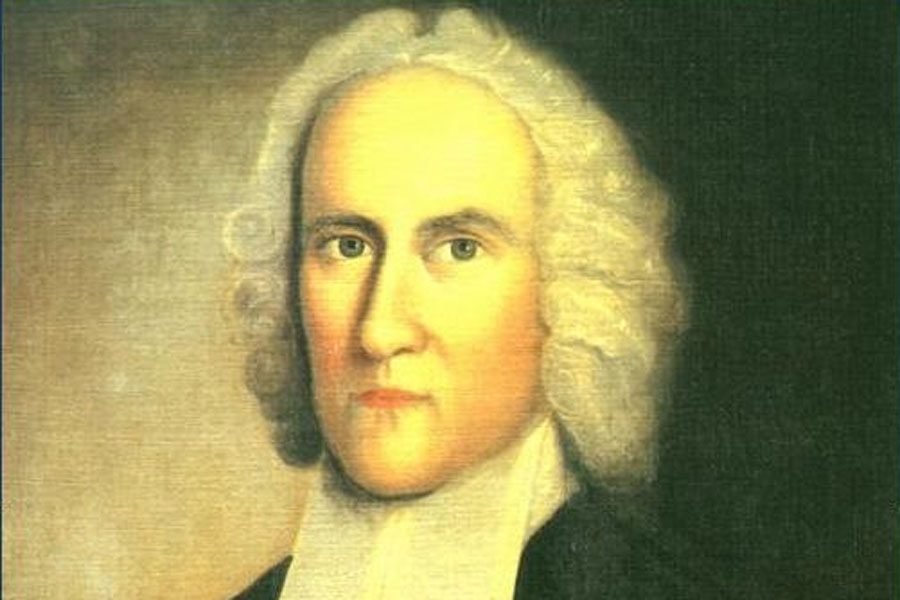
Jonathan Edwards owned slaves as well.
The Southern Baptist Convention made negro inferiority a theological conviction amongst its convention.
Did these negative attributes define who these people were? Not in my opinion. But I wonder if the issue was abortion?
What if George Whitfield campaigned for the rights of women to have abortions.
Jonathan Edwards owned abortion clinics.
The Southern Baptist Bonvention made a woman’s right to choose a theological conviction amongst its convention.
I have heard abortion and slavery compared on more than one silly occasion so I figured I would use it here. I think abortion would make us think of these folks very differently. It shows how we value certain issues more than others.
I love what Propaganda said in his album and I’m surprised that he hasn’t received more flack than he has. Prop was right. I think the entirety of the poem speaks to the flaws of all leaders, which is a healthy reminder. But what I think we are unwilling to embrace is that white people are far too often tired of the slavery conversation and want to move on.
I understand that many white people feel like they shouldn’t have to discuss something they weren’t apart of. Yet what we should embrace is that humans were once used like a rake or luggage; nothing but tools. Black people were considered three-fifths of a human and made white people a fortune. A fortune that many whites have gained a considerable amount of privilege from. It would only be healthy to consistently take a look at how we actually thought God was ok with that. It would also be a benefit to our missiology within cities to understand how slavery and Jim Crow have effected the black population to day.
Sin is never easy to talk about. Yet my prayer is that we grow more comfortable with examining, confessing, and praying over the sins of our fathers. It will as James 5:16 promises, bring healing to our nation.
From Dwight McKissic:
(1) It is alright for the pastor to quote Puritans, because anyone quoted could probably be disqualified in someones eyes for various reasons, including Propaganda who is bothered by the pastor quoting Puritans. (2) I applaud and appreciate Propaganda for voicing his viewpoint. Whenever I quote someone that may be objectionable to a large segment of my audience (for whatever reasons), I usually make some kind of disclaimer or qualifying remark to make that person more palatable to my audience. Similar to the song I’ve said, “God sometimes hit straight licks with crooked sticks,” or “The Great Puritan, Jonathan Edwards was a slavemaster–we’ll forgive him for that without him asking. He preached a great sermon, “Sinners in the Hands….”. You get the point.
So, the preacher needs to qualify or “ask permission” to quote the slaveholder, and the rapper must accept the fact that one never receives ministry from a person totally without fault or sin. He alludes to this in his song.
And certainly, I recognize that slaveholding was a sin on par with abortion, murder, and even more egregious than same-sex marriage. But to the slave-holder, it was a blind spot. That is no excuse, but the reason we call it a blind spot is because–they were blind. Both parties need to seek to understand the other on this issue and meet somewhere in the middle.
Below are the lyrics to “Precious Puritans,” and the song itself from YouTube.
If you would allow me second to deal with some in-house issues here…
Pastor, you know it’s hard for me when you quote puritans.
Oh the precious puritans.
Have you not noticed our facial expressions?
One of bewilderment and heart break.
Like, not you too pastor.
You know they were the chaplains on slaves ships, right?
Would you quote Columbus to Cherokees?
Would you quote Cortez to Aztecs?
Even If they theology was good?
It just sings of your blind privilege wouldn’t you agree?
Your precious puritans.
They looked my onyx and bronze skinned forefathers in they face,
Their polytheistic, god-hating face.
Shackled, diseased, imprisoned face.
And taught a gospel that says God had multiple images in mind when he created us in it.
Their fore-destined salvation contains a contentment in the stage for which they were given which is to be owned by your forefathers’ superior image-bearing face.
Says your precious puritans.
And my anger towards this teaching screams of an immature doctrine and a misunderstanding of the gospel.
I should be content in this stage, right? Isn’t that Paul taught?
According to your precious puritans.
Oh, you get it but you don’t get it.
Oh, that we can go back to an America that once were, founded on Christian values.
They don’t build preachers like they used to. Oh, the richness of their revelations.
It must be nice to not have to consider race.
It must be nice to have time to contemplate the stars.
Pastor, Your colorless rhetoric is a cop-out.
You see my skin, and I see yours. And they are beautiful.
Fearfully and wonderfully divinely designed uniqueness.
Shouldn’t we celebrate that rather that act like it ain’t there?
I get it. Your puritans got it. But,
How come the things the Holy Spirit showed them in the valley of vision didn’t compel them to knock on they neighbors door and say, “You can’t own people!”?
Your precious puritans were not perfect.
You romanticize them as if they were inerrant. As if the skeletons in they closet was pardoned due to the they hard work and tobacco growth.
As if abolitionists weren’t racist and just pro-union.
As if God only spoke to white boys with epic beards.
You know Jesus didn’t really look like them paintings. That was just Michaelangelo’s boyfriend.
Your precious puritans.
They got it but they didn’t get it.
There’s not one generation of believers that figured out the marriage between proper doctrine and action.
Don’t pedestal these people, your precious puritans partners purchased people.
Why would you quote them?
Step away.
Think of the congregation that quotes you. Are you inerrant?
Trust me I know the feeling.
It’s the same feeling I get when people quote me.
Like, if you only knew!
I get it. But I don’t get it.
Ask my wife.
And, it bothers me when you quote puritans, if I’m honest, for the same reason it bothers me when people quote me–they precious propaganda.
So, I guess it’s true.
God really does use crooked sticks to make straight lines.
Just like your precious puritans.