Tag Archives: Jesus Christ

Fear not

Several years ago I was privileged to hear former professor Eugen Schoenfeld, a Holocaust survivor, address a north Atlanta audience. In the midst of telling a portion of his story he made a specific statement that stuck with me. Here is a paraphrase:

Always watch what your government does in times of fear. Hitler rose to power during a time of national calamity and fear in Germany: fear of the economy, fear of the impact of Versailles. In times of fear it is easy for the government to take civil liberties because we readily give them up.

Schoenfeld may have been referring to the Patriot Act, but I do not remember specifically. It would fit the bill.

The aftermath of 9/11 brought a period of uncertainty, vengefulness and fear. Our national disposition was one of disbelief. We expected a response and were rewarded.


In order to ensure 9/11 did not become the progenitor of many such events, the Department of Homeland Security was formed. Even though we should have known better, we gave away certain rights guaranteed us by the Constitution. If we did not give them away, we did little more than pout as they were take away from us. Warrantless wiretaps, secret courts, and expansive government powers have re-defined “the American Experience.” In some ways we have more commonality with banana republics of the 1970s than with the American Revolution of the 1770s.

None of this happened because we evaluated the ramifications. All of this happened because of fear. We gave up liberties enjoyed by generations of Americans before us because we feared for ourselves and the generations to follow.

If you keep up with the news at all you know that we have consistently seen the Fourth Amendment of the Constitution eroded until almost nothing remains. “Probable cause” has become the humorless punchline to an inside joke of the police state. In 2013 America it’s closer to 1984 than ever.

In addition to the governmental overreach accelerated in the last decade, we have witnessed–from a New Testament perpective–a moral shift perhaps not seen since the 1960s. Gay marriage, which was a fringe issue a decade ago, now has the support of almost all Democrats and a new crop of leading Republicans. Within the year it could be legalized in all 50 states. Homosexual behavior, once was mentioned in hushed tones, if at all, is now the theme of movies, TV shows, and sympathetic news stories. At the current pace there will soon be no closet from which to “come out.”

The Democratic National Convention cheered abortion like a drunken pep rally might cheer another keg and barely voted in the most generic mention of God in the platform. The Republicans mention God, but could not define Him in a month of Sundays. Their most openly religious presidential candidate openly advocated for pre-emptive assassinations based on an Iranian person’s occupation.

Our concept of religious liberty, indeed the concept our country has held since the first feet left the boat, has been reinterpreted. Religious thought is as widely supported as ever…as long as it only affects your personal life. Try to bring it into the public square and voila it is branded “hate speech.”

These are times of extreme change, and nearly unbelievable societal morphing. The result seems to be a lot of fear and worry among Christ followers.

It is for times like these multiple scriptures were written. The Old Testament addresses fearful times: “Do not fear, for I am with you; do not be afraid, for I am your God. I will strengthen you; I will help you; I will hold on to you with My righteous right hand.” Isaiah 41:10

As does Jesus: “Do not be afraid, little flock, because your Father delights to give you the kingdom.” Luke 12:32

“Don’t fear those who kill the body but are not able to kill the soul; rather, fear Him who is able to destroy both soul and body in hell.” Matthew 10:28

As does Paul: “For God has not given us a spirit of fearfulness, but one of power, love and sound judgment.” 2 Timothy 1:7

As did an angel: “‘Don’t be afraid, Paul. You must stand before Caesar.'” Acts 27:24 (Note the governmental aspect.)

As did Peter: “But even if you should suffer for righteousness, you are blessed. Do not fear what they fear or be disturbed, but honor the Messiah as Lord in your hearts. Always be ready to give a defense to anyone who asks you for a reason for the hope that is in you.” 1 Peter 3:14, 15

So, in the familiar refrain of the King James Version: “fear not.”

Fear not is most applicable when fear is most actual.

Fear not means little when there is little to fear.

Fear not is most personal when fear is most probable.

Even though there may be much we can fear, we are still commanded to have no fear. I mean, really, what is the worst thing that can happen? Total economic and societal collapse ending in death. For followers of Christ death is a doorway to the presence of our savior, so what is to fear?

What might be worse? Jail? Torture? Suffering? All–ALL–of these things have been suffered by our brothers and sisters in Christ since He ascended to heaven. Not only that, for centuries Christians have learned to rejoice in that suffering.

The worst thing that could happen to me in all the universe would be something God could do to me. And the worst thing God can ever do to me, because of Jesus Christ, is show me mercy. An Paul asked:

Who can separate us from the love of Christ? Can affliction or anguish or persecution or famine or nakedness or danger or sword? As it is written: Because of You we are being put to death all day long; we are counted as sheep to be slaughtered. No, in all these things we are more than victorious through Him who loved us. For I am persuaded that not even death or life, angels or rulers, things present or things to come, hostile powers, height or depth, or any other created thing will have the power to separate us from the love of God that is in Christ Jesus our Lord! [Romans 8:35-39]

Who knows? We might even begin to live like the church again rather than cogs in political machinery.

All scripture from the Holman Christian Standard Bible.

Jesus Christ, marriage and sex

In a day when fewer people have a biblical understanding of marriage than ever before these reminders are apropos. Marriage is not simply a social arrangement as we in the West have come to understand it. It is not merely a means by which the state garners more little potential taxpayers or soldiers. It is not a man and woman who decide to live together. It is not two people of the same sex who decide to unite and call it “marriage.”

It is a holy institution that has probably endured as much violence from Christ’s followers as from Christ’s enemies. Yet, it remains what it is.

The following quotes are from the book, Who is This Man: The Unpredictable Impact of the Inescapable Jesus by John Ortberg. I highly recommend it.

In the ancient world, sexuality was celebrated as a means of procreation and as an appetite to be gratified, much like appetites for food and drink. Greek physicians often diagnosed women with “hysteria,” which comes from the Greek word for “uterus,” a condition they said was caused by a wandering uterus. They said hysteria could be cured by intercourse. The Roman physician Rufus prescribed sex to adolescents as a cure for melancholia, epilepsy, and headaches. One imagines he had a thriving practice.

[…]

The gods had little to say about marriage. The rules for a public cult in Pergamum demanded a day’s interval after sex with one’s wife but two days after sex with someone else’s wife. Zeus’s sexual history (one writer describes him as “the ultimate player”) did not suggest that restraint was an Olympian virtue. The silence of the gods about sex also led to a very different world of sexuality and children. Particularly in Greek culture, sexual relationships between adult men and younger boys, often between ages twelve and sixteen, were taken for granted. The Roman emperor Commodus is said to have had three hundred young boys available for sex. The Christian writer Tatian said that Romans “consider pederasty to be particularly privileged and try to round up herds of boys like herds of grazing mares.”

[…]

Slave girls were made available for sexual purposes at the decision of the paterfamilias. Freeborn girls were often married by their families as early as possible: A study based on inscriptions indicated that 20 percent of pagan girls were married before the age of thirteen (in the Christian community it was about a third of that)
[…]

Marriage, Jesus was saying, is not at its heart just an economic or social institution. It is a God-directed covenant that reflects the human capacity for self-transcendence and community. It is a joining of spirit and flesh. It does not serve the state; it precedes the state.

[…]

Jesus connects marriage to creation. In Genesis God is making creation good by separating: he separates the light from the darkness, the dry land from the sea, the heavens from the earth. But now, with the man and the woman, he takes what was separate and joins them. And so Jesus says what God has joined let man not separate.

[…]

Walter Wangerin wrote, “Marriage begins with a promise.” A man and a woman stand in a church or a chapel or a backyard before each other, before witnesses, and before almighty God. They make a vow. They say a promise. They give their word. That’s what a marriage is built on. A promise freely offered, fully embraced, joyfully witnessed, painstakingly kept —that’s what makes a marriage. Sometimes people will say: “I don’t need a piece of paper.” It was never about the paper. In Jesus’ day they didn’t have paper. It’s about the promise: “as long as we both shall live.”

[…]

In the ancient world, one’s primary loyalty was to parents. But the man and the woman are to leave their parents to create a new primary loyalty—a union, and their union with each other is to be expressed through sexual intimacy, one flesh. In other words, sex is kind of a sacrament. It is an outward sign that points to an inward reality, to a spiritual state.

[…]

In a broader way, something like this went on in the ancient world. For Greco-Roman culture, the idea of reserving sexual intimacy wasn’t quaint and old-fashioned; it was new and revolutionary. As a whole, it never did get established terribly well. And to this day, no one I know doesn’t struggle with it. But the framework that Jesus taught—the idea that marriage is a covenant relationship between and man and a woman, that sex has a spiritual component, that fidelity is a quality to be prized in men as well as women, that children are to be protected rather than exploited sexually — would come to shape our world.

[…]

In the book of Hebrews, the eleventh chapter is called the Hall of Faith, and great heroes in the Bible—Noah, Abraham, Moses, Gideon, and David — are all listed there. Then there is this comment, “By faith the prostitute Rahab, because she welcomed the spies, was not killed.” The writer does not mention anybody else’s occupation — not David the king, or Samuel the priest, or Abraham the rancher, or Gideon the judge. Why Rahab’s? Grace. The same Jesus who was a magnet for sexual sinners who had flunked marriage was the same Jesus who redefined what a marriage could be. “Husbands, love your wives, just as Christ loved the church and gave himself up for her.” More marriages have been performed, more wedding vows have been made, more nuptial blessings have been asked in his name than any other.

All quotes taken from Chapter 11: The Truly Old-Fashioned Marriage.
Click below to order from Amazon.com.

Adventures in food stamps: a personal story

I have never been on food stamps. Sonya, my wife, was raised in a family that has never been on food stamps.

A while back I was underemployed for a period of almost two years. My income was drastically reduced. Twice during that time we strongly considered at least applying for food stamps (now called SNAP–Supplemental Nutrition Assistance Program). The second time I had already found the office address for making the trip to apply. Both times we decided not to apply. We do not have the experience of being looked at with disdain by other shoppers who wonder if we are lazy, criminal, or “just poor.” Or those other shoppers who examine the groceries of such folks for any non-generic items.

We did enough research to know the stamps have been traded for reloadable cards. Rather than a book of tear off sheets, recipients pay just like using a debit card. Folks around the check-out line who are not paying attention may not even realize the difference.

Which brings me to a story of Sonya yesterday at our local Aldi grocery store (a story she did not want to to relate, but here we are).

The lady in front of Sonya, whose groceries were being scanned, was old enough to be in the social security range. Sonya watched as they removed item after item from her order, rerunning her card to no avail. Soon it became clear the woman did not have any money on her card.

It was about this time Sonya realized she was trying to pay with her SNAP card. She heard the customer and cashier discussing what day of the month and that the card should already have been refilled for use. It dawned on the lady trying to buy the groceries that no matter how many groceries were removed she could not pay for what was left.

As Sonya watched these events unfold the Holy Spirit prompted her to include the lady’s purchase in our own. So she said to the cashier, “I’ll get hers. Just include it with my groceries.”

After the expected quizzical looks from customer and cashier, the customer expressed her profound appreciation. After the transaction was completed she and Sonya hugged several times, near tears. Sonya said, “God will meet your needs and He’ll meet ours.” About then the cashier let loose with “That’s right! Amen!” and a small revival was had in the grocery story.

As they were getting ready to leave the lady then asked, “Where do you go to church?” After Sonya told her, she said, “Well, I was about to invite you to mine.”

I relate this story primarily to highlight generosity and the blessing of following God. But there is another component.

When talking about the poor we often hear the argument, “It is not the responsibility of the government to help the poor. It is the responsibility of the church.” It sounds good, right? It sounds right, right?

But is not the church (or churches) made up of people? Of we who claim the name of Jesus? How much helping of the poor do we really do? If all income taxes were to fall away overnight, would Christ followers increase their offerings or increase their possessions? Would we buy pants, shirts, gloves, and food for those in need, or empty our own closets of perfectly good threads to make room for armloads from our favorite clothier?

feeding the hungry and homeless

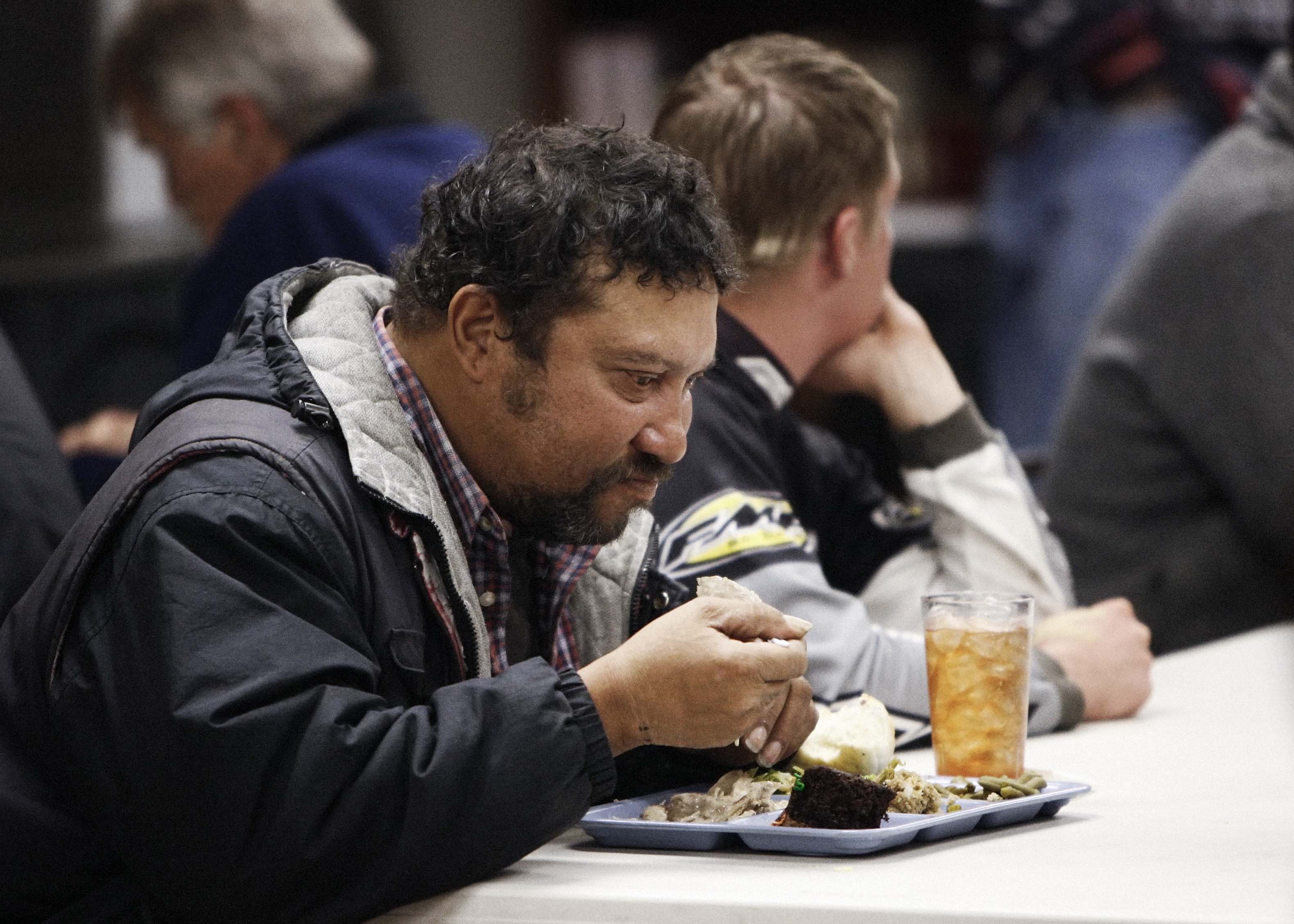
Would we feed the hungry and homeless? [Image credit]

In a conversation with a homeless person yesterday, Sonya found out his greatest need is for thermal underwear (as he stands in the cold selling newspapers). If we fill that need it may mean that one of us does without something we would like to have. Just how long would we live like that?

Would churches reallocate their budgetary funds away from buildings and property that house the faithful once or twice a week to construct, fund, and staff shelters for the long-term and transitional homeless? Organize and provide job training or job opportunities? You know, the stuff some say the government should be doing?

If churches were suddenly awash in cash from generous members would they join together with other churches to supplement the food needs in their community, or just hire additional staff to do the ministry the members should already be doing?

In short, would we “do justice,” or merely do business as usual?

Support this blog! Even $1 is helpful. No PayPal account necessary.


Learning from Turkish Muslims

My friend Joel Rainey recently returned from a trip to Turkey. Joel has been a pastor and church planter, is an author, blogger, husband and father. He currently is the Director of Missions for the Mid Maryland Baptist Association.

This week he blogged about his trip to the nation of Turkey; a trip he took with several pastors from his area. It is an illuminating story with truths that benefitted me, and I hope will benefit you, too. He has given me to publish, “What Turkish Muslims Taught Me About our Changing World” in its entirety. The original post is at his blog, themelios.

My job sometimes requires pretty extensive travel, and through my service to our churches, I’ve had the opportunity to, literally, see the world. But I’ve just returned from a trip that I think has had a greater impact on me than any other trip I’ve taken.

Turkey trip

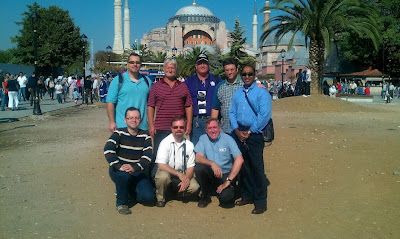
Joel Rainey (back left) and team in Turkey

From September 21-30, six area pastors and myself traveled throughout the Republic of Turkey with members of the Muslim community. This journey actually started more than a year ago with a call from one of our state legislators who is a member of one of our churches. The Governor of Maryland had included her in a trip to Turkey as part of an eventual “sister-state” agreement that was signed between my state and a province in that country, but once the leader of the Turkish organization discovered that this representative was an evangelical Christian, he expressed hesitation, because, as he put it, “I always thought evangelical Christians hated Muslims.”

Seeking to put this false rumor to rest, I reached out to the members of this community, and got a warm embrace in response that has lasted more than a year. I’ve been in the company of people from nearly every tribe and tongue, but when it comes to hospitality, no one does it better than the Turkish people! They are some of the finest and most gracious people I’ve ever met! Eventually, this new relationship resulted in their invitation for us to join them in their home country last week.

Let me say that again. Muslims openly invited more than a half dozen Baptist preachers to the middle east, and even covered a significant portion of the cost of the trip!

During our time abroad with our new friends, I have never experienced such hospitality! We toured sites together that were important to both Christians and Muslims. We visited schools, newspapers, and hospitals built by this group in the hopes of improving the lives of others in their home country. We visited the homes of influential Turkish business leaders and learned of their own involvement in trying to improve conditions, not only in Turkey, but throughout the middle east. One young pharmacist we met near the border with Syria told me “I want to take what we have done in this city, and spread that peace across the border and throughout this part of the world. I want my city to be the starting gate for peace.” I love that guy’s heart!

It is unfortunate that nearly everything about this part of the world that is broadcast on American news media focuses on extremist elements. To be sure, those elements are very present (as was demonstrated after our departure with the Syrian violence crossing the border into Turkey), but the so-called “Muslim world” is full of good people who are trying to make a positive difference, and its working!

All of this probably sounds very strange coming from the mouth of an evangelical Christian, and to be sure, my convictions have not changed. I still believe the Bible is the Word of God. I still believe Jesus is God, that He was crucified as a substitute for sinners, that he rose bodily from the dead, and that nothing short of repentance and total faith in His death and resurrection will save. But these convictions don’t hold me back from the relationship I now have with my Muslim friends. On the contrary, they propel me more deeply into relationship with these precious people!

This experience is but one example of how the way we engage the world as followers of Jesus needs to change, and I’ve addressed that issue in more depth here. But as we explore further ways to walk together with the Muslim community here, I’m taking several things away from our recent trip that will continue to inform our ongoing relationship.

1. The sincerety of their faith is motivating them to change the world, starting with the region where they live. Our Turkish-American guide for this trip told me that years ago he asked the question, “why is it that when it comes to science and technology, education, and health care, that the Muslim world seems to lag behind everyone else?” According to his own testimony, he found mentors within his own faith who believed that Islam should actively engage all these areas, and contribute to the global community. In short, he and others like him who live in Turkey have found meaning and purpose that they believe is anchored in their faith.

2. The Movement we witnessed in Turkey is cross-generational. While many young people are “out in front” seeming to make positive waves, older generations are seeing their passion and responding with financial support and other things necessary to accomplish their goals. Inspired by Imams of centuries past who encouraged Muslims to invite “outsiders” in, they have taken one step further and are taking the initiative to introduce themselves to the non-Muslim world. They are disheartened by the way the media have focused almost exclusively on the radical elements of their faith, are weary of being automatically identified with those radical elements, and are eager to share the good that is happening throughout the middle east and among Muslims worldwide which is so under-reported. It was not uncommon for us to visit a home where three or four generations of Turkish Muslims spoke of their commitment to these goals.

3. They speak boldly and loudly to the violent elements in their faith, and so should we! Though the media pay them little attention (honest appraisal of the positive elements of a movement or religion rarely sells a lot of newspapers or increases viewer ratings), they are quick to condemn violence committed in the name of Islam. We had barely landed when our guests openly and forcefully condemned the recent attack on our embassy in Libya in response to the “Innocence of Muslims” film made in the U.S., and apologized to us for the way their faith was represented in that violence. (We responded by condemning the film itself. The language and sexual content alone should make that film as offensive to Christians as it is to Muslims. We also acknowledged that idiots are entitled to their 1st amendment rights also!)

Call it propaganda if you want, but the truth is that Muslim critics of violence abound, we just don’t listen for their voices. (Harris Zafar is but one example in our own country.) Instead, we tend to suppress our awareness of the violent tendencies present in ourselves. Sure, we Christians don’t have anyone flying airplanes into skyscrapers. But when was the last time you heard a Christian openly condemning a violent attack on an abortion clinic, or the bullying of a homosexual? Our new Muslim friends agree with us that ALL people are created in God’s image and likeness, and when violence is done to any of them, the reason doesn’t matter. Such violence should be condemned.

4. This new relationship is a new platform for the very kind of “public square” evangelism in which Paul participated. You could spend years as a “traditional” missionary in a Muslim country and never achieve the level of access we achieved in a single week! From the beginning, we have been up front with our Muslim friends regarding what we believe, and told them our greatest desire is for them to come to know Jesus as we know Him. But we have also stressed that our continued friendship is not contingent on whether they become Christian. After all, “forced conversion,” is not conversion. It is conquest, and both Christians and Muslims have already given each other too much of that in our history together.

At the same time, I can’t help but think that if Paul were alive today, this is precisely the platform he would leverage in order to spread the Gospel. On several occasions, our group had this opportunity, and we seized it with the blessing of our hosts, most of whom were and are curious about Jesus. In general, Muslims have great respect for Jesus. They just don’t know much about him, and recognize that Christians spend much more time focusing on Him. So when they encounter Christians, they are often anxious to hear a story about him. Though most seminary textbooks on the subject claim that Muslims reject the doctrine of penal substitution, the truth is that many Muslims have never even been offered the opportunity to consider the concept. In one of my conversations this past week, one man asked “tell me again what you mean by ‘Jesus paid the price.’ I’ve never heard that before!”

5. In our current North American context, walking in close relationship with Muslims is the epitome of being “counter-cultural.” Let’s face it. Most Americans, even Christians, are afraid of Muslims. We are conditioned by our media, and even most of our political leadership to keep our distance. So what could possibly be more counter-cultural than our willingness to to walk together with these precious people, and do it publicly?

6. If the Gospel is truly “the power of God unto salvation,” then what on earth are we afraid of? I still believe Romans 1:16-17 is true. And because I believe this, I want to walk closely with those who have yet to accept its claim. Our new friends are anxious to talk about faith, and there is much that we hold in common! But in the midst of discussing those commonalities, I have, and will continue to challenge them concerning the basis for forgiveness, and a sure hope of eternal life. And I’ll do it because they are my friends.

Our group learned much while traveling with our friends, and we look forward to learning more, to engaging them in matters of common interest, and to consistently present the Gospel of Jesus to them at every opportunity. God is at work in places we too quickly brush off as “lost.” I saw it for myself, and I look forward to experiencing all that He has in store in the future for us, and for our new friends.

I will just add that Joel’s strategy for meeting and learning from members of the Islamic religion is also needed for any area where you and I differ from others. We cannot claim to “know” about Islam if we do not know any Muslims. We cannot claim to know the needs of the homeless unless we talk to them and ask. Those in the racial majority cannot claim to know how racial minorities are affected by government policy unless those in the majority are friends with minorities. Wisdom requires nothing less of us.

Grieving father warns of teenager and prescription drug mix

Prescription meds, teenagers
On Friday morning, November 6, I received a prayer chain call from church. While the requests can run a wide berth of concerns, this one caught my attention in a way that almost stopped my heart. Prayer was being requested for a church member whose 18 year old grandson, a young man I knew, had been found dead that morning. I really could not believe that I had heard it right, so I listened again and the message was indeed what was initially thought.

I placed a couple of quick calls seeking information before finally touching base with his grandfather who confirmed the story as true. The initial concern was that he had overdosed on prescription medication; a concern that eventually was determined to be correct.

Over the weekend, this young man’s Dad sent an email to family and friends, an email which is published below with his permission. It has been edited slightly for clarity and privacy. The words “my son” have been substituted for the young man’s name.

Dear Business partners and Friends,

Words cannot begin to express the overwhelming support felt by all of my family this past weekend. Thank you so much for the food, prayers, thoughts, hugs, and words of encouragement. I would like to share with you my son’s story in hope that no one else ever has to experience the tragedy of burying a child:

On Friday morning of last week, my worst nightmare came true, I received a call from my younger son, 15, that his brother, 18, was unconscious and I needed to get over to their house quick. When I arrived, my son’s mom and the paramedics told me that they had nothing to work with-he had obviously been gone for a few hours. Within 15 minutes the outpouring of love, support, and prayers began-God showed up and placed his arms of comfort and peace around everyone. Family, friends, pastors, co-workers, students and neighbors began to show up and offer any assistance they could. I was amazed.

Like most people, I live in a fast paced life. I am not sure where I thought I was going all the time, but I was always doing something quickly-sometimes doing things right –sometimes not. The death of my son has made me take some time and think about what is really important. Our children are important. If you’re receiving this email and you are a parent that feels like everything moves to quickly, please slow down and take time to find out what is going on in your child’s life. Spend time with them each day, talk to their friends, their teachers, coaches, and anyone else they are involved in. Check their cell phones-you will be amazed. Check there email, Facebook, etc. You’re their parent-you have the right!

Just 2 years ago, my son was a typical teenager- interested in girls and cars-the usual things for boys. Two years later- he is gone. Where did it go wrong, where did the tide turn, what were the signs? If you have a child in school, chances are they have been asked or know someone that has been asked to participate in the taking of “prescribed” medicines. They take pain killers, anti-inflammatory, anxiety, depression, sleeping pills and any other meds they can find to “alter” their state of mind. They do not take it as prescribed. They think if one is good-two is better- and three is “killer”! What they don’t understand is it can kill them- it killed my son!

Some of the signs to look for are: sudden changes in mood, appetite, irritability, sleeping to much or not enough…they will take something to give them energy and then take something to bring them down. It’s hard to tell- but the signs are there. Keep all your medicines in a safe place that only you know about. These kids will have their friends steal meds from you while they steal meds from those friends’ parents (they don’t feel as bad this way). Do whatever you have to do to try and keep them safe.

While his death is a tragedy-it is also a success story. Just three weeks ago, my son spoke to Pastor Robbie at Hopewell Baptist church and Robbie asked my son if he knew Jesus as his Lord and Savior- he said “yes”. They prayed and my son was so excited. He called me and told me that he was changing his life and gonna quit doing the things that had gotten him in trouble. I was so excited that he had seen the light and wanted to change, but the devil wasn’t finished. As the days went by, my son began to be tested – he gave way to temptation- he lost that battle—but in the end he won the war. Because of his decision to accept Jesus as his Lord and Savior, he is in heaven and at his funeral over 10 people accepted Jesus and will spend eternity in heaven when they leave this world. I don’t think I could be any prouder of my son.

I hope that my son’s story will cause us to make changes in our lives for the good- I hope that his story will bring families closer, that people will get back to the basics in life and realize that we are only here temporarily-that there is a place in eternity with God if we want it.

If your family is dealing with an addiction or abuse situation, please seek help so that lives may be saved. A great starting point is Celebrate Recovery, a Jesus Christ centered ministry for those struggling with addictive behavior, hurts, habits or hangups. Search “celebrate recovery” and the name of your town to find a local ministry.