Category Archives: Theology

A little context for the complementarian-egalitarian debate

In the past few weeks the complementarian-egalitarian debate has again featured prominently in the blogosphere. Perhaps it is time for a little context.

From Allison Dinoia Newcombe at the Huffington Post:

Last week, I visited the spot where a young girl was brutally murdered, set on fire and burned to death in the middle of the street in Los Angeles. I have searched to find answers about her plight, but to no avail; this story barely made local news. She was just 17 years old.
[…]
Every single day, girls in Los Angeles are kidnapped and coerced by traffickers and pimps into a life of sexual slavery and violence. The average age of entry into this life is 12 years old — the age of a child in seventh grade. There are hundreds of children affected by this crisis in LA alone. Alarmingly, yet not surprisingly, estimates consistently show over 70 percent of the children victimized through sex trafficking are foster children. Traffickers know that foster kids are an abused and vulnerable population, and that these girls are desperate for the love and attention that they did not receive from their own families. Lacking the necessary relationships and support, coupled with likely sexual and physical abuse at a young age, these girls are particularly at risk for the organized and pre-meditated tactics of traffickers.

Child sex trafficking, though largely unheard of and often misunderstood, is in fact a domestic crisis. It has become one of the most common organized crimes in the country, third only after the sale of illegal drugs and arms. Gangs, which have been entrenched in Los Angeles neighborhoods for many years, are increasingly becoming involved in child sex trafficking. Gang members have learned that, unlike drugs or weaponry, a young girl’s body is a “commodity” that can be sold time after time. An added benefit for traffickers is the decreased risk: when selling girls, the primary risk falls on the child being sold, who is standing alone on the street, not on the trafficker who is safely out of sight. And while a child is not of age to consent to sex, they can be arrested and charged with the crime of prostitution due to legal loopholes. Just last week I observed a court hearing where a 12-year-old was being charged with the crime of prostitution. Likely pre-menstrual, still with a childish look in her eyes, she sat in court in an orange jumpsuit, with tears streaming down her cheeks, while the judge explained the charges.

Do not miss it: a 17 year old girl, set afire and burned to death in the middle of a street in Los Angeles, California, USA.

Do not miss it: a 12-year old girl, likely brutalized and trafficked by a gang, arrested and charged with prostitution by cops and D.A.s who should know better. With tears on her face she sits in front of a judge who may be too uncaring to set aside unjust laws. Or possibly hindered by a legislature too stupid to change them.

From a Reuters report entitled, “Syrian forces use sexual violence against men, women, children”:

[Human Rights Watch] said many of the assaults were in circumstances in which commanding officers knew or should have known the crimes, such as electric shocks to genitalia, were taking place.

In another face-to-face interview a woman from the Karm al-Zeitoun neighborhood of Homs city which was overrun by Assad’s troops said she heard security forces and shabiha militia rape her neighbors while she hid in her apartment in March.

“I could hear one girl fighting with one of (the men)… She pushed him and he shot her in the head,” HRW quoted the woman as saying. She said three girls, the youngest aged 12, were then raped. After the men left the woman went next door.

“The scene on the inside was unreal. The 12-year-old was lying on the ground, blood to her knees… More than one person had raped the 12-year-old… She was torn the length of a forefinger. I will never go back there. It comes to me. I see it in my dreams and I just cry.”

Some interviewees told HRW that victims did not want their families to know about the assault because of fear or shame. In one case, HRW said a female rape victim was willing to be interviewed but her husband forbade it.

Do not miss it: a 12-year old girl gang-raped in an apartment. Brutalized emotionally, psychologically and physically with body ripped as if she had endured a traumatic childbirth.

In fact here’s an entire website dedicated to tragedies being endured by women in Syria: Women Under Siege: Documenting Sexualized Violence in Syria. Recent entries included, “Woman tells Brandeis students Assad soldiers raped her,” “Man reports Republican Guards raped woman, killed men, in Douma apartment building,” “Former officer describes being ordered to rape in Homs,” and more.

Or this from the Chattanooga Times Free Press, September 2012:

Note to parents: Go check your kid’s cellphone. Or Facebook. Just check. Just … check.

Back in April 2010, one mother did just that. Her daughter was 14 at the time, right in the thick of middle school. Should be texting about cute boys or Hannah Montana or pre-algebra problems.

Instead, here’s what showed up in her sent texts.

“Cud u use a condom this time. I’m still not on birth control pills yet.”

You’d freak, right? Ready to wring the neck of some punk seventh-grader? Mom found more texts, all involving a caller known as “Greg.” Police traced the texts back to a cellphone number. Turned out Greg hadn’t been in middle school since the 1970s.

He’s Greg Austin, a 46-year-old Ooltewah father of three and former president of CTC Technologies in Chattanooga.

Earlier this year, he pleaded guilty to two charges of statutory rape: having sex with two middle-schoolers in a $45-per-night motel.

Want to know where he is today?

Not in jail.

Thanks to sentencing reform and the fact Austin had no prior record, he received six months of jail, followed by 18 months’ probation and registration as a sex offender.

Even though he pleaded guilty to statutory rape of two girls barely old enough to see a PG-13 movie.

Know how many days in jail he has served for that crime?

“Zero,” said his attorney, Bryan Hoss.

Two middle school girls manipulated into sex–raped–by a man old enough to be their Dad. Probably, he was fantasizing that he was.

Or consider these statistics from Forbes:
–One in every four women have experienced severe physical violence by a current or former spouse, boyfriend, or girlfriend.
–Stalkers victimize approximately 5.2 million women each year in the U.S, with domestic violence-related stalking the most common type of stalking and often the most dangerous.
–One in ten 9th-12th grade students (mail and female) were physically hurt on purpose by a boyfriend or girlfriend in 2009 alone.
–One in five women have been raped in their lifetimes, and nearly 1.3 million women in the U.S. are raped every year.
–The statistics are sobering – even more so with our understanding that these types of crimes are often the most underreported. Many victims suffer in silence without confiding in family and friends, much less reaching out for help from hospitals, rape crisis centers, shelters, or even the police.

According to the newly released documentary, The Invisible War, which gathered its statistics from the United States government, a female soldier in combat zones is more likely to be raped by a fellow soldier than killed by enemy fire; over 20% of female veterans have been sexually assaulted while serving in the US army; of 3,192 sexual-assault reports in 2011 only 191 members of the military were convicted at courts martial. Further, as reported by ABC News,

As terrible as the rape was, the repercussions were almost as horrendous — [single] women were accused of adultery (if the perpetrator happened to be married) or “conduct unbecoming an officer.”

Kori Cioca

Cori Cioca, formerly of the United States Coast Guard, alleges assault and rape by a superior officer [Image credit]

They lost rank, they were accused of having “set up the men.” When one of the women reported a rape — the third that week in one particular unit — she was asked, “You girls think this is a game; are you all in cahoots?”
[…]
A Navy study conducted anonymously reported that 15 percent of incoming recruits had attempted or committed rape before entering the military, twice the percentage of an equivalent civilian population. Women who’ve been raped in the military have a higher PTSD rate than men in combat. In 2010, there were 2,617 military victims (women and men), but that represented only about 14% of the estimated number of victims; 86% did not report they had been sexually assaulted.

Until early 2012 military regulations required rapes be reported to one’s supervising officer. It was all to common, in cases where the victim was female, for that officer to be her rapist.

If you have not seen The Invisible War check out iTunes, Amazon.com, Vudu.com or the website above.

While on the subject of the military do not forget the fastest growing segment of the homeless population is women, many of them veterans.

Native American women? How about this?

The official number is bad enough: One in three American Indian women have experienced rape or attempted rape, a rate more than twice the national average. But it gets worse: One survey finds that in some rural villages, the rate of sexual violence is as much as 12 times the national rate, and interviews by the New York Times found that sexual assault is so common that few, if any, Native American women living on tribal reservations escape it.

The Times article relays wrenching stories (the 19-year-old rape victim who never received a return phone call from tribal police), offers more heartbreaking statistics (just 10% of sex assaults on reservations are reported, and arrests are made in just 13% of those cases), and details the myriad problems contributing to the tragic situation: isolated villages; alcohol abuse and a breakdown of the family structure; a lack of sexual assault training.

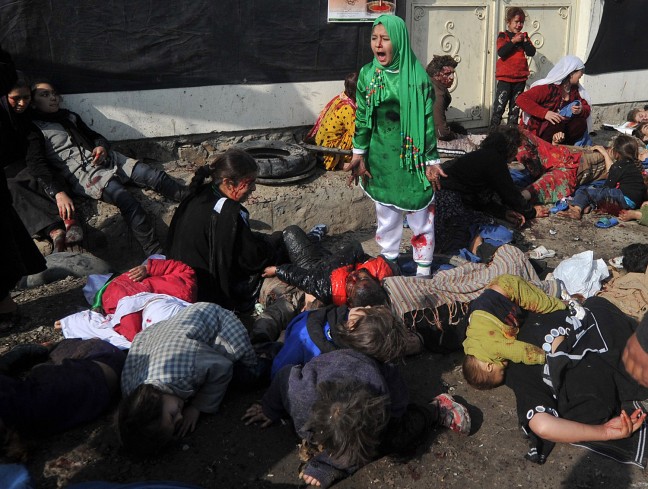
Look at this picture of Tarana Akbari, a young Afghani girl. She survived a suicide bomber’s attack that claimed seven members of her family and injured nine of her other relatives. This is anger. This is hurt. This is the face of one suffering inexplicable injustice. This is real; not manufactured. Complementarian vs egalitarian? It does not even get into the ballpark.
An egalitarian friend of mine read this yesterday to provide feedback. She wrote back:

Feminist and womanist theologians in the Third World have long accused white Western feminists of focusing on semantics and meaningless symbols (like female language for God) instead of doing real things to help real women suffering all over the world.

Now, go ahead and tell me how wrong it was that you did not get to teach that Sunday School class because there were men in it. Tell me how some couple is in sin because she cuts the grass and he vacuums the house rather than holding traditional gender roles. Tell me how debates about semantics and theology even come close to the tragedies endured by women–from those born to those unborn–on whom Satanic war has been waged since the Garden of Eden.

I wonder if these victims of inhuman barbarity wake up each day frustrated because they were not allowed to speak at a panel discussion, did not have their CV considered by a pastor search team, or thinking their dad was too patriarchal. Think about these stories when you are trying to decide whether a women testifying in church can speak behind the pulpit or must stand on the floor so as not to be confused with the preacher.

Tell me instead how unborn girls have a right to live. Tell me 12 year olds have a right to not be sexually brutalized 70 or more times a week. Tell me how women have a right not to be raped by soldiers or law enforcement officers. Tell me teenage girls should not be shot for wanting an education. Tell me seventeen year olds should not be burned to death in the street.

Tell me the gospel matters for more than discussion, debate and division. Tell me these women matter more than the luxury we have for endless disagreements.

If they do matter then why do we not redeem the time in a way reflecting it?

Below is a brief TED Talk called, “Every 15 Seconds.” It was presented by Matt Friedman at TEDxSanJoaquin. The title refers to the frequency people around the globe are sold into some kind of human slavery. Women, girls, men, and boys.

Listen to him talk about professional rapists. Do not even try to hold your anger.

Adventures in food stamps: a personal story

I have never been on food stamps. Sonya, my wife, was raised in a family that has never been on food stamps.

A while back I was underemployed for a period of almost two years. My income was drastically reduced. Twice during that time we strongly considered at least applying for food stamps (now called SNAP–Supplemental Nutrition Assistance Program). The second time I had already found the office address for making the trip to apply. Both times we decided not to apply. We do not have the experience of being looked at with disdain by other shoppers who wonder if we are lazy, criminal, or “just poor.” Or those other shoppers who examine the groceries of such folks for any non-generic items.

We did enough research to know the stamps have been traded for reloadable cards. Rather than a book of tear off sheets, recipients pay just like using a debit card. Folks around the check-out line who are not paying attention may not even realize the difference.

Which brings me to a story of Sonya yesterday at our local Aldi grocery store (a story she did not want to to relate, but here we are).

The lady in front of Sonya, whose groceries were being scanned, was old enough to be in the social security range. Sonya watched as they removed item after item from her order, rerunning her card to no avail. Soon it became clear the woman did not have any money on her card.

It was about this time Sonya realized she was trying to pay with her SNAP card. She heard the customer and cashier discussing what day of the month and that the card should already have been refilled for use. It dawned on the lady trying to buy the groceries that no matter how many groceries were removed she could not pay for what was left.

As Sonya watched these events unfold the Holy Spirit prompted her to include the lady’s purchase in our own. So she said to the cashier, “I’ll get hers. Just include it with my groceries.”

After the expected quizzical looks from customer and cashier, the customer expressed her profound appreciation. After the transaction was completed she and Sonya hugged several times, near tears. Sonya said, “God will meet your needs and He’ll meet ours.” About then the cashier let loose with “That’s right! Amen!” and a small revival was had in the grocery story.

As they were getting ready to leave the lady then asked, “Where do you go to church?” After Sonya told her, she said, “Well, I was about to invite you to mine.”

I relate this story primarily to highlight generosity and the blessing of following God. But there is another component.

When talking about the poor we often hear the argument, “It is not the responsibility of the government to help the poor. It is the responsibility of the church.” It sounds good, right? It sounds right, right?

But is not the church (or churches) made up of people? Of we who claim the name of Jesus? How much helping of the poor do we really do? If all income taxes were to fall away overnight, would Christ followers increase their offerings or increase their possessions? Would we buy pants, shirts, gloves, and food for those in need, or empty our own closets of perfectly good threads to make room for armloads from our favorite clothier?

feeding the hungry and homeless

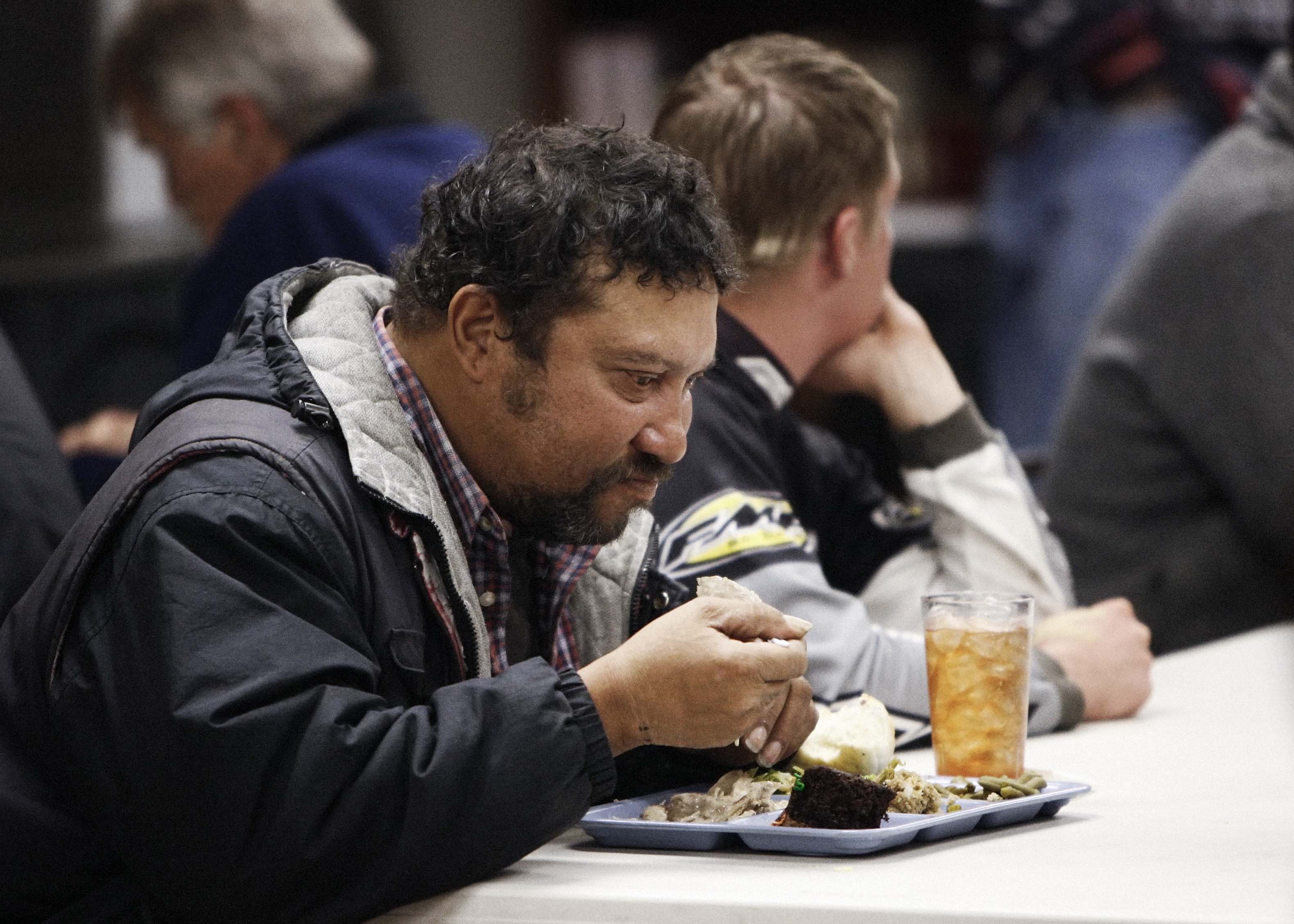
Would we feed the hungry and homeless? [Image credit]

In a conversation with a homeless person yesterday, Sonya found out his greatest need is for thermal underwear (as he stands in the cold selling newspapers). If we fill that need it may mean that one of us does without something we would like to have. Just how long would we live like that?

Would churches reallocate their budgetary funds away from buildings and property that house the faithful once or twice a week to construct, fund, and staff shelters for the long-term and transitional homeless? Organize and provide job training or job opportunities? You know, the stuff some say the government should be doing?

If churches were suddenly awash in cash from generous members would they join together with other churches to supplement the food needs in their community, or just hire additional staff to do the ministry the members should already be doing?

In short, would we “do justice,” or merely do business as usual?

Support this blog! Even $1 is helpful. No PayPal account necessary.


The real issue with abortion and the DNC

The closer the presidential election draws the more attentions return to the issue of abortion. Those on the left cry “women’s rights” while those on the right plead “right to life.” Both sides are passionate, and often enflamed in their attempts to solidify or overturn–respectively–Roe v Wade.

In early September 2012 the Democratic National Convention met in North Carolina. Amidst the debacle over “God” and “Jerusalem” the Democratic Party passed as strong a pro-abortion plank as has been ever hammered into a platform.

In the days following the DNC meeting ABC’s Cokie Roberts said

I think this Democratic Convention was really over-the-top in terms of abortion. Every single speaker talked about abortion. At some point, you start to alienate people. Thirty percent of Democrats are pro-life.

On the same program Roberts challenged Newark, New Jersey mayor Cory Booker

on why the platform committee removed the phrase saying that abortion should be “safe, legal and rare,” which had been in the platform since Bill Clinton ran on that platform in 1992.

Below is the abortion plank from the 2012 Democratic National Platform called Moving America Forward. Read it carefully.

Protecting A

Woman’s Right to Choose. The Democratic Party strongly and unequivocally supports Roe v. Wade and a woman’s right to make decisions regarding her pregnancy, including a safe and legal abortion, regardless of ability to pay. We oppose any and all efforts to weaken or undermine that right. Abortion is an intensely personal decision between a woman, her family, her doctor, and her clergy; there is no place for politicians or government to get in the way. We also recognize that health care and education help reduce the number of unintended pregnancies and thereby also reduce the need for abortions. We strongly and unequivocally support a woman’s decision to have a child by providing affordable health care and ensuring the availability of and access to programs that help women during pregnancy and after the birth of a child, including caring adoption programs. (2012 DNC Platform, pg. 18)

Here is the thing implicit in the DNC platform: abortion and adoption are moral equivalents. This is the real issue with abortion and the Democratic National Convention.

That Democrats affirm the legality of abortion from conception to birth for any reason or no reason is self-evident and has been for decades. But it is startling they cannot even bring themselves to recommend adoption over abortion. This is slavish adherence to ideology at the expense of civilized thinking.

Perhaps pro-life Democrats should be added to the endangered species list.

The moral and ethical position of the DNC is abortion = birth = adoption. Whether a woman aborts a child, keeps a child, or gives the child to adoptive parents it is a morally equivalent decision. No recommendation is made for a preferred end. They “strongly and unequivocally support” all options. Dismembering a child in the womb is given no moral difference from one delivered healthy into the arms of its mother.

Author Steven Waldman noticed this very thing,

[T]he 2004 platform said abortion “should be safe, legal and rare” – language that’s [sic] casts abortion reduction as morally preferable, something this platform does not. [Emphasis added.]

Unfortunately, the DNC does seem to have a moral preference in the matter though unstated. This can be derived from the statistics of the DNC’s preferred provider of abortion, pre-natal care and adoption referrals, Planned Parenthood. In 2010 Planned Parenthood (who, as seen above in the Booker link, was a prominent player at the 2012 DNC) reported the following:

Planned Parenthood did 329,445 abortions while it provided prenatal care to 31,098 women (90% less) and referred only 841 women to adoption agencies.

The number of women receiving prenatal care dropped significantly from 2009 to 2010, as the abortion business helped 40,489 women in 2009 — meaning almost 10,000 fewer women received prenatal support from Planned Parenthood last year than the year prior, or a drop of almost 25 percent.

The number of women getting adoption referrals also declined — from a low 977 in 2009 to 841 last year, or a decline of 14 percent.

Examined another way Planned Parenthood does 391 abortions for every adoption referral it makes and almost 11 abortions for every woman it helps with prenatal care.

The direction the DNC has taken this year is indeed tragic. They have increased their strident support for Roe v Wade to a philosophical landfill in which good and evil are comparable. To quote Javert, “The world is inside out. The world is upside down.”

Eight sure ways to keep your kids from serving God

Years ago I heard a preacher say this:

When I was a young pastor–before I was married with children–I used to preach a series called, “Ten Sure Fire Ways to Get Your Kids to Live for God.” Now that I’m older and have kids of my own I changed it to, “Here’s a Few Things You Might Want to Try When Raising Your Kids. They Might Work and They Might Not.”

I can appreciate the sentiment.

After quite a number of years pastoring a few different churches I think that approach, though humorous, sees the issue from the wrong direction. Perhaps a question we could ask is, “What can I do to ensure my kids will have little interest in following God?” Though the question sounds backwards and unproductive, it will lead us to a number of truths.

If you want to make sure your kids do not follow Christ, I recommend the following:

1. Never even attempt to apply what the pastor teaches week after week. Your kids will readily pick up that it is not that important. They will eventually wonder why you bother to go, and, when old enough, will not go themselves.

2. Pick apart the pastor’s sermon every week. Your kids will soon figure out that you are not expecting God to speak to you. They’ll soon conclude that the message probably does not apply to them either.

3. Fight and argue all morning, and in the vehicle all the way to the service. But, when you get to the service be all smiles and laughter. Act as if the morning fighting never happened. Repeat this ritual every week.

4. Pay more attention to what people in attendance are wearing, how they look, how they smell, etc, than to the message, music and mission. Doing this will train your kids to be distracted from God’s activity by focusing on trivial matters.

5. Be more concerned with making good citizens of your kids, but not so much with making disciples of them. Teach them to be good, to mind their manners, make good grades, etc, but never about walking with God.

6. Make Sunday is the only important day in the religious ritual. Never pray before meals, never pray together as a family, never pray with your kids about issues they face: tests, romances, jobs, life decisions. Let them learn to handle things just like their unbelieving friends.

7. Talk about God’s power, but worry about everything as if He has none. Make sure to express uncertainty about the future as if God has turned His back on you.

8. Never participate in the mission of God apart from church attendance, and hinder your kids from the same. Complain about the cost of mission trips, ministry events, or the difficulty of getting them to service opportunities.

If you do these things you will doing more than enough to assist the evil one in his efforts to destroy the spiritual lives of your children and keep them from serving God.

Learning from Turkish Muslims

My friend Joel Rainey recently returned from a trip to Turkey. Joel has been a pastor and church planter, is an author, blogger, husband and father. He currently is the Director of Missions for the Mid Maryland Baptist Association.

This week he blogged about his trip to the nation of Turkey; a trip he took with several pastors from his area. It is an illuminating story with truths that benefitted me, and I hope will benefit you, too. He has given me to publish, “What Turkish Muslims Taught Me About our Changing World” in its entirety. The original post is at his blog, themelios.

My job sometimes requires pretty extensive travel, and through my service to our churches, I’ve had the opportunity to, literally, see the world. But I’ve just returned from a trip that I think has had a greater impact on me than any other trip I’ve taken.

Turkey trip

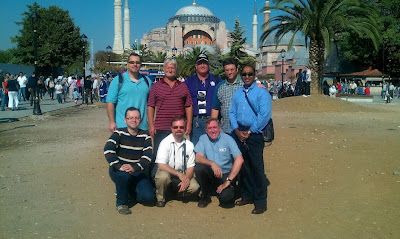
Joel Rainey (back left) and team in Turkey

From September 21-30, six area pastors and myself traveled throughout the Republic of Turkey with members of the Muslim community. This journey actually started more than a year ago with a call from one of our state legislators who is a member of one of our churches. The Governor of Maryland had included her in a trip to Turkey as part of an eventual “sister-state” agreement that was signed between my state and a province in that country, but once the leader of the Turkish organization discovered that this representative was an evangelical Christian, he expressed hesitation, because, as he put it, “I always thought evangelical Christians hated Muslims.”

Seeking to put this false rumor to rest, I reached out to the members of this community, and got a warm embrace in response that has lasted more than a year. I’ve been in the company of people from nearly every tribe and tongue, but when it comes to hospitality, no one does it better than the Turkish people! They are some of the finest and most gracious people I’ve ever met! Eventually, this new relationship resulted in their invitation for us to join them in their home country last week.

Let me say that again. Muslims openly invited more than a half dozen Baptist preachers to the middle east, and even covered a significant portion of the cost of the trip!

During our time abroad with our new friends, I have never experienced such hospitality! We toured sites together that were important to both Christians and Muslims. We visited schools, newspapers, and hospitals built by this group in the hopes of improving the lives of others in their home country. We visited the homes of influential Turkish business leaders and learned of their own involvement in trying to improve conditions, not only in Turkey, but throughout the middle east. One young pharmacist we met near the border with Syria told me “I want to take what we have done in this city, and spread that peace across the border and throughout this part of the world. I want my city to be the starting gate for peace.” I love that guy’s heart!

It is unfortunate that nearly everything about this part of the world that is broadcast on American news media focuses on extremist elements. To be sure, those elements are very present (as was demonstrated after our departure with the Syrian violence crossing the border into Turkey), but the so-called “Muslim world” is full of good people who are trying to make a positive difference, and its working!

All of this probably sounds very strange coming from the mouth of an evangelical Christian, and to be sure, my convictions have not changed. I still believe the Bible is the Word of God. I still believe Jesus is God, that He was crucified as a substitute for sinners, that he rose bodily from the dead, and that nothing short of repentance and total faith in His death and resurrection will save. But these convictions don’t hold me back from the relationship I now have with my Muslim friends. On the contrary, they propel me more deeply into relationship with these precious people!

This experience is but one example of how the way we engage the world as followers of Jesus needs to change, and I’ve addressed that issue in more depth here. But as we explore further ways to walk together with the Muslim community here, I’m taking several things away from our recent trip that will continue to inform our ongoing relationship.

1. The sincerety of their faith is motivating them to change the world, starting with the region where they live. Our Turkish-American guide for this trip told me that years ago he asked the question, “why is it that when it comes to science and technology, education, and health care, that the Muslim world seems to lag behind everyone else?” According to his own testimony, he found mentors within his own faith who believed that Islam should actively engage all these areas, and contribute to the global community. In short, he and others like him who live in Turkey have found meaning and purpose that they believe is anchored in their faith.

2. The Movement we witnessed in Turkey is cross-generational. While many young people are “out in front” seeming to make positive waves, older generations are seeing their passion and responding with financial support and other things necessary to accomplish their goals. Inspired by Imams of centuries past who encouraged Muslims to invite “outsiders” in, they have taken one step further and are taking the initiative to introduce themselves to the non-Muslim world. They are disheartened by the way the media have focused almost exclusively on the radical elements of their faith, are weary of being automatically identified with those radical elements, and are eager to share the good that is happening throughout the middle east and among Muslims worldwide which is so under-reported. It was not uncommon for us to visit a home where three or four generations of Turkish Muslims spoke of their commitment to these goals.

3. They speak boldly and loudly to the violent elements in their faith, and so should we! Though the media pay them little attention (honest appraisal of the positive elements of a movement or religion rarely sells a lot of newspapers or increases viewer ratings), they are quick to condemn violence committed in the name of Islam. We had barely landed when our guests openly and forcefully condemned the recent attack on our embassy in Libya in response to the “Innocence of Muslims” film made in the U.S., and apologized to us for the way their faith was represented in that violence. (We responded by condemning the film itself. The language and sexual content alone should make that film as offensive to Christians as it is to Muslims. We also acknowledged that idiots are entitled to their 1st amendment rights also!)

Call it propaganda if you want, but the truth is that Muslim critics of violence abound, we just don’t listen for their voices. (Harris Zafar is but one example in our own country.) Instead, we tend to suppress our awareness of the violent tendencies present in ourselves. Sure, we Christians don’t have anyone flying airplanes into skyscrapers. But when was the last time you heard a Christian openly condemning a violent attack on an abortion clinic, or the bullying of a homosexual? Our new Muslim friends agree with us that ALL people are created in God’s image and likeness, and when violence is done to any of them, the reason doesn’t matter. Such violence should be condemned.

4. This new relationship is a new platform for the very kind of “public square” evangelism in which Paul participated. You could spend years as a “traditional” missionary in a Muslim country and never achieve the level of access we achieved in a single week! From the beginning, we have been up front with our Muslim friends regarding what we believe, and told them our greatest desire is for them to come to know Jesus as we know Him. But we have also stressed that our continued friendship is not contingent on whether they become Christian. After all, “forced conversion,” is not conversion. It is conquest, and both Christians and Muslims have already given each other too much of that in our history together.

At the same time, I can’t help but think that if Paul were alive today, this is precisely the platform he would leverage in order to spread the Gospel. On several occasions, our group had this opportunity, and we seized it with the blessing of our hosts, most of whom were and are curious about Jesus. In general, Muslims have great respect for Jesus. They just don’t know much about him, and recognize that Christians spend much more time focusing on Him. So when they encounter Christians, they are often anxious to hear a story about him. Though most seminary textbooks on the subject claim that Muslims reject the doctrine of penal substitution, the truth is that many Muslims have never even been offered the opportunity to consider the concept. In one of my conversations this past week, one man asked “tell me again what you mean by ‘Jesus paid the price.’ I’ve never heard that before!”

5. In our current North American context, walking in close relationship with Muslims is the epitome of being “counter-cultural.” Let’s face it. Most Americans, even Christians, are afraid of Muslims. We are conditioned by our media, and even most of our political leadership to keep our distance. So what could possibly be more counter-cultural than our willingness to to walk together with these precious people, and do it publicly?

6. If the Gospel is truly “the power of God unto salvation,” then what on earth are we afraid of? I still believe Romans 1:16-17 is true. And because I believe this, I want to walk closely with those who have yet to accept its claim. Our new friends are anxious to talk about faith, and there is much that we hold in common! But in the midst of discussing those commonalities, I have, and will continue to challenge them concerning the basis for forgiveness, and a sure hope of eternal life. And I’ll do it because they are my friends.

Our group learned much while traveling with our friends, and we look forward to learning more, to engaging them in matters of common interest, and to consistently present the Gospel of Jesus to them at every opportunity. God is at work in places we too quickly brush off as “lost.” I saw it for myself, and I look forward to experiencing all that He has in store in the future for us, and for our new friends.

I will just add that Joel’s strategy for meeting and learning from members of the Islamic religion is also needed for any area where you and I differ from others. We cannot claim to “know” about Islam if we do not know any Muslims. We cannot claim to know the needs of the homeless unless we talk to them and ask. Those in the racial majority cannot claim to know how racial minorities are affected by government policy unless those in the majority are friends with minorities. Wisdom requires nothing less of us.

African-American responses to Propaganda’s ‘Precious Puritans’

For no particular reason I have never been a fan of rap or hip-hop, but last week I was drawn into that genre. The fellow responsible for the drawing is an artist known as Propaganda, a self-described “fire baptized, battle rapper, who’s heavily influenced by boat music and bound creative freedom in poetry.” At least I think that’s what he says. The song by which I was drawn is called “Precious Puritans.”

The song, from Propaganda’s new project, Excellence, takes pastors to task for uncritically quoting the theology of many Puritan pastors. These would be the same Puritans who owned and abused slaves, while excusing it as the order of things. The lyrics to the song (below) are blistering, insightful, and revealing.

jonathan edwards

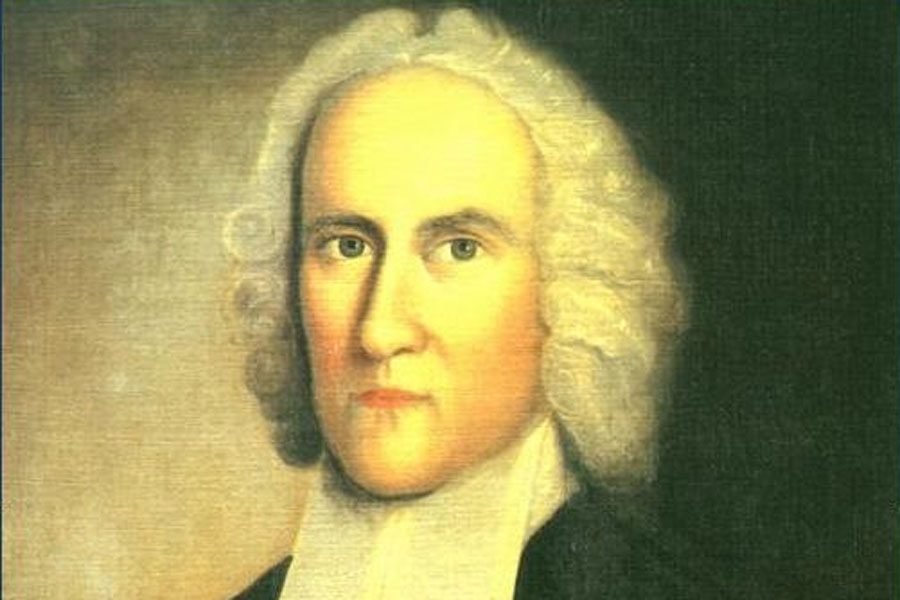
Puritan pastor Jonathan Edwards [Image credit]


Chicago area pastor Joe Thorn brought the song into my field of view with two posts on his blog. The first is an interview with historian and author Dr. Richard Bailey, professor of early American history at Canisius College, and author of Race and Redemption in Puritan New England, (OUP, 2011).

The second is an interview with Propaganda, with a lengthy discussion about the song.

In short order a twitter exchange broke out with Owen Strachan taking the position the song went too far and would possibly cause avoidance of Puritans altogether. Like not enough fiber in ones diet, I suppose. Last week Strachan took to his blog with the same assertions. It was a weak attempt at a critique. If anything Strachan demonstrated with sterling clarity the very mindset challenged by Propaganda.

Next, influential blogger Steve McCoy weighed-in. McCoy is well known for his breadth of musical knowledge and affirmation of the arts. He correctly notes too many people have missed the point of “Precious Puritans.” I could not agree more. Today Steve asks, “Where are the voices of our white, Puritan-loving Southern Baptist leaders, and seminary presidents, and deans, and entity leaders, and prominent pastors? We need your voices on this.” It is a needed, important question.

I do not fit into any of those categories, but I do have a few thoughts.

One, mainly.

Where are the white believers who are seeking responses from African-Americans? Why, when issues of race propel themselves to the fore, do so many white folks think a white opinion is all that is needed? Worse, why do we so readily believe that we automatically provide a correct analysis on any racial issue?

Today, Dr. Anthony Bradley, associate professor of theology and ethics at The King’s College in New York City and research fellow at the Acton Institute for the Study of Religion and Liberty, tackled the issue on the Urban Faith blog. Addressing this crucial item he writes:

Propaganda’s point is that if white evangelicals do not talk about the bones of their heroes they run the risk of doing great harm to people of color. Many of us are beginning to wonder why white evangelicals do not seem to care much about this and seem willing to trade off “honoring” their forefathers for their own comfort over doing what is necessary to build racial solidarity. Some of my liberation theology friends, in the end, would see Strachan’s critique as a dismissal of acknowledging the importance of caring about how the Puritans are presented to African Americans and would constitute a racial microaggression or a micro-invalidation.

There is an ongoing disconnect between most white evangelicals and anything to do with minority culture, especially as it relates to African-American culture. We are so blind and insular that we do not even attempt bridging divides. This is not typically out of hate, but because we know of no such divide.

Were the slaves not freed? Was the Voting Rights Act not passed? Was the Civil Rights Act not passed? Do we not have a president who is African-American? Then, what is the fuss? Such is a typical white line of thinking.

Two of my African-American pastor friends took the time to respond with their thoughts on “Precious Puritans.” James Roberson III is the Missional Communities Pastor at Blueprint Church in Atlanta, GA. Dr. Dwight McKissic is the Senior Pastor of Cornerstone Baptist Church in Arlington, TX.

From James Roberson:

Here are some historical facts that aren’t talked about:
George Whitfield campaigned to have slaves at his orphanage.
Jonathan Edwards owned slaves as well.
The Southern Baptist Convention made negro inferiority a theological conviction amongst its convention.

Did these negative attributes define who these people were? Not in my opinion. But I wonder if the issue was abortion?

What if George Whitfield campaigned for the rights of women to have abortions.
Jonathan Edwards owned abortion clinics.
The Southern Baptist Bonvention made a woman’s right to choose a theological conviction amongst its convention.

I have heard abortion and slavery compared on more than one silly occasion so I figured I would use it here. I think abortion would make us think of these folks very differently. It shows how we value certain issues more than others.

I love what Propaganda said in his album and I’m surprised that he hasn’t received more flack than he has. Prop was right. I think the entirety of the poem speaks to the flaws of all leaders, which is a healthy reminder. But what I think we are unwilling to embrace is that white people are far too often tired of the slavery conversation and want to move on.

I understand that many white people feel like they shouldn’t have to discuss something they weren’t apart of. Yet what we should embrace is that humans were once used like a rake or luggage; nothing but tools. Black people were considered three-fifths of a human and made white people a fortune. A fortune that many whites have gained a considerable amount of privilege from. It would only be healthy to consistently take a look at how we actually thought God was ok with that. It would also be a benefit to our missiology within cities to understand how slavery and Jim Crow have effected the black population to day.

Sin is never easy to talk about. Yet my prayer is that we grow more comfortable with examining, confessing, and praying over the sins of our fathers. It will as James 5:16 promises, bring healing to our nation.

From Dwight McKissic:

(1) It is alright for the pastor to quote Puritans, because anyone quoted could probably be disqualified in someones eyes for various reasons, including Propaganda who is bothered by the pastor quoting Puritans. (2) I applaud and appreciate Propaganda for voicing his viewpoint. Whenever I quote someone that may be objectionable to a large segment of my audience (for whatever reasons), I usually make some kind of disclaimer or qualifying remark to make that person more palatable to my audience. Similar to the song I’ve said, “God sometimes hit straight licks with crooked sticks,” or “The Great Puritan, Jonathan Edwards was a slavemaster–we’ll forgive him for that without him asking. He preached a great sermon, “Sinners in the Hands….”. You get the point.

So, the preacher needs to qualify or “ask permission” to quote the slaveholder, and the rapper must accept the fact that one never receives ministry from a person totally without fault or sin. He alludes to this in his song.

And certainly, I recognize that slaveholding was a sin on par with abortion, murder, and even more egregious than same-sex marriage. But to the slave-holder, it was a blind spot. That is no excuse, but the reason we call it a blind spot is because–they were blind. Both parties need to seek to understand the other on this issue and meet somewhere in the middle.

Below are the lyrics to “Precious Puritans,” and the song itself from YouTube.

If you would allow me second to deal with some in-house issues here…

Pastor, you know it’s hard for me when you quote puritans.
Oh the precious puritans.
Have you not noticed our facial expressions?
One of bewilderment and heart break.
Like, not you too pastor.
You know they were the chaplains on slaves ships, right?
Would you quote Columbus to Cherokees?
Would you quote Cortez to Aztecs?
Even If they theology was good?
It just sings of your blind privilege wouldn’t you agree?
Your precious puritans.

They looked my onyx and bronze skinned forefathers in they face,
Their polytheistic, god-hating face.
Shackled, diseased, imprisoned face.
And taught a gospel that says God had multiple images in mind when he created us in it.
Their fore-destined salvation contains a contentment in the stage for which they were given which is to be owned by your forefathers’ superior image-bearing face.
Says your precious puritans.

And my anger towards this teaching screams of an immature doctrine and a misunderstanding of the gospel.
I should be content in this stage, right? Isn’t that Paul taught?
According to your precious puritans.

Oh, you get it but you don’t get it.
Oh, that we can go back to an America that once were, founded on Christian values.
They don’t build preachers like they used to. Oh, the richness of their revelations.
It must be nice to not have to consider race.
It must be nice to have time to contemplate the stars.
Pastor, Your colorless rhetoric is a cop-out.
You see my skin, and I see yours. And they are beautiful.
Fearfully and wonderfully divinely designed uniqueness.
Shouldn’t we celebrate that rather that act like it ain’t there?
I get it. Your puritans got it. But,

How come the things the Holy Spirit showed them in the valley of vision didn’t compel them to knock on they neighbors door and say, “You can’t own people!”?
Your precious puritans were not perfect.
You romanticize them as if they were inerrant. As if the skeletons in they closet was pardoned due to the they hard work and tobacco growth.
As if abolitionists weren’t racist and just pro-union.
As if God only spoke to white boys with epic beards.
You know Jesus didn’t really look like them paintings. That was just Michaelangelo’s boyfriend.
Your precious puritans.

They got it but they didn’t get it.
There’s not one generation of believers that figured out the marriage between proper doctrine and action.
Don’t pedestal these people, your precious puritans partners purchased people.
Why would you quote them?
Step away.

Think of the congregation that quotes you. Are you inerrant?
Trust me I know the feeling.
It’s the same feeling I get when people quote me.
Like, if you only knew!
I get it. But I don’t get it.
Ask my wife.
And, it bothers me when you quote puritans, if I’m honest, for the same reason it bothers me when people quote me–they precious propaganda.
So, I guess it’s true.
God really does use crooked sticks to make straight lines.
Just like your precious puritans.

The drone war and the kingdom of God

A week or so ago results from a recent in-depth investigative report on America’s drone war were released. Despite horrid reviews for President Obama’s involvement in it, several “mainstream” news outlets reported the findings.

A CNN report entitled Drone strikes kill, maim and traumatize too many civilians, U.S. study says states

The report accuses Washington of misrepresenting drone strikes as “a surgically precise and effective tool that makes the U.S. safer,” saying that in reality, “there is significant evidence that U.S. drone strikes have injured and killed civilians.”

It also casts doubts on Washington’s claims that drone strikes produce zero to few civilian casualties and alleges that the United States makes “efforts to shield the drone program from democratic accountability.”

When I wrote about drones in September (“One former British soldier talks about drone warfare”) a linked Washington Post story revealed 92 U.S. drone attacks from January 2011-June 2012 resulted in only five Al Queda leaders being killed. That is 87 misses out of 92 tries.

“Misses” being qualified by saying many people have been killed or injured, just not so much the actual enemy. The surgical precision about which our government likes to brag is akin to using a chainsaw to take out an appendix. The scars being about equal.

In the second of his two broadsides on why he will not vote for either major party candidate, Atlantic staff writer, Conor Friedersdorf, notes this about drone warfare:

Obama terrorizes innocent Pakistanis on an almost daily basis. The drone war he is waging in North Waziristan isn’t “precise” or “surgical” as he would have Americans believe. It kills hundreds of innocents, including children. And for thousands of more innocents who live in the targeted communities, the drone war makes their lives into a nightmare worthy of dystopian novels.

Forgive me, but the word “terrorizes” is tellingly ironic.

Mitt Romney, the Republican nominee, can be expected to dial up the hubris meter during the election approach. He may even hit 11. To fire up his base he must demonstrate he is even tougher on terrorism than Obama, which, following the most recent 9/11, should not be difficult. But Romney has offered no indication he would scale back the targeted killing program Predators provides.

Just yesterday, October 1, 2012, a Washington, DC, CBC affiliate reported drones will soon be able to seek and destroy on the battlefield without human input.

Ronald Arkin, a professor at the Georgia Institute of Technology, believes that drones will soon be able to kill enemies on their own independently.

“It is not my belief that an unmanned system will be able to be perfectly ethical in the battlefield, but I am convinced that they can perform more ethically than human soldiers are capable of,” Arkin told AFP.

Arkin added that robotic weapons should be designed as “ethical” warriors and that these type of robots could wage war in a more “humane” way.

And we thought Skynet was so far in the future.

drone firing hellfire missiles

A Predator drone fires two Hellfire missiles


Dutifully the military asserts humans will remain involved in drone manipulation, that they will not be autonomous. And we are expected to to believe the military without question. Because the military never lies and the government never participates in cover-ups.

Right.

This post, however, is not primarily concerned with the politics involved with the drone war. My concern is the relationship of its effects to the kingdom of God.

We have been told that drone warfare provides safety to American troops and provides for less collateral damage than other types bombing. Drones are able to provide visuals clearer than a set of latitude and longitude coordinates, I suppose. A Hellfire missile launched from a drone should cause fewer casualties than a Tomahawk fired from a ship. Cleaner shots, better identification, direct hits. All of this adds up to more dead terrorists and a better protected homeland.

Except it doesn’t.

The Bureau of Investigative Journalism in London, reports,

from June 2004 through mid-September 2012, available data indicate that drone strikes killed 2,562-3,325 people in Pakistan, of whom 474-881 were civilians, including 176 children. TBIJ reports that these strikes also injured an additional 1,228-1,362 individuals. Where media accounts do report civilian casualties, rarely is any information provided about the victims or the communities they leave behind. This report includes the harrowing narratives of many survivors, witnesses, and family members who provided evidence of civilian injuries and deaths in drone strikes to our research team. It also presents detailed accounts of three separate strikes, for which there is evidence of civilian deaths and injuries, including a March 2011 strike on a meeting of tribal elders that killed some 40 individuals.

Also noted in the report is whenever men of fighting age are killed, even if they are completely unknown, and even if their activity is undefined, they are classified as combatants. That is, if a Hellfire missile lands in the middle of 20 sixteen to eighteen year olds playing soccer, they are classified as enemy combatants. Why? Because we killed them in the course of prosecuting a war. Not because they have been or are in a training camp or have plans to join Al Queda.

A quick review: How do we know they were enemy combatants? Because the government said so. How does the government know they were enemy combatants? Because we killed them.

They might as well be since, as the NYT reports, “some in the Obama administration joke that when the CIA sees ‘three guys doing jumping jacks,’ they think it is a terrorist training camp.” Very funny.

The drone war in Asia and the Middle East has become the “War on Terror” equivalent of the bombing of Laos and Cambodia during the Vietnam War.

As if this were not enough our drone strategy includes the very behaviors for which we would condemn terrorists: double strikes.

Drones hover twenty-four hours a day over communities in northwest Pakistan, striking homes, vehicles, and public spaces without warning. Their presence terrorizes men, women, and children, giving rise to anxiety and psychological trauma among civilian communities. Those living under drones have to face the constant worry that a deadly strike may be fired at any moment, and the knowledge that they are powerless to protect themselves. These fears have affected behavior. The US practice of striking one area multiple times, and evidence that it has killed rescuers, makes both community members and humanitarian workers afraid or unwilling to assist injured victims. Some community members shy away from gathering in groups, including important tribal dispute-resolution bodies, out of fear that they may attract the attention of drone operators. Some parents choose to keep their children home, and children injured or traumatized by strikes have dropped out of school. Waziris told our researchers that the strikes have undermined cultural and religious practices related to burial, and made family members afraid to attend funerals. In addition, families who lost loved ones or their homes in drone strikes now struggle to support themselves. Emphasis mine

One report has a drone striking a funeral where mourners had gathered to remember the victims of a previous drone strike.

Additionally the

FATA [Federally Administered Tribal Area] suffers from one of highest poverty rates in the world. The per capita income is approximately US$250 per year, with 60 percent of the population living below the national poverty line. Undeveloped infrastructure and low per capita public development expenditure have resulted in an overall literacy rate of only 17 percent. Most of the population depends on subsistence agriculture, manual labor, small-scale local business, or remittances from relatives working abroad or in other regions of Pakistan for survival. In North Waziristan, chromite mining operations also provide limited contract jobs near the Afghan border. There are only 41 hospitals in the region, and an estimated one doctor for every 6,762 residents.

Who lives there?

FATA is inhabited almost entirely by Pashtuns, a group of tribes that first settled in the area more than 1,000 years ago. The various Pashtun tribes live not only in FATA, but also in large parts of south and east Afghanistan. Altogether, there are some 25 million Pashtuns worldwide, making it one of the largest tribal groups in the world.

Who are the Pashtuns? They are virtually all Muslims who span the border between Afghanistan and northwestern Pakistan. This means they are not followers of Christ. This means they are being bombed into a Christless eternity.

As a follower of Christ it disturbs me to know my government is randomly, regularly, inefficiently, deceptively, and erroneously killing people with whom we are not at war; targeting first responders and mourners for missile strikes; creating an ongoing situation where bearers of the gospel cannot enter with eternal good news. Why do we who give money for missions, pray for the fulfillment of the Great Commission, long for the day when some from every nation tribe and tongue sing praises to our great God seem so content to have one of those tribes bombed into oblivion? Have we bought so thoroughly into a kingdom of this world it has priority over the kingdom of God? Are we so fearful of what might happen to us we are willing to overlook anything that is happening to people around the world?

My friend Emily said today in a Facebook conversation, “I think we should do our best not to have these conversations in a theoretical moral and ethical sphere that is separate from the Christian narrative. The crucifixion and resurrection of Christ should be the basis for thinking through all of these things, IMHO.” If we are to call ourselves “followers of the Way,” then, I believe, it must thus be.

You can read or download the entire report pdf from Stanford-NYU here.