Category Archives: Featured

What is Maundy Thursday?

Many people not in Catholicism or familiar with may ask today, “What is Maundy Thursday?” Maundy Thursday is the day before Good Friday. That is the short answer.

The longer answer to “What is Maundy Thursday” is:

Maundy Thursday (also known as Holy Thursday, Covenant Thursday, Great and Holy Thursday, Sheer Thursday and Thursday of Mysteries) is the Christian feast, or holy day, falling on the Thursday before Easter. It commemorates the Maundy and Last Supper of Jesus Christ with the Apostles as described in the Canonical gospels. It is the fifth day of Holy Week, and is preceded by Spy Wednesday and followed by Good Friday.

Another explanation of Maundy Thursday:

This day, Maundy Thursday (also “Holy Thursday” or “Shire Thursday”) commemorates Christ’s Last Supper and the initiation of the Eucharist [Lord’s Supper or Communion]. Its name of “Maundy” comes from the Latin word mandatum, meaning “command.” This stems from Christ’s words in John 13:34, “A new commandment I give unto you.” It is the first of the three days known as the “Triduum,” and after the Vigil tonight, and until the Vigil of Easter, a more profoundly somber attitude prevails (most especially during the hours between Noon and 3:00 PM on Good Friday). Raucous amusements should be set aside.

What struck me from this last paragraph was the sentence “Raucous amusements should be set aside.”


Passion Week is a week overlooked by many in favor of Easter. While there is no doubt the resurrection trumps the last supper for eternal value, that supper, if it teaches us anything, teaches us the power of remembrance.

Today is Maundy Thursday, a day of remembrance. Perhaps we should set aside frivolity for a time, reflect on what the last supper meant to Christ, to His disciples and to us. This weekend again brings to our attention the victory of Christ over the grave. He secured the possibility of forgiveness at the cross and the reality of eternal life at the resurrection.

We also do well to reflect on John 13:34, “A new commandment I give to you, that you love another. Just as I have loved you, you should love one another.” How well is that going for us? Good Friday is tomorrow, the grave is Saturday, and Easter is Sunday. Remember. And love.

Blessings.

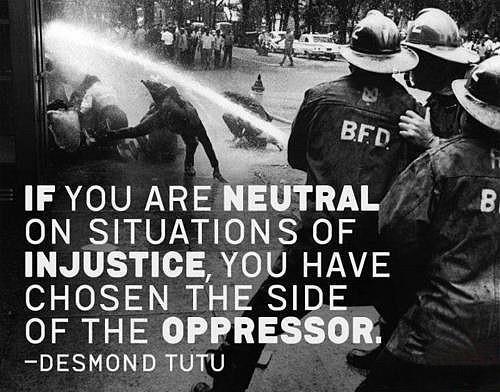
The priority of biblical justice

Woe to you, scribes and Pharisees, hypocrites! You pay a tenth of mint, dill and cumin, yet you have neglected the more important matters of the law–justice, mercy, and faith. These things you should have done without neglecting the others. (Matthew 23:23, HCSB)

A friendly exchange over the weekend addressed whether abortion is “the human rights issue of our day.” It will be obvious to most that I believe abortion to be a human rights issue. My challenge concerned the use of the word the. Can we rightly hold the position that abortion is the human rights issue of our day? I contend abortion is an incredible injustice carried out not only in the United States, but worldwide. But I am not persuaded it is any greater moral evil than human trafficking, slavery in its various forms, governmental “disappearing” of those who resist injustice, or other types of oppression.

Since 1973 many Christians have elevated one injustice, abortion, to a level above all others. Emphasizing the “right-to-life” for unborn babies is important, but we have understood it less within a framework of biblical justice than as a constitutional right. As many Christians cannot articulate a fully biblical view of justice we have watched abortion become a political rallying cry for our two party system of mutual antagonism. Failure to declare the biblical breadth of God’s justice allows “woman’s right to privacy”–which should be discarded as a non-sequitur–to guide the conversation.
injustice engraved

Worse, the dearth of a justice framework has allowed some to reduce biblical justice issues as “social justice” or “economic justice” to mere politics. Both fit within the Bible’s call for justice, but neither sociology nor economy completely wrap their arms around biblical justice.

Calls to help the poor and disadvantaged are sometimes derided as left-wing distractions from the church’s primary role of evangelism. However, even a cursory search of scriptures reveals more than 130 uses of justice. It is used of God’s character, as a basis for asking for His intervention, as commands to His children, as expectations and examples. Justice is used in the context of helping the poor, taking care of business affairs, how orphans are treated, and judgments “in the gate,” ie, legal decisions. Consider this sampling:

Psalm 106:3-“Blessed are they who observe justice, who do righteousness at all times.”
Psalm 112:5– “It is well with the man who deals generously and lends; who conducts his affairs with justice.”
Proverbs 21:3-“To do righteousness and justice is more acceptable to the Lord than sacrifice.”
Proverbs 21:15-“When justice is done, it is a joy to the righteous but terror to evildoers.”
Isaiah 1:17-“Learn to do good; seek justice, correct oppression; bring justice to the fatherless, plead the widow’s cause.”
Isaiah 59:14, 15-“Justice is turned back, and righteousness stands far away; for truth has stumbled in the public squares, and uprightness cannot enter. Truth is lacking and he who departs from evil makes himself a prey. The Lord saw it, and it displeased him, that there was no justice.”
Hosea 12:6-“So you, by the help of your God, return, hold fast to love and justice, and wait continually for your God.”
Amos 5:24-“But let justice roll down like waters, and righteousness like an ever-flowing stream.”
Micah 6:8-“He has told you, O man, what is good; and what does the Lord require of you but to do justice, and to love kindness, and to walk humbly with your God?”
Hebrews 11:32, 33-“And what more shall I say? For time would fail me to tell of Gideon, Barak, Samson, Jephthah, of David and Samuel and the prophets–who…enforced justice,” (all ESV)

In scripture justice does not supplant the character of God, it flows from it. Calls for justice do not obscure the gospel, they bear witness to it. If justice is a left-wing, commie pinko plot the only alternative is to call the Bible a left-wing, commie pinko book.

It is to the discredit of American Christians that we have so readily and uncritically embraced our political system. We join the rancor of the powerful and gorge ourselves on the rewards of an earthly throne. We are reticent to “speak truth to power” because our team may be back in power after the next election. We have swallowed worldly systems hook, line, sinker, rod, reel and boat. Thus, care for the poor, to use a single example, with its clear biblical imperative, is bounced about as a Democrat-Republican debate.

God forbid.


Surely the prophet Nathan scratches his head at what passes for prophetic these days. Preaching against abortion to a TV audience is not prophetic. Mother Teresa speaking against abortion before the president of the United States is.

The Holy Spirit is yet quenched if we create a ranking system for justice based merely on what tugs on our heart strings, rather than what offends God’s character. And it is this–offending God’s character–that reveals injustice.

A few months ago I mused on a broad expression of injustice:

Injustice is the deprivation of basic human rights, dignity or freedoms by those in authority through oppressive or unfair laws, customs or mores that allow the physical, sexual, or economic exploitation of men, women or children who lack power, position or voice, affecting individuals and groups, whether unique or systemic, hidden or known, all of which grows from contempt toward or ignorance of God’s standard of righteousness.

If this is a fair enough description, what follows is what it would mean to “do justice” or “enforce justice.”

Doing justice is using all righteous means to restore basic human rights, dignity and freedom to men, women or children everywhere, becoming their voice to address, rebuke or replace those abusing power so God’s standard of righteousness is recognized and reflected as much as it is possible within the fallen systems of this world until Christ brings the kingdom of God in its fulness.

To “do” or “enforce” justice is a clear call to God’s people. The extensive Old Testament groundwork is affirmed in the New. Where power is abused, and when the established authority, ie, government, is either complicit or ignorant, justice must be pursued.

We are not given the option to pick and choose between preferable justice issues. Doing justice is shining light in the darkness. It is being a city on a hill. It is the kingdom of God displayed on earth. And only a full framework of biblical justice prepares us to do justice when and where the righteousness of God should most be on display.

Some of my other articles on justice and injustice:
Our Comfortable Injustice-Part 1 and Part 2.
The gospel to the poor
When injustice is enough justice: Parsing theology into nothingness

Three reasons we are eating organic food

Like most people raised in the suburbs of a metropolitan area, nearly all of our food growing up was a product of the industrialized food system. Neither my family’s nor my wife’s meals were dominated by McDonald’s or Burger King. But that really does not matter since most food in grocery stores is processed by the same companies in the same way.

Documentaries like Fresh and books by Joel Salatin convinced me we needed to begin the shift to organic food (although we still currently enjoy lots of processed sweets and desserts).

I’m using the word “organic” not in the same way the USDA uses it, which can be sketchy. In my use consider locally grown, as little chemical fertilizer as possible, as little insecticide as possible, as little transport as possible, as little processing as possible. Give me eggs from chickens walking around the pasture, beef from grass-fed cows rather than corn and carrion fed cows, pork from oinkers in the field rather than from a cage shot-up with anti-biotics from birth.

The first time we had organic chicken from a local butcher, Sonya had prepared a dish we had frequently eaten. After one bite of the chicken we are all looking at each other asking, “If this is chicken, what in the world have we been eating?”

It is the same with farm direct, organic eggs. First you notice how much harder the shell is than a store-bought, industrialized egg. Then a bright orange yolk is staring up at you instead of a pale-yellow something and you wonder, “If this is a real egg, what are those other things and what has been laying them?” You may not want to know.

So we are shifting toward organic. Here are three reasons to consider it.


(Compare the above “free range sow” to the sow in the video below.)

1. Organic food tastes better and is better for you.
Undertand the process of industrializing the food chain requires many rounds of anti-biotics to prevent diseases in the confined spaces. The medicine, stress, and often toxic-environment all contribute to the shrink-wrapped package cooly displayed at the local grocery store.

There are reasons E-coli originates in the industrial food system.

Then there is the taste. Unless your taste buds are on a permanent vacation the taste difference will be immediate. It will also be for the better.

2. Buying local supports local, small farms.
If the food tasted exactly the same–and it does not–buying local is still a better option, when the option exists. CSAs and farmer’s markets remain great locations to get locally grown produce and meat. It also allows you to meet the local farmer and possibly even visit the farm.

The industrialized food system has no interest at all in your health, unless your loss of it can be directly attributable to their product. As with all things capitalist the bottom line is the bottom line. Profit margins will trump health concerns every time. Agribusiness needs my dollars a lot less than Shady Farms.

3. Choosing organic is a means of honoring God’s covenant with the earth.
After the flood of Noah God promised never to destroy the earth and its inhabitants by water. Often overlooked is that God’s covenant is not only with humanity, but with the animals as well.

Then God said to Noah and his sons with him, “Understand that I am confirming My covenant with you and your descendants after you, and with every living creature that is with you–birds, livestock and all the wildlife of the earth that are with you–all the animals of the earth that came out of the ark. (Genesis 9:8-10, HCSB)

The verses immediately preceding affirm these animals are provided for food.

Proverbs says “The righteous care for the needs of their animals” (12:10, NIV). This does not only refer to dogs and cats (ie, pets) since pets were not the order of the Old Testament day. The reference is to productive animals like animals used in farming. If a mistreated dog is offensive to you, then mistreated pigs, chickens and cows should be offensive as well. Compassion should exist even if the heart strings are not strummed in the same way.

The following video shows the industrial food system as it works in one Asian country eventually reaching the fast food chains. The sublimity of the soundtrack is a vivid contrast to the processing taking place on screen.

Foodies, share and share some more through my social media buttons! (HT: Kottke)

Support Kingdom in the Midst when you purchase from Amazon. You get the same low price and I get a small commission.


The Backyard Homestead is on my wish list, hint, hint…

Depression: When the black dog howls

A version of this was first posted as a Facebook note in 2009. Nothing in this post should be construed as medical or medicinal advice.

The term “black dog” was used by Winston Churchill to describe depression and, though it predates the British prime minister, is the sum total of familiarity most seem have with it. Regardless of who coined it, “black dog” is as apt a descriptor of the frustrating experience of depression as there is. Ask anyone who deals with it regularly.

At this point in my life I cannot even remember when I started dealing with depressive episodes. (I do not use the phrase “suffering from depression”; it just does not seem to fit me.) I’m pretty certain that it has not always been a part of my life, though it may have been unrecognized earlier on. For the last few years, however, there are three or four times each year that it hits.

It is funny when you start talking about being depressed and experience the reactions of those around. The responses can range from the spiritual (“Pray more.”), to the physical (“Are you getting outside enough?”) to the ludicrous (“Just pull out of it.”)

One can no more “just pull out of” a depressive episode than they can “just pull” the moon out of its orbit.

This note is the result of my own observations and experiences over the last couple of years.


1. No one wants to be depressed. Nobody would choose it. It is not to get attention. There are easier and far more fun ways of getting attention.

2. Anything or nothing can trigger it. It can be turmoil on the job. Or not. It can be the kids growing older. Or not. It can be you growing older. Or not. It can be feeling inadequate on the job. Or not. All of the above, or none of it. Or anything else that you can put your finger on. It just shows up howling its blooming head off.

3. Sometimes you can be in it before you realize it. This is especially true with me. Sonya usually recognizes it before I do. I usually do not realize how depressed I am until I do not know if I can work another day, and that is even when things are good.

4. There are no easy steps out. Sometimes you just cannot tell if or when it will go away. I’ve awakened in the morning feeling pretty good only to have it return in half an hour leading to an entire day of “down” feelings.

5. Things may not be the same for every person with depression. It might be easier to relate to people in depressive episodes if they were all the same, but they are not.

What not to say to a depressed and why:

1. “Pray.” (Or these variants, “Pray more,” “Are you praying enough?” “Have you prayed about it?”) Depression is always a matter of prayer. If prayer was the solution there would not be any depressed Christians, since we all pray about it. Yes, I wish that God would always take it away for just the asking, but since Moses, Elijah and Paul dealt with it periodically, I don’t see that God will take it away just because He’s asked. It does bear remembering that prayer can actually make you more depressed since the tendency is to focus on the depression. This can be a tricky proposition.

2. “Cheer up.” Depression by nature is an emotional “out of whackedness.” A depressed person cannot simply get happy because they decide to do so any more than you can get from Nashville to Los Angeles by clicking your heels together. Although depression might be caused by various factors, in the end it is a feeling of sadness that usually seems impenetrable and, while you are in the midst of it, permanent. I’ve never been suicidal (or homicidal) during a depression, but I understand how some people can get that way. Just imagine the most sad you have ever been and then being convinced that it will never go away. The feeling of potential “lifelong sadness” is more than some can bear.

3. “Just trust God.” To do what, exactly? I do trust God and try to trust Him with every aspect of my life and depression still strikes. I trust Him to see me through it each time, but it does not make it go away immediately, though it always does with time.

4. “Don’t isolate yourself.” This one is actually true and helpful, but sometimes really hard to do. When depressed, there are few if any feelings of desire to socialize with ten or with one. Of course this exacerbates the situation but remains an issue. Depression can result from and cause a desire for isolation. It is not so much not wanting to be a wet blanket as it is not wanting to have to expend the emotional energy to carry on conversation. Any expenditure of emotion worsens the lack of emotional balance symptomatic of the depression itself. I have experienced great times of fun and laughter while depressed, then turned away and felt just as sad or “blue” as before. Laughter may be the best medicine, but it is not always the cure.

5. “Get some meds.” Some people are offended by the idea, since it is sometimes mentioned flippantly. I have not yet gotten a prescription, but I’m considering it. (Is it the purple pill, the blue pill or the hexagonal pill?) The thing that I am most working through is whether medication is necessary for something that happens three or four times a year.

What do to for a friend who is depressed:

1. If you deal with it, be open about it. Depression may be a black dog, but it should not be a dirty secret. Some men view it as weakness and thus it retains a hold on them. Bite the dog; don’t let it continue to gnaw on you. Be sensitive when you recognize that a friend is depressed, and be open when that friend is just realizing it for themselves. Sometimes depression makes you feel crazy; hearing from a friend who struggles through it and retains most of their sanity is an encouragement for others not to give up.

2. Don’t think that going to a ball game or a movie is “just what they need.” It may or may not be; depression is a tricky thing and when I am depressed, I often do not know what in the world I want to do. I do find that being in the company of another person, whether Sonya or a friend, who does not demand that I talk or interact can be helpful. Just hanging out. It takes a lot of energy to carry on conversation or “just be yourself” when there is no inner drive at all to do anything.

And on this note, don’t give a book, website, sermon, podcast, or other thing you think “might help.” The person typically feels broken already. Offers to “fix them” can serve to reinforce their feelings of inadequacy. Be friend enough to long time care without immediate repair.

3. Do pray because often your depressed friend finds little comfort in praying themselves. In addition prayer while depressed can be tricky. It is very easy for prayer itself to become depressing when depressed. I am not sure why.

4. Don’t judge the whys and wherefores, especially if you’ve never dealt with it. It’s very, very hard to explain; heck, it’s very, very hard to deal with emotionally, physically and spiritually. Depression may or not be spiritual and if it is not, then it is very frustrating to be given a simplistic answer revolving around a book, dvd or sermon series.

5. If the person begins to talk suicide or act suicidal to any degree, intervene; obviously, sadly some depressive episodes end in suicide. I knew a fellow many years ago who seemed for all the world to be ok. He woke up one morning to leave for vacation and saw that it was raining. Despondent over that particular situation, he went back into his house and killed himself. It was almost unbelievable to hear. At the time I thought, “How in the world…”

When writing this post originally I received a great amount of encouragement. I was steered to a natural product called St. John’s Wort available at almost any grocery store or drug store. It has proven to be very effective for me at both preventing and helping lift depression. I now take it only as needed which is infrequently.

All-in-all I see depression a result of the fall, not a part of God’s creation. As such Jesus died so that we might have ultimate deliverance from it. That may or may not happen in this life for me, but it gives me yet another reason to long for That Day.

Fear not

Several years ago I was privileged to hear former professor Eugen Schoenfeld, a Holocaust survivor, address a north Atlanta audience. In the midst of telling a portion of his story he made a specific statement that stuck with me. Here is a paraphrase:

Always watch what your government does in times of fear. Hitler rose to power during a time of national calamity and fear in Germany: fear of the economy, fear of the impact of Versailles. In times of fear it is easy for the government to take civil liberties because we readily give them up.

Schoenfeld may have been referring to the Patriot Act, but I do not remember specifically. It would fit the bill.

The aftermath of 9/11 brought a period of uncertainty, vengefulness and fear. Our national disposition was one of disbelief. We expected a response and were rewarded.


In order to ensure 9/11 did not become the progenitor of many such events, the Department of Homeland Security was formed. Even though we should have known better, we gave away certain rights guaranteed us by the Constitution. If we did not give them away, we did little more than pout as they were take away from us. Warrantless wiretaps, secret courts, and expansive government powers have re-defined “the American Experience.” In some ways we have more commonality with banana republics of the 1970s than with the American Revolution of the 1770s.

None of this happened because we evaluated the ramifications. All of this happened because of fear. We gave up liberties enjoyed by generations of Americans before us because we feared for ourselves and the generations to follow.

If you keep up with the news at all you know that we have consistently seen the Fourth Amendment of the Constitution eroded until almost nothing remains. “Probable cause” has become the humorless punchline to an inside joke of the police state. In 2013 America it’s closer to 1984 than ever.

In addition to the governmental overreach accelerated in the last decade, we have witnessed–from a New Testament perpective–a moral shift perhaps not seen since the 1960s. Gay marriage, which was a fringe issue a decade ago, now has the support of almost all Democrats and a new crop of leading Republicans. Within the year it could be legalized in all 50 states. Homosexual behavior, once was mentioned in hushed tones, if at all, is now the theme of movies, TV shows, and sympathetic news stories. At the current pace there will soon be no closet from which to “come out.”

The Democratic National Convention cheered abortion like a drunken pep rally might cheer another keg and barely voted in the most generic mention of God in the platform. The Republicans mention God, but could not define Him in a month of Sundays. Their most openly religious presidential candidate openly advocated for pre-emptive assassinations based on an Iranian person’s occupation.

Our concept of religious liberty, indeed the concept our country has held since the first feet left the boat, has been reinterpreted. Religious thought is as widely supported as ever…as long as it only affects your personal life. Try to bring it into the public square and voila it is branded “hate speech.”

These are times of extreme change, and nearly unbelievable societal morphing. The result seems to be a lot of fear and worry among Christ followers.

It is for times like these multiple scriptures were written. The Old Testament addresses fearful times: “Do not fear, for I am with you; do not be afraid, for I am your God. I will strengthen you; I will help you; I will hold on to you with My righteous right hand.” Isaiah 41:10

As does Jesus: “Do not be afraid, little flock, because your Father delights to give you the kingdom.” Luke 12:32

“Don’t fear those who kill the body but are not able to kill the soul; rather, fear Him who is able to destroy both soul and body in hell.” Matthew 10:28

As does Paul: “For God has not given us a spirit of fearfulness, but one of power, love and sound judgment.” 2 Timothy 1:7

As did an angel: “‘Don’t be afraid, Paul. You must stand before Caesar.'” Acts 27:24 (Note the governmental aspect.)

As did Peter: “But even if you should suffer for righteousness, you are blessed. Do not fear what they fear or be disturbed, but honor the Messiah as Lord in your hearts. Always be ready to give a defense to anyone who asks you for a reason for the hope that is in you.” 1 Peter 3:14, 15

So, in the familiar refrain of the King James Version: “fear not.”

Fear not is most applicable when fear is most actual.

Fear not means little when there is little to fear.

Fear not is most personal when fear is most probable.

Even though there may be much we can fear, we are still commanded to have no fear. I mean, really, what is the worst thing that can happen? Total economic and societal collapse ending in death. For followers of Christ death is a doorway to the presence of our savior, so what is to fear?

What might be worse? Jail? Torture? Suffering? All–ALL–of these things have been suffered by our brothers and sisters in Christ since He ascended to heaven. Not only that, for centuries Christians have learned to rejoice in that suffering.

The worst thing that could happen to me in all the universe would be something God could do to me. And the worst thing God can ever do to me, because of Jesus Christ, is show me mercy. An Paul asked:

Who can separate us from the love of Christ? Can affliction or anguish or persecution or famine or nakedness or danger or sword? As it is written: Because of You we are being put to death all day long; we are counted as sheep to be slaughtered. No, in all these things we are more than victorious through Him who loved us. For I am persuaded that not even death or life, angels or rulers, things present or things to come, hostile powers, height or depth, or any other created thing will have the power to separate us from the love of God that is in Christ Jesus our Lord! [Romans 8:35-39]

Who knows? We might even begin to live like the church again rather than cogs in political machinery.

All scripture from the Holman Christian Standard Bible.

I am going on a mission to Nicaragua. Can you help?

God has provided me with an awesome opportunity. He has opened a door for me to go on a mission trip this summer with the Highlands Mission Cooperative to Los Loma Del Nance, Nicaragua. My trip will be this summer, led by my good friend Dan Brothers.

Nicaragua

Almost never a shortage of kids. [Image]

One of the things my team will be doing is installing bio sand water filters. The village of Los Loma Del Nance currently receives clean water for 3 hours every 8 days. All of their drinking water must be stored in open containers. The bio sand filter will filter out particles, sediment, and bacteria and allow them to use alternate sources of water for drinking. Given that the number one health problem in the world is the lack of access to clean drinking water, this is a wonderful opportunity to show these people Jesus’ love.

In addition to the filter project we will be hosting Backyard Bible Clubs for the children in the community. We will end our week with a community gathering on Saturday with a time of fellowship, worship and sharing. There may also be an opportunity for me to participate in ministry training with some local leaders.

No less a blessing is this mission opportunity will be with my youngest daughter, Abigail.

I have two needs related to this trip. First, I need prayer. Would you consider praying for me to have faith in God for power, health, effectiveness and that I would be sensitive to any cultural challenges I might face? Pray that God not only moves in the lives of the Nicaraguan people (I would love to see some come to faith in Christ), but in my life as well as I fully expect God to change me during this trip.

Second, I am looking for financial supporters. Would you pray about being a financial partner with me? Travel costs are not cheap, and having friends (or strangers) help bear this burden will be crucial to my participation. However you decide to support me, whether financially, prayerfully, or both, I will be thankful. I will be publishing a specific prayer list as the mission date approaches.

The total cost for this trip (round trip from Nashville) is $2,200 which includes airfare, visa, immunizations, and accommodations.

I will need the money in these stages:

$250 before March 15th
$876 before May 1st
$174 before June 1
$900 before June 15th

Donations are 100% tax-deductible through Highlands Mission Cooperative. To donate online, please go to the Highlands Mission Cooperative donation page then follow the directions. Make sure to indicate “Marty Duren” in the “special instructions to seller” box during the payment process.

If you need to mail a check, make payable and mail to:

BIMA
P. O. Box 1155
Flowery Branch, GA 30542
ATTN: Highland Mission, Marty Duren

You will be issued a receipt from BIMA at the year’s end. Any amount received above $2,200 will either help cover unforeseen expenses or be given to support another team member.

Thank you so much for taking the time to read this letter. Even if you cannot participate in financial support, I would really appreciate your prayers for me and our team.

The Senior Adult Dilemma, Part 2

In my last post I explored a few issues involved with what I termed “The Senior Adult Dilemma.” I encourage you to read it first for context.

This response came from a friend via Facebook:

Consider that the Boomer generation was perhaps the first to see that government leaders often lied to them. The Sixties were radically different than anything this country had faced. Authority figures, music, sexual revolution, etc., etc. EVERYTHING changed rapidly.

I’ve read stats saying 1 out of 4 were sexually abused and we know that kind of abuse is often by someone in a place of authority in that person’s life. They were drafted into the first war (Vietnam) that was so unpopular that when coming home they were often met at airports and pelted with tomatoes. Even today one can walk in a VFW event and immediately tell the Vietnam vets. This generation was among the first to come out of college with massive student loans.

These folk (Boomers) have been told that they have spent the nation into oblivion, are guilted over abortion (the Supreme Court chief justices who wrote majority opinions were appt. by Republican Presidents Eisenhower and Nixon. Check out Republican Supreme Court appointees and their decisions. Not good. In fact, Ike said his appointment of Earl Warren was the “damnedest fool thing I ever did”.), and many are reduced to working two or three part time jobs to support themselves. One outlives early retirement. They have only know SBC live to be in turmoil their entire ministry life.

My point is that there is a lot of latent anger in almost every congregation among the seniors.

This friend spent more than a decade as a traveling evangelist, and has been nearly two decades in denominational work.

Two other friends, one via Twitter and another offline, also mentioned existing or potential issues with Baby Boomers in the Senior Adult Dilemma. As the oldest Boomers are just hitting retirement age, I think it remains to be seen. I hope, rather, to see Boomers go into their senior years pressing forward without looking back. In point of fact, I have been eyewitness to the Dilemma since before the oldest of the Boomers were out of their 40s.

While Boomers may fall to the same temptations current and past seniors have faced, this seems to be beyond a mere Boomer issue. Unless these issues are addressed, Boomers, Busters, Millennials and future generations may fall as well.

I should note I’m hardly an expert. I have been blessed with some fantastic relationships with senior adults. We loved, honored and respected each other, often in the midst of disagreements about “worship styles” or church direction. Then there were those who did not fit in that group ;^)

What I offer are thoughts as my old age grows larger in the windshield. Now let us consider a few possible solutions:

1. Seniors often feel left out, but need more than Branson, Missouri trips to help them continue to grow in Christ.
Which came first the chicken or the egg? Do churches lower discipleship expectations on seniors to little more than a travel club, or do seniors fail to respond to discipleship efforts requiring more than a travel club?

Another friend who has been in ministry for many years wrote this:

A friend of mine, a pastor and missionary of many decades reached his 70’s and told me this, “I have more time to give, more knowledge to share and a hearts desire to minister but no one wants and old man. If you are over 50-55 try and to get a position in a church, very difficult. I know there are older people who are like those in your article but there are many more who love God, love their church and desire to be in ministry but many times the church has turned them away or formed a “senior saints” group that basically takes trips for pleasure. The older generation needs to be challenged to press on just as every other generation in the church.

2. Aging entrenches routine as a form of comfort and certainty, but church leaders often miss this.
A former co-laborer on a staff once made this observation about his widowed, senior adult mother-in-law: “If a light bulb goes out at my mother-in-law’s house, she will call us every day until I can get over to replace it. Even if it is in a room or closet she rarely uses. She seems fixated on it until I can get it done.”

As we get older and more physically restricted from “adventures,” routines become places of comfort. If this is true of young people–and to some degree it is true of us all–with some it gets much worse with aging. Predictability becomes the groove through which life is comfortably lived. Like residents of The Shire many eschew the unknown and enjoy the serenity of sameness.

But, like nostalgia, routine is not a spiritual gift. Arguably, the desire for a “whole life routine” can work against spiritual growth: it is hard to invite God to break into your routine if you do not want God to break into your routine. Or fail to believe it is something He would even do.

When church leaders misunderstand the routine they multiply problems for themselves. You may not be able to change it; but you do well to take it into consideration in decision making.

3. Most people who come to Christ do so in their younger years and seniors should participate in their church’s efforts to reach them.
Every study I have ever known indicates most people who come to Christ do so while young. Youth pastors used to say the majority are saved before the age of 18. Barna says it is a “substantial majority” (2004) who do so.

If this is the case why would churches in their evangelistic attempts not focus a lot of energy in reaching those under 18? Further, why would senior adults not rejoice to be a part of leading young people to Christ?

One of the great blessings of my ministry was Mrs. Jessie Lancaster. Mrs. Jessie died several years ago. She was single for many, many years. Having no children or relatives in the community, she depended, more than most, on her church family. She was active in an intergenerational small group at our church, and prayed for me relentlessly. She once told me when I had a conflict between leaving for a youth camp and seeing her in the hospital, “Preacher, don’t you ever come see me if you have a chance to lead some young person to Jesus. That’s way more important.”

That is the outlook I want to have at 80.

4. Churches should view aging as a unique discipleship opportunity.
It is a little too easy to say, “You didn’t hear the Apostle Paul complaining while he was chained up in that dark Roman jail!!” I kind of doubt he is in your church. I kind of doubt he is in the pastor’s office, either. But, if we want to produce a different kind of senior adult believer, we might need to develop a different discipleship strategy for senior adults.

Esteemed professor, Howard Hendricks, who died February 20, 2013, described aging as a:

quiet, ill-defined blur that steals up on one with little advance warning. My body refuses to cooperate with my mind, as if it were a stranger. Mysterious little aches and odd moments of forgetfulness pop up. Birthdays become irrelevant. The surprise is that I no longer seem to be quite the ‘me’ I have always known.

It also rings true that you do not see in the mirror what everyone else sees when looking at you.

Perhaps one solution is for churches to implement “aging out” of age-graded small groups. For illustrative purposes let us say age fifty-nine. When reaching 60 members should join younger groups. That would be the only option since no senior adult groups would exist. This combats the feelings of isolation, opens the eyes of all involved to the needs of each age, and helps facilitate organic mentoring. It also helps disconnect the problem of complaints feeding on themselves.

I have heard people talk about “cradle to grave” ministry, but I have seen few ministries last that long.

One thing seems certain: if we want to reduce the amount of stress and heartache experienced both by church leaders and seniors a modified approach to discipleship is needed.

Despite all the challenges in the senior adult dilemma I have been blessed to know many seniors like Jessie Lancaster. Among them:

My Mom and Dad
My Mother began a writing ministry to women in prison after she was 65 years old. She continued ministry to them after they exited prison. For months she drove to Atlanta each Sunday to pick-up a lady and bring her to church. My Dad, in addition to never missing a work day at church, picks up a blind man for church every Sunday and takes him home after Sunday School and church are over. My Dad often takes this man to the doctor.

Their pastor, Chris, has told me on more than one occasion, “Your Mom and Dad are truly missional people.”

Frances and Waymon Lamb
The Lambs were longtime members at a church where I served on staff. They were members when the church was small enough that Frances sent get-well cards to every member who went into the hospital. The first time I ever met her she was hospitalized. When I entered her room, I noticed her leg standing in the corner of the room while she was occupying the bed. Over the course of several months I visited her so many times we joked about her trying out every room in the hospital. At the end of each visit, she had a list a names for which I was to pray…but never for her. God was taking care of her.

After she died, Waymon became a de facto chaplain for the hospital. He had spent so much time there it was like a home away from home. He had already begun visiting sick people when Frances was hospitalized, and continued returning to visit sick people after she passed away. This he did until he was too old to continue.

Waymon outlived almost all his friends, and died after I was no longer on staff at his church. His graveside service was so small, the pastor conducting the service and I had to serve as impromptu pallbearers.

Mr. and Mrs. Benson
Raynor and Lois Benson, with their adult son, Drew, volunteered in the office at my last pastorate. They were amazingly sweet, showing up every Sunday morning to do paperwork, answer the phones and the like while our secretary was completing the extra records from Sunday. They never asked for a thing, never expected a thing, and always were gracious and cheerful.

One week I got a phone call they had been in a car accident and Mrs. Benson had broken a bone; her arm, I think. They insisted that I not visit. I did anyway, for just a few minutes. As I was leaving, Mrs. Benson said, “I’m not going to tell anyone you came by. You didn’t have to come, and if I do tell people all the old people will expect you to come see them every time they get sick.” I could not believe what I was hearing, but was I ever thankful for her wisdom.

Oh, and those “old people” were her peers.

Myrl Kitchens
The “Adult Ladies” teacher in my very first church. She was a great encouragement, and faithful to teach those ladies for many, many ears. She was the first person to teach me what Genesis means by the sun and moon being given for signs.

Far from “callous disregard” for seniors’ concerns, those entrusted with spiritual leadership should help seniors see their true needs, learn to trust God instead of routines, and continue to press on toward the goal of the high calling of God in Christ Jesus.

Have Megan Phelps-Roper and her sister Grace left the Westboro cult?

It appears two granddaughters of Westboro patriarch Fred Phelps have left the fold. Megan and Grace Phelps-Roper, daughters of Shirley Phelps-Roper, have reportedly posted the following on Medium.com under a title borrowed from The Avett Brothers, Head Full of Doubt / Road Full of Promise:

“There’s no fresh start in today’s world. Any twelve-year-old with a cell phone could find out what you did. Everything we do is collated and quantified. Everything sticks.”

Don’t act surprised that I’m quoting Batman. At WBC, reciting lines from pop culture is par for the course. And why not? The sentiments they express are readily identifiable by the masses – and shifting their meaning is as easy as giving them new context. So put Selina Kyle’s words in a different framework:

Megan Phelps [Image Credit]

Megan Phelps [Image Credit]

In a city in a state in the center of a country lives a group of people who believe they are the center of the universe; they know Right and Wrong, and they are Right. They work hard and go to school and get married and have kids who they take to church and teach that continually protesting the lives, deaths, and daily activities of The World is the only genuine statement of compassion that a God-loving human can sincerely make. As parents, they are attentive and engaged, and the children learn their lessons well.

This is my framework.

Until very recently, this is what I lived, breathed, studied, believed, preached – loudly, daily, and for nearly 27 years.

I never thought it would change. I never wanted it to.

Then suddenly: it did.

And I left.

Where do you go from there?

I don’t know, exactly. My sister Grace is with me, though. We’re trying to figure it out together.

There are some things we do know.

We know that we’ve done and said things that hurt people. Inflicting pain on others wasn’t the goal, but it was one of the outcomes. We wish it weren’t so, and regret that hurt.

We know that we dearly love our family. They now consider us betrayers, and we are cut off from their lives, but we know they are well-intentioned. We will never not love them.

We know that we can’t undo our whole lives. We can’t even say we’d want to if we could; we are who we are because of all the experiences that brought us to this point. What we can do is try to find a better way to live from here on. That’s our focus.

Up until now, our names have been synonymous with “God Hates Fags.” Any twelve-year-old with a cell phone could find out what we did. We hope Ms. Kyle was right about the other part, too, though – that everything sticks – and that the changes we make in our lives will speak for themselves.

Megan and Grace

Sometimes these types of reports are little more than hopeful urban legends, but the link to this story came from Megan’s well known Twitter account:


The next day, Grace tweeted simply:


I hope this report is true. We should pray both of these young ladies come to know God in a way they never before have, but into a relationship into which He invites them.

Previous Westboro articles:
A plea to all media outlets re: the Westboro cult

Is Westboro Baptist Church a cult? Yes, it is

‘The most hated family in America,’ documentary on the Westboro Cult [VIDEO]

Click below to order (pre-order before March 5, 2013) Banished, by former Westboro member Lauren Drain.


Schools, sex, and degradation: losing the sacred

If you are the parent of a middle or high school student, consider posting this to any and all of their social media accounts. It may help them and may help their friends who read it.

We live in a world that no longer sends mixed messages about sex. Our world sends one message about sex: it is for anyone, any time, any where, without boundaries. Anything goes, any one is fair game, victims–if they even exist–are irrelevant.

For many if not most, sex is not sacred. It is not holy. It is not seen as special. It is not seen as a blessing of marriage. It is animalistic.

Too often sex is an expression of violence, not love; power, not kindness; aggression, not gentleness.


Girls in middle and high school are increasingly victimized by boys and young men whose erroneously developed view of females has been substantially shaped by pornography. Writing out of concern for his own young daughters, Cole Moreton helps explain this pervasive behavior, currently being acted out in British schools:

“Never before has girlhood been under such a sustained assault – from ads, alcohol marketing, girls’ magazines, sexually explicit TV programmes and the hard pornography that is regularly accessed in so many teenager’s bedrooms,” says the psychologist Steve Biddulph, currently touring the country to promote a book called Raising Girls.

[Boys] are under pressure too, being led to believe that girls will look and behave like porn stars. Our children are becoming victims of pornification.

“It is usually girls who are on the receiving end of some pretty degrading stuff,” says Claire Perry MP, who has just been appointed David Cameron’s special adviser on the commercialisation and sexualisation of childhood. “We’ve got young girls being asked to write their names on their boobs and send pictures. Parents would be really shocked to know this is happening in pretty much every school in the country. Our children are growing up in a very sexualised world.”

And it is not just in the Old Country. A 2010-2011 survey of American middle and high school students revealed

48 percent of students in grades 7-12 experienced some form of sexual harassment in person or electronically via texting, email and social media, according to a major national survey being released Monday by the American Association of University Women.
The harassers often thought they were being funny, but the consequences for their targets can be wrenching, according to the survey. Nearly a third of the victims said the harassment made them feel sick to their stomach, affected their study habits or fueled reluctance to go to school at all.

Ongoing investigations in a Steubenville, Ohio rape case reveals high school behavior as perverse as anything a movie writer could concoct after a week of binge-drinking.

Critics say football’s dominance in the town makes them suspicious that authorities have been lax in investigating allegations involving Big Red players last August, when a 16-year-old West Virginia girl was allegedly carried, unconscious, from one teen party to another and sexually assaulted.
[…]
Two players were arrested and charged with the crime, but many locals think there were other players involved. Some social media activists have posted images, purportedly from the parties, that depict players who have not been charged with a crime. One video, of a now-former player joking about the girl’s condition and treatment, caused worldwide outrage when it went viral a few weeks ago.

The New Yorker adds, “What emerged was terrifying: rumor had it that she’d been repeatedly sexually assaulted at several parties, publicly dragged from house to house, unconscious, as a ‘joke.'”

We have, in large part, allowed society to explain the mechanics of sex, define the meaning of sex and erase the boundaries of sex. Its sacredness questioned, disbelieved and mocked. Unlike stray dogs in the yard where a bucket of water might separate, students grab smartphones and celebrate. Again from Moreton:

Kamal, a boy in the same [grade], says: “Say I got a girlfriend, I would ask her to write my name on her breast and then send it to me and then I would upload it on to Facebook or Bebo or something like that.” The profile picture on his phone, seen by everyone to whom he sends messages, is an image of his girlfriend’s cleavage. Some of the boys at his school have explicit images of up to 30 different girls on their phone. They swap them like we used to swap football cards. If they fancy a girl, they send her a picture of their genitals. As one teenage girl said after the report came out, sending pictures of your body parts is “the new flirting”.

Recall Moreton’s article which gets at the truth: girls are under a sustained assault, an assault that began in Eden and has not slowed. Consider this idiocy from one Missouri school:

when one 13-year-old girl in Missouri reported being harassed about her breast size, her mother called the school district to put an end to her daughter’s humiliation.

The school’s first response? The only way for the bullying to stop was for her daughter to undergo breast reduction surgery.

The problem, in the mind of this school employee, is not bullying or sexual harassment. The problem is obviously the girl’s breasts. If they were smaller all the fellows could get back to trigonometry. Or, more likely, underwater basket weaving. When victims are blamed, abusers are empowered. Take that to the bank.

The effects of hormones, sinfulness, alcohol and callousness make any middle or high school party suspect–off or on campus. By “suspect” I mean 100 percent off limits, especially for believers. These instances are not about reaching people with the gospel where they are; it is about protecting girls from unknowingly ingesting a date-rape-drug spiked drink. Parents who ignore this border on being brain dead. (My apologies to the brain dead for the insult.)

The effects of always available, easily accessible pornography cannot be overstated. Pornography is itself a fantasy; there is nothing real about it from the arranged scenarios to body parts. Porn, at its core, is about women saying “yes” to any sexual encounter, and meaning “yes” even when they say “no.” Everyone looks happy, everyone looks like they have had a good time.

This porn problem goes right into the hallways, classrooms and bathrooms in schools every day. These addictions sustain such a powerful grip some boys say they cannot go to sleep without watching porn. You really think this stays behind the bedroom door?

If you are a middle or high school student reading this understand: you are growing up in a culture that, for the most part, treats sex with disrespect. Since you are a sexual being (by God’s design) you may suffer disrespect as well. That which was designed to be intimate and personal is open and displayed. In this, sex is degraded to be much less that God designed it to be.

The sexual wholeness of our beings far, far surpasses the physical coupling of bodies. Animals can do that; animals regularly do that. You are not an animal; you are a person for whom there are emotional consequences to every act. A person for whom Jesus Christ died and was raised.

What has been one effect of this hyper-sexualization?

A recent report in USAToday, conducted by Market Tools Inc., found 42% of single men and women over the age of 21 would not date a virgin.

Stop and let that sink in for a while. Nearly half of single young adults would not date a person they knew to have no sexual experience.

Further results may reveal why: 44% of women and 63% of men had already had one-night stands. Nearly 1/3 said they’ve had sex by the third date, and forty-six percent by the sixth date. That means almost one in three single adults surveyed go to a movie on Friday, to dinner on Monday and to bed on Tuesday. Another 15 or so percent wait all the way until the following weekend before hopping in the sack.

Alley-cats everywhere salute you.

Young ladies, hear me: you are not an object to be pawed, groped, leered at, assaulted, abused, attacked, or sexualized. You need not give up your body and yourself to please any guy until a pastor or judge has pronounced you as married. Even if that guy gets what he wants, he will still not have what he needs. It is not your fault when parents, police, pastors or school administrators do not come to your defense. You bear the image of God and are worthy of respect.

Young men, hear me: God did not design you to be an aggressor, gawker, abuser, user, or predator. You show manliness at no greater point than when you stand on the side of victims, not when you join running train on them. Real men show restraint. Do not be afraid to swim firmly against the cultural tides for the sake of the gospel.

(Yes, I’m aware of role reversal. Sometimes girls are aggressors and boys are victims. In the realm of sexuality in American schools, however, girls seems to be suffering the most.)

Parents, you must be vigilant. Talk to your kids about bullying and harassment, and protect them. Have very frank discussions with teachers and administrators at their schools. But, most of all, teach them the sacredness of sex and sexuality from the biblical perspective. Model it for them. And pray for them without ceasing.

Parallels between abortion and the Holocaust, Part 2

Note: To get the context of this post it is necessary to read through the Introduction in Part 1 of this series. The basis for these two posts is the book Rachel Weeping: The Case Against Abortion, by James T. Burtchaell.

3. Discharge of responsibility and brutality from average people
According to Burtchaell,

A third theme that rises repeatedly from the Holocaust record is the denial of responsibility…The first way of putting it is for each person to account for his killing work by pointing out that he acted under law, having submitted his judgment to those empowered to make decisions of state. (pg. 157)

Or, as it has come to be known, “I was just following orders.”

As one defense attorney explained at Nuremberg:

If the experiment is ordered by the state, this moral responsibility of experimenter towards the experimental subject relates to the way in which the experiment is performed, not to the experiment itself. (pgs. 157, 158)

Even the commandant of Auschwitz who oversaw the most efficient extermination method of the Holocaust and one of history’s most gruesome, shrugged it off on Himmler:

I did not reflect on it at the time: I had been given an order, and I had to carry it out. Whether this mass extermination of the Jews was necessary of not was something on which I could not allow myself to form an opinion, for I lacked the necessary breadth of view. (pg. 158)

More recently at least one supporter of abortion has moved beyond being concerned about the responsibility for the act. She forthrightly states: “Here’s the complicated reality in which we live: All life is not equal.Emphasis mine. Sounds like “Life unworthy of life” to me.

Though some promoters of abortion rights now accept moral responsibility, this is not universally acknowledged nor was it always the case. The former president of the National Abortion Rights Action League, Dr. Bernard Nathanson, wrote in 1974:

Certainly the medical profession itself cannot shoulder the burden of this matter. The phrase, ‘between a woman and her physician’ is an empty one since the physician is only the instrument of her decision, and has not special knowledge of the moral dilemma or the ethical agony involved in the decision. (pg. 211)

The doctor does not shoulder the burden? Is he or she not the one who inserts the vacuum, dismembers the child and evacuates the womb? Nathanson eventually did shoulder the blame and left the abortion industry.

Medical doctors were not the only ones who disavowed responsibility. Psychiatrists did as well.

Kenneth R. Niswander, professor and chairman of Obstetrics and Gynecology at ht eUniversity of California, Davis, insisted that there were virtually no psychiatric grounds for abortion…’If society wants abortion to be easier, it should have the courage to campaign for it honestly and not exploit the psychiatrist who, I contend, has no factual basis for being associated with the problem.’ (pgs. 213, 214)

Shifting of blame is not the only issue. How far can it be removed when so many people have become links in the chain of death?

Daniel Goldhagen’s 1997 international bestseller Hitler’s Willing Executioners (though perhaps too broad in assessing motivation) showed overwhelming evidence that the extermination of European Jews involved the energies and enthusiasm of tens of thousands of ordinary Germans. Noted scholar Hannah Arendt concluded “heinous evil generally, and the Holocaust in particular, were not executed by fanatics or sociopaths. Instead, these were the actions ordinary people who accepted the premises of their state and therefore participated with the view that their actions were normal.” She coined the now famous phrase: “the banality of evil.”

How evil can banality become? From Rachel Weeping:

There was Ilse Koch who had lampshades made of prisoner’s tattooed skin and Irma Grese of Auschwitz and Belsen, who was said to have bound together the legs of prisoners in labor so that mother and child would perish together….And there was Dr. Sigmund Rascher [who] was also detailed to Dachau, where he conducted aviator clothing tests by freezing prisoners to death, and trials of parachute function by suffocating others in high-altitude chambers, and experiments on blood coagulants by shooting prisoners and noting how long it required for them to bleed to death.” (pgs. 165, 166)

The perversity of the demonic Third Reich is an interwoven tale of family men who were doting parents, lovers of their wives, and kind to children. These, who were the very devil of Hell to six-million Jews and as many as 7 million others, could be angels when dealing with their own.

Perhaps one reason (besides overuse) comparisons to the Nazis tend to be rejected is the ash of the crematory covers so much of our memory. We tend to forget these “willing executioners,” to use Goldhagen’s term, could be our neighbors and co-workers. Indeed, in Nazi Germany neighbors and co-workers were exactly that.

But, if there is a better word to describe the diabolical efficiency of the mass slaughter of babies than “brutality” I would lean toward “savagery.” More than 55M children killed in the U.S. alone in the last 40 years while we simultaneously herald and ignore the documentary assertion that “life” is an “inalienable right”?

It is well known that a certain number of attempted abortions result in live births each year. The Alan Guttmacher Institute, no friend to the pro-life movement, estimates the number around 400. This is not a new phenomenon; it has been happening since Roe.

As Mt. Sinai Hospital in New York moved into high-volume abortion work (“pregnancy interruption service”), the director of nurses reported: ‘Most nurses find the destruction of life the very antithesis of what they believe…Nurses in delivery rooms had been accustomed to every conceivable effort to save babies, even those of one to three pounds, and they found that sometimes they were ‘salting out’ bigger babies than those they had worked to save. (pg. 215)

In case you do not recognized it, “salting out” is a euphemism for “kill.”

4. Once killing was initiated, killed continued indiscriminately
Burtchaell notes the expanding circle of victims the Reich was willing to include.

The killers do not, in fact, appear to have been discriminating. What characterized them is not so much a defensive readiness to destroy all major enemies of the state as it is a tempered willingness, once they had blood on their hands, to eliminate any person or group that constituted even a relatively mild frustration. (pg. 172)

What kind of progression do we see? “Mercy death” for chronic mental and medical patients, those with encephalitis, Parkinson’s, Huntington’s, epileptics, polio, senility and more. What was initially wrought to those hospitalized was later expanded. In northwestern Poland the SS sent out mobile units for X-ray procedures. Anyone with TB was cured at an extermination center. Early Jewish victims, even before the Final Solution had been formulated, included the crippled, chronic bed-wetters or some with “badly modeled ears” (pgs. 172, 173).

The inability of some to see the parallels between this and gendercide or abortion of Down’s Syndrome babies is beyond comprehension. (Gendercide has come to refer to the killing of children of a certain gender, usually female. In one a championship demonstration of mental gymnastics, a significant portion of abortion-rights proponents defend the right to exterminate a child because said child is female. Such a right is the very definition of abortion on demand. Any reason is sufficient. The killing is indiscriminate.)

It has only been two years since Dr. Kermit Gosnell’s abortion clinic was called a “baby charnel house”. He was charged with murder. His wife and seven others have pled guilty and Gosnell’s trial is set to begin this year. The Boston Globe reports:

“[Gosnell] regularly and illegally delivered live, viable, babies in the third trimester of pregnancy — and then murdered these newborns by severing their spinal cords with scissors. The medical practice by which he carried out this business was a filthy fraud in which he overdosed his patients with dangerous drugs, spread venereal disease among them with infected instruments, perforated their wombs and bowels — and, on at least two occasions, caused their deaths. Over the years, many people came to know that something was going on here. But no one put a stop to it.’’

The report goes on to describe a squalid operation in which hygiene was ignored, equipment was broken, and late-term abortions were routine. Pregnant women were treated with callous disdain, often left for hours, semi-conscious and in pain, on dirty recliners covered with bloodstained blankets. Untrained employees administered powerful drugs to induce labor, and heavy sedatives to keep women from screaming.

Time and again, the grand jury says, late-term babies were delivered alive — fully intact and breathing — and then killed. Gosnell “called it ‘ensuring fetal demise.’ The way he ensured fetal demise was by sticking scissors into the back of the baby’s neck and cutting the spinal cord. He called that ’snipping.’ Over the years, there were hundreds of ‘snippings.’’’

5. Found the violence an occasion to acquire wealth
Skin for lamps, exploitation by non-German companies like IBM, Ford and Standard Oil, and large profits for German companies including IG Farben (maker of the poisonous Zyklon B gas used at Auschwitz and parent company of Bayer), Porsche/Volkswagon, and Hugo Boss, the Holocaust boosted many a financial bottom line. Riches made via the commission of genocide; blood money.

baby foot in mom's belly

Baby on board! [Image credit]

Planned Parenthood has made millions from the abortion services it provides. Riches at the expense of children’s lives. Riches made via the commission of genocide; blood money.

Abortion providers made enormous sums of money immediately following Roe. Often far more than doctors who practiced medicine the way it was intended…you know, to save lives rather than take them. Abortion, which, only years before, was reprehensible, came to the fore. The mythical “coat hanger in the back-alley” transformed into a highly lucrative cog in the wheel of capitalism.

Even in the early 70s the amount of money made from the abortion industry was staggering. Nathanson reported doctors in his clinic could clear more than $1,000 in each eight hour shift. Some worked double shifts as a result. In 1974 one Chicago doctor–by himself–billed Medicaid $792,266 for abortions for his welfare customers. One job recruitment effort promised $80,000 per year for 10 hours of work per week, while a single woman made up to $5,000 per week running a “counseling” facility. She was paid commissions from abortionists. (pg. 227)

Abort73 figures annual revenue from aborting babies at upward of $831 million. The Planned Parenthood Federation of American, the nation’s largest abortion provider made more than $148.6m from abortion in 2010. After an all time high of around 334,000 abortions performed in 2011-2012, the total number of abortions committed by PPFA affiliates in the past three years reached nearly 1M.

It thus remains that honest, thoughtful people can disagree on the subject of abortion. But defenders of abortion-on-demand should admit that they share vivid, historical parallels with one of the most ruthless and efficient killing organizations in history. The parallels are real and demonstrable.

The comparison I have put forth is not emotionalism, nor a thoughtless invoking of Godwin. It is studied, factual evaluation. If the pro-choice camp insists on defending abortion, members should also be honest enough to acknowledge their philosophical kinships where ever the bloodlines lead.