Category Archives: Politics

Asset forfeiture: When profit obscures justice

From a John W. Whitehead commentary:

Long before Americans charted their revolutionary course in pursuit of happiness, it was “life, liberty, and property” which constituted the golden triad of essential rights that the government was charged with respecting and protecting. To the colonists, smarting from mistreatment at the hands of the British crown, protecting their property from governmental abuse was just as critical as preserving their lives and liberties. As the colonists understood, if the government can arbitrarily take away your property, you have no true rights. You’re nothing more than a serf or a slave.


The Fifth Amendment to the U.S. Constitution was born of this need to safeguard against any attempt by the government to unlawfully deprive a citizen of the right to life, liberty, or property, without due process of law. Little could our ancestral forebears have imagined that it would take less than three centuries of so-called “independence” to once again render us brow-beaten subjects in bondage to an overlord bent on depriving us of our most inalienable and fundamental rights.

The latest governmental scheme to deprive Americans of their liberties—namely, the right to property—is being carried out under the guise of civil asset forfeiture, a government practice wherein government agents (usually the police) seize private property they “suspect” may be connected to criminal activity. Then—and here’s the kicker—whether or not any crime is actually proven to have taken place, the government keeps the citizen’s property, often divvying it up with the local police who did the initial seizure.

For example, the federal government recently attempted to confiscate Russell Caswell’s family-owned Tewksbury, Massachusetts, motel, insisting that because a small percentage of the motel’s guests had been arrested for drug crimes—15 out of 200,000 visitors in a 14-year span—the motel was a dangerous property. As Reason reports:

This cruel surprise was engineered by Vincent Kelley, a forfeiture specialist at the Drug Enforcement Administration who read about the Motel Caswell in a news report and found that the property, which the Caswells own free and clear, had an assessed value of $1.3 million. So Kelley approached the Tewksbury Police Department with an “equitable sharing” deal: The feds would seize the property and sell it, and the cops would get up to 80 percent of the proceeds.

Thankfully, with the help of a federal judge, Caswell managed to keep his motel out of the government’s clutches, but others are not so fortunate. One couple in Anaheim, Calif., is presently battling to retain ownership of their $1.5 million office building after the U.S. Drug Enforcement Administration filed an asset-forfeiture lawsuit against them because one of their tenants allegedly sold $37 in medical marijuana to an undercover agent.

Some states are actually considering expanding the use of asset forfeiture laws to include petty misdemeanors. This would mean that property could be seized in cases of minor crimes such as harassment, possession of small amounts of marijuana, and trespassing in a public park after dark.

As the Institute for Justice points out:

Civil forfeiture laws represent one of the most serious assaults on private property rights in the nation today. Under civil forfeiture, police and prosecutors can seize your car or other property, sell it and use the proceeds to fund agency budgets—all without so much as charging you with a crime. Unlike criminal forfeiture, where property is taken after its owner has been found guilty in a court of law, with civil forfeiture, owners need not be charged with or convicted of a crime to lose homes, cars, cash or other property.

Americans are supposed to be innocent until proven guilty, but civil forfeiture turns that principle on its head. With civil forfeiture, your property is guilty until you prove it innocent.

Relying on the topsy-turvy legal theory that one’s property can not only be guilty of a crime but is guilty until proven innocent, government agencies have eagerly cashed in on this revenue scheme, often under the pretext of the War on Drugs. By asserting that someone’s personal property, a building or a large of amount of cash for example, is tied to an illegal activity, the government—usually, the police—then confiscates the property for its own uses, and it’s up to the property owner to jump through a series of legal hoops to prove that the property was obtained legally.

Despite the fact that 80 percent of these asset forfeiture cases result in no charge against the property owner, challenging these “takings” in court can cost the owner more than the value of the confiscated property itself. As a result, most property owners either give up the fight or chalk the confiscation up to government corruption, leaving the police and other government officials to reap the benefits. For example, under a federal equitable sharing program, police turn cases over to federal agents who process seizures and then return 80% of the proceeds to the police.

Asset forfeitures can certainly be lucrative for cash-strapped agencies and states. In the fiscal year ending September 2012, the federal government seized $4.2 billion in assets, a dramatic increase from the $1.7 billion seized the year before. Between 2004 and 2008, police in Jim Wells County, Texas seized over $1.5 million. The Metropolitan Police Department in Washington, D.C. collected $358,000 from civil forfeiture in fiscal year 2011, and $529,000 from federal equitable sharing. The State Attorney’s Office in Madison County, Illinois, made $500,000 from asset forfeiture over the course of eight years.

Often, these governmental property grabs take the form of highway robbery (literally), where police officers extract money, jewelry, and other property from unsuspecting motorists during routine traffic stops. As Mother Jones quips, “forfeiture corridors are the new speed traps.” Indeed, states such as Texas, Tennessee, and Indiana are among the worst offenders. Mother Jones continues:

You all know what a speed trap is, right? If you have a highway running through your small town, you can make a lot of money by ticketing out-of-state drivers who are going one or two miles per hour over the speed limit. How many victims are going to waste time trying to fight it, after all? But have you heard about “forfeiture corridors”? That’s a little different — and quite a bit more lucrative. All you have to do is pull over an out-of-state driver for supposedly making an unsafe lane change, have your police dog sniff around for a bit of marijuana residue, and then use civil asset forfeiture laws to impound any cash you might find. Apparently it’s especially popular on highways leading into and out of casino towns.

In typical fashion, these police traps tend to prey on minorities and the poor, as well as undocumented immigrants and individuals who happen to have large amounts of cash on hand, even for lawful reasons. One such person is Jerome Chennault, who fell prey to Madison County, Illinois’ forfeiture corridor in September 2010. En route to Nevada after a visit with his son, Chennault was pulled over by police for allegedly following another car too closely. When police asked to sweep Chennault’s car with a drug dog, Chennault obliged, believing that he had done nothing wrong and had nothing to hide and completely unaware that he had fallen into a forfeiture trap.

During the search, the drug dog alerted on a black bag in the back seat of the car which contained about $22,000 in cash. The money, Chennault explained, was intended for a down payment on a home. The dog did not find any drugs in the car, nor was there any evidence of criminal activity. However, instead of letting Chennault go on his way with a traffic citation, the police confiscated the cash, claiming that since the drug dog alerted to it, it must have been used in the commission of a drug crime. Chennault challenged the seizure in court, after months spent traveling to and from Illinois on his own dime, and eventually succeeded in having his money returned, although the state refused to compensate him for his legal and travel expenses.

Tenaha, Texas, is a particular hotbed of highway forfeiture activity, so much so that police officers keep pre-signed, pre-notarized documents on hand so they can fill in what property they are seizing. Between 2006 and 2008, for instance, Tenaha police seized roughly $3 million.

As Roderick Daniels discovered, it doesn’t take much to get pulled over in a forfeiture corridor like Tenaha’s. Daniels was stopped in October 2007 for allegedly traveling 37 mph in a 35 mph zone. He was ordered to hand over his jewelry and the $8,500 in cash he had with him to purchase a new car. When he resisted, he was taken to jail, threatened with money-laundering charges and “persuaded” to sign a waiver forfeiting his property in order to avoid the charges.

In an even more egregious case, Jennifer Boatright and Ron Henderson, an interracial couple travelling through Tenaha, were forced to forfeit the $6,000 cash they had with them to buy another car when police threatened to turn their young children over to Child Protective Services. Another traveler, Maryland resident Amanee Busbee, was also threatened with losing her child to CPS after police stopped her, her fiancé and his business partner when they were en route to Houston with $50,000 to complete the purchase of a restaurant. Boatright and Busbee were eventually able to reclaim their money after mounting legal challenges.

Comparing police forfeiture operations to criminal shakedowns, journalist Radley Balko paints a picture of a government so corrupt as to render the Constitution null and void:

Police in some jurisdictions have run forfeiture operations that would be difficult to distinguish from criminal shakedowns. Police can pull motorists over, find some amount of cash or other property of value, claim some vague connection to illegal drug activity and then present the motorists with a choice: If they hand over the property, they can be on their way. Otherwise, they face arrest, seizure of property, a drug charge, a probable night in jail, the hassle of multiple return trips to the state or city where they were pulled over, and the cost of hiring a lawyer to fight both the seizure and the criminal charge. It isn’t hard to see why even an innocent motorist would opt to simply hand over the cash and move on.

In an age in which the actions of the police—militarized extensions of the government—are repeatedly sanctioned by the legislatures and the courts, hard-won concessions such as the U.S. Supreme Court’s 5-4 ruling in Florida v. Jardines that the use of drug-sniffing dogs to carry out warrantless searches of homes is unconstitutional comes as little comfort. After all, it was not long ago that this very same court sanctioned the use of drug-sniffing dogs in roadside stops, a practice that has proven extremely profitable for law enforcement officials tasked with policing the nation’s forfeiture corridors.
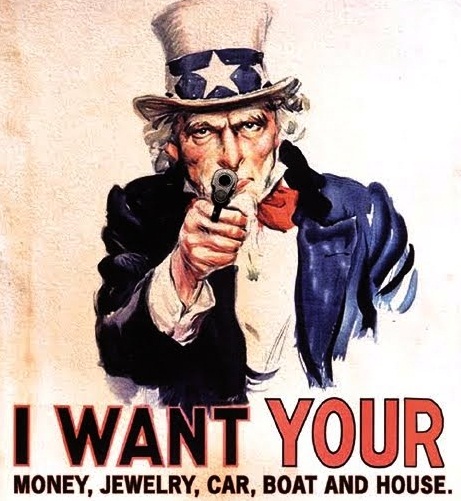

This commentary can also be found at Rutherford.org.

Exactly how much will some people lie? Jimmy Kimmel knows

Jimmy Kimmel has a segment on his show called “Lie Witness News.” It is similar to other person-on-the-street interviews with this caveat: the interviewer is asking completely bogus questions. Nothing about the questions is true because nothing about them can be true. “What did you think about the debate?” when the debate has not taken place. “Who are you voting for?” when no such office exists.

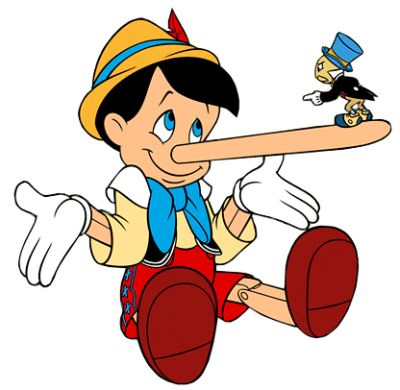
liar pinocchio

Image credit: Disney


As Kimmel wryly notes, “We found people who had strong opinions about these imaginary events.”

One thing this demonstrates is people will lie and sometimes continuously if it makes them looks smart. Or if they think it makes them look smart. While this is likely true everywhere, it is doubtless true on Hollywood Boulevard.

“Did you vote in today’s vice-presidential election?”

And then there is this one where one of the liars shows up on the studio audience. He does not escape Kimmel’s attention.

“Who Won Last Night’s First-lady Debate?”

To kill Americans

Let’s make this short and sweet.

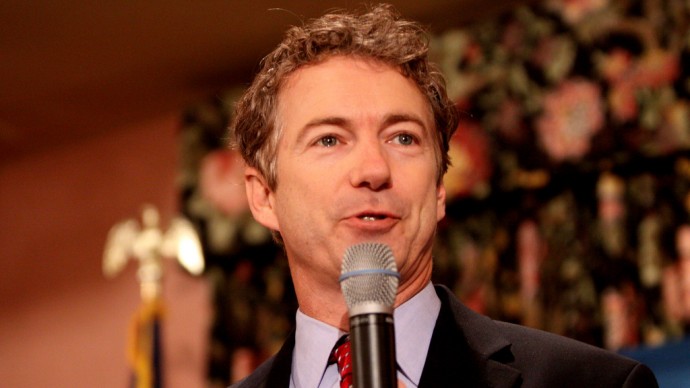
senator rand paul

Kentucky Senator Rand Paul [Image credit]

For around 13 hours yesterday and into this morning, Kentucky senator Rand Paul (R) conducted a filibuster in the United States senate chamber. Ostensibly a delay to the probable confirmation of John Brennan as CIA chief, Paul allowed numerous times his main purpose was to draw attention to the targeted killing program operated by the Obama administration. Said program is primarily carried out by Unmanned Aerial Vehicles, commonly known as “drones.”

While some may argue the necessity of drones in wartime, even considering the differences of the “War on Terror” (I do not), Paul’s argument with the administration was different. Currently, the Obama administration, via Attorney General Eric Holder, holds to the position of possible killing of American citizens on American soil without due process, without charge, without trial.

The 5th Amendment to the U.S. constitution reads:

In ALL criminal prosecutions, the accused shall enjoy the right to a speedy and public trial, by an impartial jury of the State and district wherein the crime shall have been committed, which district shall have been previously ascertained by law, and to BE INFORMED OF THE NATURE AND CAUSE OF THE ACCUSATION; to be confronted with the witnesses against him; to have compulsory process for obtaining witnesses in his favor, and to have the assistance of counsel for his defense. [EMPHASIS ADDED.]

All of these rights are set aside in each and every case of targeted killing. The nature of targeted killing is secrecy, not openness. It’s a secret list, a secret process, secret decision making, secret rules, secret records, and secret secrecy.

To put it another way: There is no due process when the charge is on the business end of a missile in your morning latte.

The Constitution must protect the worst of us if it is to protect the rest of us. No matter how strong the evidence against a person, a “day in court” is a constitutional guarantee. It is this guarantee that has historically separated the Republic from banana republics. Violation of this right by any president or administration is not only unconstitutional, it is uncivilized.

I take issue with Bush, Rice, Obama and Brennan that drone warfare is legitimate or the “collateral damage” acceptable. I also take issue with Holder that Americans may be killed by the government based on little more than circumstantial evidence. Murder by suspicion is not a comforting thought.

The years since 9/11 bear witness to the hurricane force erosion of the 4th Amendment. It appears the shores of the 5th will be the next to wash away.

Text and Video of President Obama’s Second Inaugural Address

The full text of President Barack Obama’s second inaugural address:

Vice President Biden, Mr. Chief Justice,
members of the United States Congress, distinguished guests, and fellow citizens:

Each time we gather to inaugurate a President we bear witness to the enduring strength of our Constitution. We affirm the promise of our democracy. We recall that what binds this nation together is not the colors of our skin or the tenets of our faith or the origins of our names. What makes us exceptional — what makes us American — is our allegiance to an idea articulated in a declaration made more than two centuries ago:

president obama oath of office inauguration

President Obama takes the oath of office.


“We hold these truths to be self-evident, that all men are created equal; that they are endowed by their Creator with certain unalienable rights; that among these are life, liberty, and the pursuit of happiness.”

Today we continue a never-ending journey to bridge the meaning of those words with the realities of our time. For history tells us that while these truths may be self-evident, they’ve never been self-executing; that while freedom is a gift from God, it must be secured by His people here on Earth. (Applause.) The patriots of 1776 did not fight to replace the tyranny of a king with the privileges of a few or the rule of a mob. They gave to us a republic, a government of, and by, and for the people, entrusting each generation to keep safe our founding creed.

And for more than two hundred years, we have.

Through blood drawn by lash and blood drawn by sword, we learned that no union founded on the principles of liberty and equality could survive half-slave and half-free. We made ourselves anew, and vowed to move forward together.

Together, we determined that a modern economy requires railroads and highways to speed travel and commerce, schools and colleges to train our workers.

Together, we discovered that a free market only thrives when there are rules to ensure competition and fair play.

Together, we resolved that a great nation must care for the vulnerable, and protect its people from life’s worst hazards and misfortune.

Through it all, we have never relinquished our skepticism of central authority, nor have we succumbed to the fiction that all society’s ills can be cured through government alone. Our celebration of initiative and enterprise, our insistence on hard work and personal responsibility, these are constants in our character.

But we have always understood that when times change, so must we; that fidelity to our founding principles requires new responses to new challenges; that preserving our individual freedoms ultimately requires collective action. For the American people can no more meet the demands of today’s world by acting alone than American soldiers could have met the forces of fascism or communism with muskets and militias. No single person can train all the math and science teachers we’ll need to equip our children for the future, or build the roads and networks and research labs that will bring new jobs and businesses to our shores. Now, more than ever, we must do these things together, as one nation and one people. (Applause.)

This generation of Americans has been tested by crises that steeled our resolve and proved our resilience. A decade of war is now ending. (Applause.) An economic recovery has begun. (Applause.) America’s possibilities are limitless, for we possess all the qualities that this world without boundaries demands: youth and drive; diversity and openness; an endless capacity for risk and a gift for reinvention. My fellow Americans, we are made for this moment, and we will seize it — so long as we seize it together. (Applause.)

For we, the people, understand that our country cannot succeed when a shrinking few do very well and a growing many barely make it. (Applause.) We believe that America’s prosperity must rest upon the broad shoulders of a rising middle class. We know that America thrives when every person can find independence and pride in their work; when the wages of honest labor liberate families from the brink of hardship. We are true to our creed when a little girl born into the bleakest poverty knows that she has the same chance to succeed as anybody else, because she is an American; she is free, and she is equal, not just in the eyes of God but also in our own. (Applause.)

We understand that outworn programs are inadequate to the needs of our time. So we must harness new ideas and technology to remake our government, revamp our tax code, reform our schools, and empower our citizens with the skills they need to work harder, learn more, reach higher. But while the means will change, our purpose endures: a nation that rewards the effort and determination of every single American. That is what this moment requires. That is what will give real meaning to our creed.

We, the people, still believe that every citizen deserves a basic measure of security and dignity. We must make the hard choices to reduce the cost of health care and the size of our deficit. But we reject the belief that America must choose between caring for the generation that built this country and investing in the generation that will build its future. (Applause.) For we remember the lessons of our past, when twilight years were spent in poverty and parents of a child with a disability had nowhere to turn.

We do not believe that in this country freedom is reserved for the lucky, or happiness for the few. We recognize that no matter how responsibly we live our lives, any one of us at any time may face a job loss, or a sudden illness, or a home swept away in a terrible storm. The commitments we make to each other through Medicare and Medicaid and Social Security, these things do not sap our initiative, they strengthen us. (Applause.) They do not make us a nation of takers; they free us to take the risks that make this country great. (Applause.)

We, the people, still believe that our obligations as Americans are not just to ourselves, but to all posterity. We will respond to the threat of climate change, knowing that the failure to do so would betray our children and future generations. (Applause.) Some may still deny the overwhelming judgment of science, but none can avoid the devastating impact of raging fires and crippling drought and more powerful storms.

The path towards sustainable energy sources will be long and sometimes difficult. But America cannot resist this transition, we must lead it. We cannot cede to other nations the technology that will power new jobs and new industries, we must claim its promise. That’s how we will maintain our economic vitality and our national treasure — our forests and waterways, our crop lands and snow-capped peaks. That is how we will preserve our planet, commanded to our care by God. That’s what will lend meaning to the creed our fathers once declared.

We, the people, still believe that enduring security and lasting peace do not require perpetual war. (Applause.) Our brave men and women in uniform, tempered by the flames of battle, are unmatched in skill and courage. (Applause.) Our citizens, seared by the memory of those we have lost, know too well the price that is paid for liberty. The knowledge of their sacrifice will keep us forever vigilant against those who would do us harm. But we are also heirs to those who won the peace and not just the war; who turned sworn enemies into the surest of friends — and we must carry those lessons into this time as well.

We will defend our people and uphold our values through strength of arms and rule of law. We will show the courage to try and resolve our differences with other nations peacefully –- not because we are naïve about the dangers we face, but because engagement can more durably lift suspicion and fear. (Applause.)

America will remain the anchor of strong alliances in every corner of the globe. And we will renew those institutions that extend our capacity to manage crisis abroad, for no one has a greater stake in a peaceful world than its most powerful nation. We will support democracy from Asia to Africa, from the Americas to the Middle East, because our interests and our conscience compel us to act on behalf of those who long for freedom. And we must be a source of hope to the poor, the sick, the marginalized, the victims of prejudice –- not out of mere charity, but because peace in our time requires the constant advance of those principles that our common creed describes: tolerance and opportunity, human dignity and justice.

We, the people, declare today that the most evident of truths –- that all of us are created equal –- is the star that guides us still; just as it guided our forebears through Seneca Falls, and Selma, and Stonewall; just as it guided all those men and women, sung and unsung, who left footprints along this great Mall, to hear a preacher say that we cannot walk alone; to hear a King proclaim that our individual freedom is inextricably bound to the freedom of every soul on Earth. (Applause.)

It is now our generation’s task to carry on what those pioneers began. For our journey is not complete until our wives, our mothers and daughters can earn a living equal to their efforts. (Applause.) Our journey is not complete until our gay brothers and sisters are treated like anyone else under the law –- (applause) — for if we are truly created equal, then surely the love we commit to one another must be equal as well. (Applause.) Our journey is not complete until no citizen is forced to wait for hours to exercise the right to vote. (Applause.) Our journey is not complete until we find a better way to welcome the striving, hopeful immigrants who still see America as a land of opportunity — (applause) — until bright young students and engineers are enlisted in our workforce rather than expelled from our country. (Applause.) Our journey is not complete until all our children, from the streets of Detroit to the hills of Appalachia, to the quiet lanes of Newtown, know that they are cared for and cherished and always safe from harm.

That is our generation’s task — to make these words, these rights, these values of life and liberty and the pursuit of happiness real for every American. Being true to our founding documents does not require us to agree on every contour of life. It does not mean we all define liberty in exactly the same way or follow the same precise path to happiness. Progress does not compel us to settle centuries-long debates about the role of government for all time, but it does require us to act in our time. (Applause.)

For now decisions are upon us and we cannot afford delay. We cannot mistake absolutism for principle, or substitute spectacle for politics, or treat name-calling as reasoned debate. (Applause.) We must act, knowing that our work will be imperfect. We must act, knowing that today’s victories will be only partial and that it will be up to those who stand here in four years and 40 years and 400 years hence to advance the timeless spirit once conferred to us in a spare Philadelphia hall.

My fellow Americans, the oath I have sworn before you today, like the one recited by others who serve in this Capitol, was an oath to God and country, not party or faction. And we must faithfully execute that pledge during the duration of our service. But the words I spoke today are not so different from the oath that is taken each time a soldier signs up for duty or an immigrant realizes her dream. My oath is not so different from the pledge we all make to the flag that waves above and that fills our hearts with pride.

They are the words of citizens and they represent our greatest hope. You and I, as citizens, have the power to set this country’s course. You and I, as citizens, have the obligation to shape the debates of our time — not only with the votes we cast, but with the voices we lift in defense of our most ancient values and enduring ideals. (Applause.)

Let us, each of us, now embrace with solemn duty and awesome joy what is our lasting birthright. With common effort and common purpose, with passion and dedication, let us answer the call of history and carry into an uncertain future that precious light of freedom.

Thank you. God bless you, and may He forever bless these United States of America. (Applause.)

The list of Obama’s 23 executive orders on gun control

I’m still looking for the one that calls for the confiscation of all legal weapons. (See a brief explanation on the purpose and use of executive orders historically.) It’s also important to remember not everything the president writes is an executive order.

From Yahoo News:

1. Issue a Presidential Memorandum to require federal agencies to make relevant data available to the federal background check system.

2. Address unnecessary legal barriers, particularly relating to the Health Insurance Portability and Accountability Act, that may prevent states from making information available to the background check system.


3. Improve incentives for states to share information with the background check system.

4. Direct the Attorney General to review categories of individuals prohibited from having a gun to make sure dangerous people are not slipping through the cracks.

5. Propose rulemaking to give law enforcement the ability to run a full background check on an individual before returning a seized gun.

6. Publish a letter from ATF to federally licensed gun dealers providing guidance on how to run background checks for private sellers.

7. Launch a national safe and responsible gun ownership campaign.

8. Review safety standards for gun locks and gun safes (Consumer Product Safety Commission).

9. Issue a Presidential Memorandum to require federal law enforcement to trace guns recovered in criminal investigations.

10. Release a DOJ report analyzing information on lost and stolen guns and make it widely available to law enforcement.

11. Nominate an ATF director.

12. Provide law enforcement, first responders, and school officials with proper training for active shooter situations.

13. Maximize enforcement efforts to prevent gun violence and prosecute gun crime.

14. Issue a Presidential Memorandum directing the Centers for Disease Control to research the causes and prevention of gun violence.

15. Direct the Attorney General to issue a report on the availability and most effective use of new gun safety technologies and challenge the private sector to develop innovative technologies.

16. Clarify that the Affordable Care Act does not prohibit doctors asking their patients about guns in their homes.

17. Release a letter to health care providers clarifying that no federal law prohibits them from reporting threats of violence to law enforcement authorities. 18. Provide incentives for schools to hire school resource officers.

19. Develop model emergency response plans for schools, houses of worship and institutions of higher education.

20. Release a letter to state health officials clarifying the scope of mental health services that Medicaid plans must cover.

21. Finalize regulations clarifying essential health benefits and parity requirements within ACA exchanges.

22. Commit to finalizing mental health parity regulations.

23. Launch a national dialogue led by Secretaries Sebelius and Duncan on mental health.

There is more in the list about mental health than gun ownership. I thought that’s what gun owners were hoping to see. Honestly, I do not know why gun-control advocates are not more upset about these EOs than 2nd amendment defenders. They seem pretty benign to me.

The same is indicated by Forbes:

It does not appear that any of the executive orders would have any impact on the guns people currently own-or would like to purchase- and that all proposals regarding limiting the availability of assault weapons or large ammunition magazines will be proposed for Congressional action. As such, any potential effort to create a constitutional crisis—or the leveling of charges that the White House has overstepped its executive authority—would hold no validity.

C’mon folks, even Slate realizes how wigged out this all became. From political reporter David Weigel:

And also: Me. For a while on Wednesday, I referred to Obama’s “executive orders,” printing the list of actions in full, but muffing the terminology. Why did all of us do that? You know, I think the pre-game panic about the very idea of Obama “signing executive orders” — I think that got into our heads. The result, ironically, was that a lot of people learned that Obama did something very scary — 23 ORDERs, above and beyond the will of Congress! — that he didn’t do, at all. If nominating an ATF director was done by “an executive order,” the Senate wouldn’t have to confirm him.

So which of the lazy journalists got it wrongest? One point goes to Carl Azus, for referring incoherently to “laws that don’t have to be approved by Congress.” Another to Brooke Baldwin, who addes the drama of Obama “signing” these 23 orders as children watched, even though CNN had a camera on Obama as he didn’t do that. But the Marvel No-Prize surely goes to Cavuto, for his scary count-off of “23, 23!” orders that suggest a “president out of control.”

Honesty should have led Weigel to the conclusion most of us have already reached: his profession is overflowing with those both lazy and out of control. It is clear enough to the rest of the world, it should be clear to them.

The scoop on Obama’s Executive Orders

Folks on one side of the aisle have been off the rails about the possibility of President Obama’s executive orders in the gun control debate. Another of those infamous White House petitions has been started. This one is called “Impeach President Barack Obama if Executive Orders are signed to ban Assault Rifles, Guns & High Capacity Magazines”. The text of it reads

The Vice President has made it clear that 19 Executive Orders could / will come about if an Assault Rifle / High Capacity Magazine ban is not passed through the House. This is a violation of our 2nd Amendment. I propose that our elected officials Impeach President Barack Obama if he signs executive orders to take away this right to bear arms. Our 2nd Amendment was written to stand up against a tyrant government. Our government has F18s and F16s, we the people should be allowed a Semi Automatic Rifles to defend ourselves from a possible tyrant government take over.

As of this writing more than 96,000 signatures had been affixed. The lethality of an AR-15 against “F18s and F16s” has not been verified as of this writing.

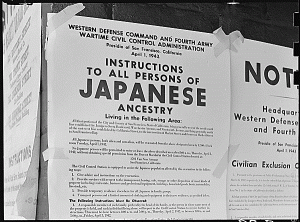
Executive Order 9066

Issued by FDR, perhaps the most egregious EO ever written, 9066, interred Japanese-Americans in WW2.


Some levels of ignorance are deep. That is not meant as insult, but according to the strict usage of the word. Most people simply have not taken the time to determine reality, or maybe people do not care. Either way, as with the petition above, it does not slow the opinion making or proclaiming, errant though it may be. There is a certain comfort level that comes with parroting what you have heard rather than finding the truth.

Enough of the opinion piece, back to the post…

Online resource Wikipedia says about executive orders (sometimes called “presidential directives”):

United States Presidents issue executive orders to help officers and agencies of the executive branch manage the operations within the federal government itself. Executive orders have the full force of law, since issuances are typically made in pursuance of certain Acts of Congress, some of which specifically delegate to the President some degree of discretionary power (delegated legislation), or are believed to take authority from a power granted directly to the Executive by the Constitution.

According to the Government Archives, “Executive orders are official documents, numbered consecutively, through which the President of the United States manages the operations of the Federal Government.”

Another explanation is given here,

Executive Orders (EOs) are legally binding orders given by the President, acting as the head of the Executive Branch, to Federal Administrative Agencies. Executive Orders are generally used to direct federal agencies and officials in their execution of congressionally established laws or policies. However, in many instances they have been used to guide agencies in directions contrary to congressional intent.

Not all EOs are created equal. Proclamations, for example, are a special type of Executive Order that are generally ceremonial or symbolic, such as when the President declares National Take Your Child To Work Day. Another subset of Executive Orders are those concerned with national security or defense issues. These have generally been known as National Security Directives. Under the Clinton Administration, they have been termed “Presidential Decision Directives.”

Executive Orders do not require Congressional approval to take effect but they have the same legal weight as laws passed by Congress. The President’s source of authority to issue Executive Orders can be found in the Article II, Section 1 of the Constitution which grants to the President the “executive Power.” Section 3 of Article II further directs the President to “take Care that the Laws be faithfully executed.” To implement or execute the laws of the land, Presidents give direction and guidance to Executive Branch agencies and departments, often in the form of Executive Orders.

They detail which part of the executive branch is responsible for a dropped ball, and extend EOs issued by previous presidents. In short an executive order has the force of law because it is intended to clarify existing law. It would make very little sense to patch a concrete wall with a bandaid.

This is not to say some president would not–or has not–used them inappropriately or expanded the powers of the executive branch unconstitutionally. I have no doubts about that. But, they all do it, not merely the ones “on the other team.”

How it usually works is this: Republican President issues executive order. Republicans assert its absolute necessity or ignore it altogether. Democrats’ hair catch on fire and warn of implosion of democracy.

Democrat President issues executive order. Democrats cheer as if biblical prophecy has been fulfilled. Republicans, with scalps on fire, warn of looming dictatorship.

Libertarians warn of both no matter who is in the presidency, but that’s for another post.

The fact is that President Obama is on pace to issue fewer executive orders than George W. Bush (291), Bill Clinton (364), Ronald Reagan (381), Jimmy Carter (320), Richard Nixon (364), Lyndon Johnson (324), Dwight D. Eisenhower (486), Harry S. Truman (896), Franklin D. Roosevelt (3,728, *winner). Through 2012 Obama has issued only 144. (Click here for EO numbers, dates and subjects.)

Simply and fairly all presidents use EOs when they feel such instruments are needed. Since Hoover, all presidents save 2 or 3 have used EOs to a greater degree than Barack Obama. The sky is not falling until he decides he wants to pass Truman or Roosevelt. If he tries, we all will know because he will need carpal tunnel surgery on both wrists.

*-In fairness, Roosevelt was in office 13 or so years and governed during a world war. Still his average per year was far above all others.

UPDATE: See also The list of Obama’s 23 executive orders on gun control

Obama surrounds himself with children just like…

A meme circulating heavily this morning has to do with President Obama’s scheduled speech on gun control. According to White House Press Secretary, Jay Carney,

[T]he president will be joined by Vice President Joe Biden as well as children who wrote to the president after the Newtown shootings.
“They will be joined by children around the country expressing their concerns about gun violence and school safety, along with their parents,”

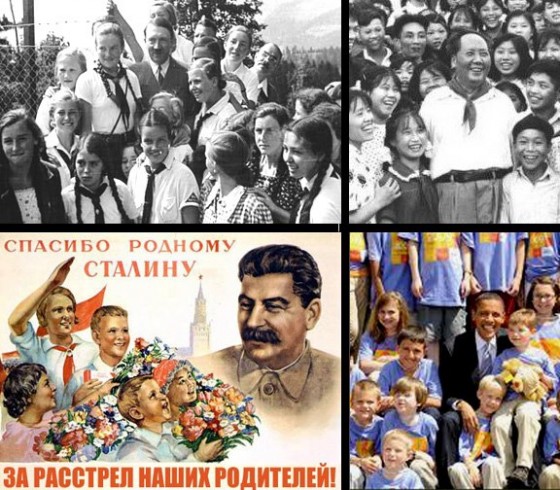
Both passions and accusations have run high since the Newtown, CT massacre as Sandy Hook Elementary School. The image below is one.
obama dictators children

I mean, seriously, if Hitler, Mao, and Stalin had their pictures made with children does that not make Obama equal to them?

I drink bottled water. I’m sure every president in recent memory drinks bottled water. That does not mean I am or have been the president. We will forego the old putting pants on one leg at a time saw.

The stupid thing about the meme is, like many of the same genre, there is no context at all. They are simply pictures of a known leader and kids. Except for Stalin. That’s a drawing. He had probably already killed those kids. Or, maybe they were happy to get another potato. [UPDATE: A missionary friend of mine had this to say about the Stalin poster: “What’s ironic is that the Stalin poster is actually a parody. It says, ‘Thank you dear Stalin for shooting our parents.'”]

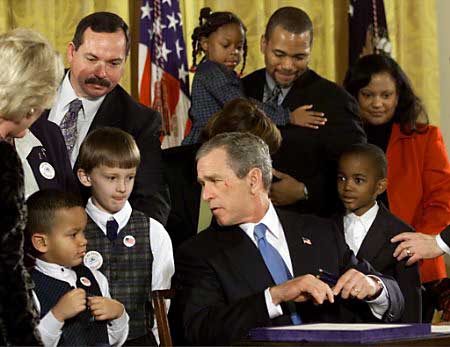
But, since we are on the subject, here is another well known dictator with a bunch of kids:
bush and kids

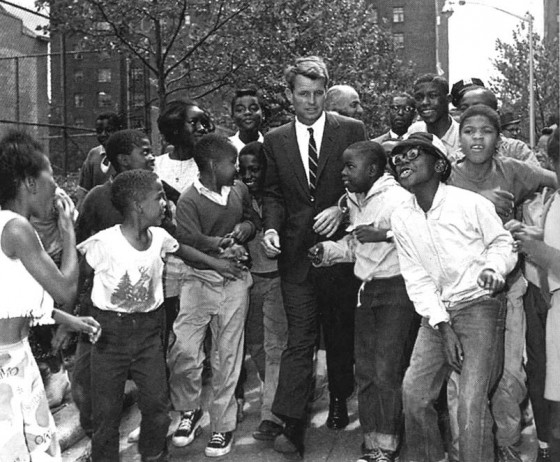
And another (in fairness he did not get the chance to be dictator, but would have):
rfk with children

And another:
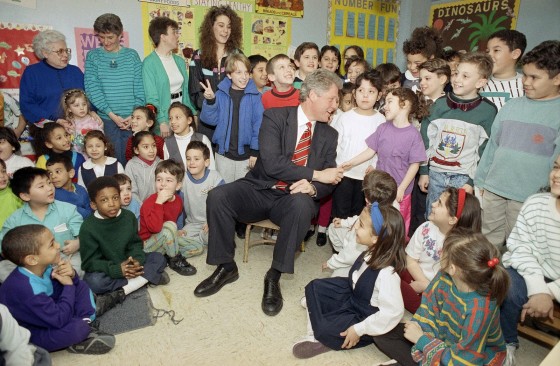
Clinton with children

And another:
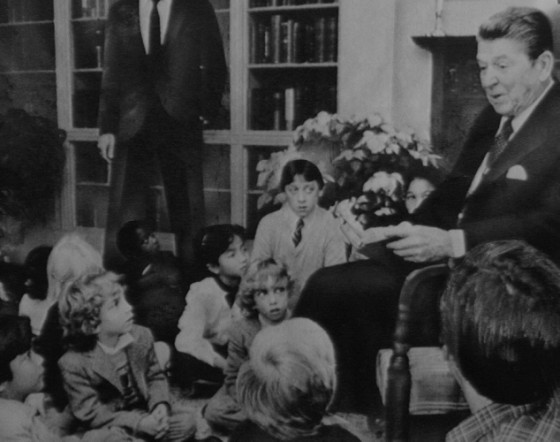
ronald reagan with children

Please don’t fall for these things. Guilt by association is not the domain of truth seekers. Besides that, easily disproven assertions weakens your argument and your credibility.

Oh, and that thing about Hitler taking away all the guns in Germany before the Holocaust? You might want to check again. It is not true. And here is a solid explanation of the Hitler “For the first time, a civilized nation has full gun registration” quote. Hint: He did not say it.

Barack Obama the accidental pro-life president

If only our president was moved to compassion over the plight of unborn children as he was after the tragedy at Sandy Hook. He has never been more eloquent. If only…
barack obama solemn
But when it comes to the most defenseless of all, our president is double-minded at best. Which is more defenseless, a six year old in a classroom facing a gunman or a child still attached to the mother confined by the walls of the womb facing a medical technician with dismemberment in mind? If a child in a classroom is defenseless against a madman, how much more so a unborn child against calm, methodical, professional annihilation?

Mr. President, get your thinking in order. A double minded man is unstable in all his ways (James 1:8).

(HT: Justin Taylor)

Why Ron Paul excels John McCain and Mitt Romney

Most people who know me are aware that I supported retiring Texas congressman Ron Paul for president. I did so in 2008 and 2012. All except those who have died in the mean time also know that he did not win, unless you count those eleven congressional terms.

Yesterday Ron Paul gave a final speech in the House chamber. Like most of his speeches it was a bit rambling, sounding warning bells on economic concerns, the gold standard of money, an overextended military and liberty. From his remarks:

In many ways, according to conventional wisdom, my off-and-on career in Congress, from 1976 to 2012, accomplished very little. No named legislation, no named federal buildings or highways—thank goodness. In spite of my efforts, the government has grown exponentially, taxes remain excessive, and the prolific increase of incomprehensible regulations continues. Wars are constant and pursued without Congressional declaration, deficits rise to the sky, poverty is rampant and dependency on the federal government is now worse than any time in our history.

All this with minimal concerns for the deficits and unfunded liabilities that common sense tells us cannot go on much longer. A grand, but never mentioned, bipartisan agreement allows for the well-kept secret that keeps the spending going. One side doesn’t give up one penny on military spending, the other side doesn’t give up one penny on welfare spending, while both sides support the bailouts and subsidies for the banking and corporate elite. And the spending continues as the economy weakens and the downward spiral continues. As the government continues fiddling around, our liberties and our wealth burn in the flames of a foreign policy that makes us less safe.

Through the campaigns Paul supporters (excepting a few flamers and morons) were a thoughtful and cogent–if not an odd–mix. It is safe to say no other single candidate in the last two elections has attracted such a wide variety in his or her base. Only Barack Obama’s supporters could touch Dr. Paul’s for passion.

In an insightful article entitled, “Who Killed Rudy Guiliani?”, W. James Antle III asserts that Ron Paul has restored the soul of conservatism’s future. In my way of thinking this would make Paul the true and better William F. Buckley, Jr. Writes Antle:

When Ron Paul leaves office in January, he will have been more successful than many of the legislators who spent decades maligning him. Paul’s ideas have gradually gone from marginal to mainstream, and his record shows how much even a single determined man of principle can do to change a movement. In foreign policy especially, the Texas congressman leaves behind a new generation of leaders, both libertarian and conservative, who challenge the disastrous bipartisan consensus.

Conor Friedersdorf chose not to actually engage the content of the speech, but, while questioning some of the questions posed by Paul, had to admit “the United States – and especially its most unjustly treated citizens – would be better off if more legislators were grappling with them.” Ron Paul asked,

-Why are sick people who use medical marijuana put in prison?
-Why does the federal government restrict the drinking of raw milk?
-Why can’t Americans manufacturer rope and other products from hemp?
-Why are Americans not allowed to use gold and silver as legal tender as mandated by the Constitution?
-Why is Germany concerned enough to consider repatriating their gold held by the FED for her in New York? Is it that the trust in the U.S. and dollar supremacy beginning to wane?
-Why do our political leaders believe it’s unnecessary to thoroughly audit our own gold?
-Why can’t Americans decide which type of light bulbs they can buy?
-Why is the TSA permitted to abuse the rights of any American traveling by air?
-Why should there be mandatory sentences–even up to life for crimes without victims–as our drug laws require?
-Why have we allowed the federal government to regulate commodes in our homes?
-Why is it political suicide for anyone to criticize AIPAC ?
-Why haven’t we given up on the drug war since it’s an obvious failure and violates the people’s rights? Has nobody noticed that the authorities can’t even keep drugs out of the prisons? How can making our entire society a prison solve the problem?
-Why do we sacrifice so much getting needlessly involved in border disputes and civil strife around the world and ignore the root cause of the most deadly border in the world-the one between Mexico and the US?
-Why does Congress willingly give up its prerogatives to the Executive Branch?
-Why does changing the party in power never change policy? Could it be that the views of both parties are essentially the same?
-Why did the big banks, the large corporations, and foreign banks and foreign central banks get bailed out in 2008 and the middle class lost their jobs and their homes?
-Why do so many in the government and the federal officials believe that creating money out of thin air creates wealth?
-Why do so many accept the deeply flawed principle that government bureaucrats and politicians can protect us from ourselves without totally destroying the principle of liberty?
-Why can’t people understand that war always destroys wealth and liberty?
-Why is there so little concern for the Executive Order that gives the President authority to establish a “kill list,” including American citizens, of those targeted for assassination?
-Why is patriotism thought to be blind loyalty to the government and the politicians who run it, rather than loyalty to the principles of liberty and support for the people? Real patriotism is a willingness to challenge the government when it’s wrong.
-Why is it is claimed that if people won’t or can’t take care of their own needs, that people in government can do it for them?
-Why did we ever give the government a safe haven for initiating violence against the people?
-Why do some members defend free markets, but not civil liberties?
-Why do some members defend civil liberties but not free markets? Aren’t they the same?
-Why don’t more defend both economic liberty and personal liberty?
-Why are there not more individuals who seek to intellectually influence others to bring about positive changes than those who seek power to force others to obey their commands?
-Why does the use of religion to support a social gospel and preemptive wars, both of which requires authoritarians to use violence, or the threat of violence, go unchallenged? Aggression and forced redistribution of wealth has nothing to do with the teachings of the world’s great religions.
-Why do we allow the government and the Federal Reserve to disseminate false information dealing with both economic and foreign policy?
-Why is democracy held in such high esteem when it’s the enemy of the minority and makes all rights relative to the dictates of the majority?
-Why should anyone be surprised that Congress has no credibility, since there’s such a disconnect between what politicians say and what they do?

A commenter at the Los Angeles Times derisively exclaimed: “Ron Paul; the answer to a question nobody asked.”

That may well be true. But maybe the problem is the wrong questions were asked over and over while the right ones were ignored.

ron paul texas a&m

Ron Paul speaks to a packed house at Texas A&M University


Did I think he could have won? Sure anything is possible. Did I think it probable? I guess I never did.

For me it was never about him winning. Though they are loathe to admit it history has already taught McCain and Romney supporters they were not about winning either. They could win neither the political nor idealogical campaigns.

For me it was about the conversation itself. Nothing is changed until the conversations is changed. McCain did not try to change the conversation unless you want to count from bad to worse. One hundred years in Iraq, an entirely new wing of government to deal with mortgages, and more military intervention. This was not upward movement; this was accelerated depreciation of ideas.

Romney could have changed the conversation several dozen times with only himself doing the talking. But, as the election demonstrated, people were too uncertain which Romney asked for their vote. In the end Romney was too much like Obama-lite to change the conversation. Romney was like Obama in an echo chamber on foreign policy, could not chart a believable path on domestic policy, and found a pretty much deaf ears on social policy.

Think about what we never heard from the top two in 2012 that Ron Paul talked about every chance he got: abuses by the Federal Reserve bank that both destroy the poor and middle class and allow for endless wars and interventions, a failed “War” on Drugs that has created an America with about as many people through prison and probation as the Gulags at their depths of depraved darkness, assassinations of American citizens without due process, abuses of government power through the Patriot Act, abuses of executive power through Executive Orders (aka “presidential directives”), the dangers of indefinite detention, and on and on we could go.

Ron Paul’s insistence that we adhere to the constitution was not only refreshing, for some people it was eye-opening and for others it was an absolute epiphany. Someone running for president acknowledging the power of the president is limited and war should be declared by Congress. Gasp! He showed a person did not have to be a card carrying member of the ACLU to care about civil liberties since civil liberties are constitutional, not preferential. He showed why and how it could and should be so.

Mitt Romney was not able to generate a single idea in his entire campaign that will still be talked about in another month. Ron Paul’s ideas have already spawned two movements, one official (the “Tea Party”) the other not (the Liberty Movement), created a trio of best selling books, contributed to a number of others being elected to congress, and drawn regular crowds of two to ten thousand people of all ages and socio-economic backgrounds.

For one, I’m thankful to have lived in the era when Ron Paul gained a national stage. He will never be elected again, and never be president. But while Barack Obama has found success with, “Ask what your country can do for you,” Ron Paul’s ideas are the ones whose time has come.

And, if those who call themselves conservative would stop merely adopting and modifying the thinking of the Left, they might just find these ideas unstoppable.

[Image credit]