Jesus Christ, marriage and sex

In a day when fewer people have a biblical understanding of marriage than ever before these reminders are apropos. Marriage is not simply a social arrangement as we in the West have come to understand it. It is not merely a means by which the state garners more little potential taxpayers or soldiers. It is not a man and woman who decide to live together. It is not two people of the same sex who decide to unite and call it “marriage.”

It is a holy institution that has probably endured as much violence from Christ’s followers as from Christ’s enemies. Yet, it remains what it is.

The following quotes are from the book, Who is This Man: The Unpredictable Impact of the Inescapable Jesus by John Ortberg. I highly recommend it.

In the ancient world, sexuality was celebrated as a means of procreation and as an appetite to be gratified, much like appetites for food and drink. Greek physicians often diagnosed women with “hysteria,” which comes from the Greek word for “uterus,” a condition they said was caused by a wandering uterus. They said hysteria could be cured by intercourse. The Roman physician Rufus prescribed sex to adolescents as a cure for melancholia, epilepsy, and headaches. One imagines he had a thriving practice.

[…]

The gods had little to say about marriage. The rules for a public cult in Pergamum demanded a day’s interval after sex with one’s wife but two days after sex with someone else’s wife. Zeus’s sexual history (one writer describes him as “the ultimate player”) did not suggest that restraint was an Olympian virtue. The silence of the gods about sex also led to a very different world of sexuality and children. Particularly in Greek culture, sexual relationships between adult men and younger boys, often between ages twelve and sixteen, were taken for granted. The Roman emperor Commodus is said to have had three hundred young boys available for sex. The Christian writer Tatian said that Romans “consider pederasty to be particularly privileged and try to round up herds of boys like herds of grazing mares.”

[…]

Slave girls were made available for sexual purposes at the decision of the paterfamilias. Freeborn girls were often married by their families as early as possible: A study based on inscriptions indicated that 20 percent of pagan girls were married before the age of thirteen (in the Christian community it was about a third of that)
[…]

Marriage, Jesus was saying, is not at its heart just an economic or social institution. It is a God-directed covenant that reflects the human capacity for self-transcendence and community. It is a joining of spirit and flesh. It does not serve the state; it precedes the state.

[…]

Jesus connects marriage to creation. In Genesis God is making creation good by separating: he separates the light from the darkness, the dry land from the sea, the heavens from the earth. But now, with the man and the woman, he takes what was separate and joins them. And so Jesus says what God has joined let man not separate.

[…]

Walter Wangerin wrote, “Marriage begins with a promise.” A man and a woman stand in a church or a chapel or a backyard before each other, before witnesses, and before almighty God. They make a vow. They say a promise. They give their word. That’s what a marriage is built on. A promise freely offered, fully embraced, joyfully witnessed, painstakingly kept —that’s what makes a marriage. Sometimes people will say: “I don’t need a piece of paper.” It was never about the paper. In Jesus’ day they didn’t have paper. It’s about the promise: “as long as we both shall live.”

[…]

In the ancient world, one’s primary loyalty was to parents. But the man and the woman are to leave their parents to create a new primary loyalty—a union, and their union with each other is to be expressed through sexual intimacy, one flesh. In other words, sex is kind of a sacrament. It is an outward sign that points to an inward reality, to a spiritual state.

[…]

In a broader way, something like this went on in the ancient world. For Greco-Roman culture, the idea of reserving sexual intimacy wasn’t quaint and old-fashioned; it was new and revolutionary. As a whole, it never did get established terribly well. And to this day, no one I know doesn’t struggle with it. But the framework that Jesus taught—the idea that marriage is a covenant relationship between and man and a woman, that sex has a spiritual component, that fidelity is a quality to be prized in men as well as women, that children are to be protected rather than exploited sexually — would come to shape our world.

[…]

In the book of Hebrews, the eleventh chapter is called the Hall of Faith, and great heroes in the Bible—Noah, Abraham, Moses, Gideon, and David — are all listed there. Then there is this comment, “By faith the prostitute Rahab, because she welcomed the spies, was not killed.” The writer does not mention anybody else’s occupation — not David the king, or Samuel the priest, or Abraham the rancher, or Gideon the judge. Why Rahab’s? Grace. The same Jesus who was a magnet for sexual sinners who had flunked marriage was the same Jesus who redefined what a marriage could be. “Husbands, love your wives, just as Christ loved the church and gave himself up for her.” More marriages have been performed, more wedding vows have been made, more nuptial blessings have been asked in his name than any other.

All quotes taken from Chapter 11: The Truly Old-Fashioned Marriage.
Click below to order from Amazon.com.


One Minute Book Reviews, January 2013

The January 2013 edition of One Minute Book Reviews includes Blood Brothers, by Elias Chacour, Ordinary Injustice, by Amy Bach, and The Insanity of God, by Nik Ripken.
Library-Books
Blood Brothers, by Elias Chacour, book review.

The one book you must read to be fully informed about the Palestinian-Israeli conflict. Chacour was a 9-year old Palestinian Christian when the his generational homeland became the destination of a world-wide Jewish immigration. This is a firsthand account of dispossession, murder, terrorism, political scheming, ministry, forgiveness, and the hand of God. He recounts how his hometown of Biram was completely destroyed by the Israeli military on Christmas day 1951, for no other reason than disallowing the rightful owners back home. Chacour ministers to Palestinians and Jews alike to this day, as he writes:

Before me stood my two commitments–one to God and one to my people. They were inextricably bound together. And suddenly, I knew I would rather be on God’s side which is stronger than human might.

Then I knew where I should be–not living in comfort, but back in the place where villages and churches were being reunited, where schools and community centers and spirits were being built up, where, amid the terrible noise of violence I could hear the whispers of the Man of Galilee, saying, “Behold, I make all things new.”

Ordinary Injustice: How America Holds Court, by Amy Bach, book review.

Bach, an attorney with the New York Bar and a journalist, spent eight years observing, interviewing and writing about the legal system in the United States. Drawing from experiences in Georgia, Mississippi, New York and Chicago, she examines over-zealous prosecutors, over-worked public defenders, wrongful convictions, lack of prosecution, and judicial improprieties. This fascinating look inside our legal system is at the same time extremely disheartening. According to Bach problems are known, but accepted at every turn, regularly bringing injustice to defendants across the nation. That this is quite unremarkable is the problem. The injustice in our justice system is quite ordinary. For instance in Coweta County, GA:

The Southern Center…charged that over a two-and-a-half-year period, more than half of the poor people found guilty in felony cases had pleaded to crimes without a lawyer present.

And, after discussing Quitman County, MS:

Prosecutor’s decisions are not transparent, except in those major trials, that make it to court. Prosecutors are not accountable and rarely have to justify their actions or identify the facts that contributed to them. With too little oversight on potentially momentous decisions that are made behind closed doors, prosecutors have no incentive to be neutral, fair, or to seek justice.

The Insanity of God, by Nik Ripken, book review

I’ve nearly finished The Insanity of God and recommend it for anyone who struggles with the big question: “Where is God in the midst of evil and suffering?” From the publisher’s summary:

“The Insanity of God” is the personal and lifelong journey of an ordinary couple from rural Kentucky who thought they were going on just your ordinary missionary pilgrimage, but discovered it would be anything but. After spending over six hard years doing relief work in Somalia, and experiencing life where it looked like God had turned away completely and He was clueless about the tragedies of life, the couple had a crisis of faith and left Africa asking God, “Does the gospel work anywhere when it is really a hard place? It sure didn’t work in Somalia.

How does faith survive, let alone flourish in a place like the Middle East? How can Good truly overcome such evil? How do you maintain hope when all is darkness around you? How can we say “greater is He that is in me than he that is in the world” when it may not be visibly true in that place at that time? How does anyone live an abundant, victorious Christian life in our world’s toughest places? Can Christianity even work outside of Western, dressed-up, ordered nations? If so, how?

“The Insanity of God” tells a story—a remarkable and unique story to be sure, yet at heart a very human story—of the Ripkens’ own spiritual and emotional odyssey. The gripping, narrative account of a personal pilgrimage into some of the toughest places on earth, combined with sobering and insightful stories of the remarkable people of faith Nik and Ruth encountered on their journeys, will serve as a powerful course of revelation, growth, and challenge for anyone who wants to know whether God truly is enough.

By ordering through the Amazon.com links below you help support this blog. You pay the same low price and I get a small commission.

Thanks for a great year

That would be last year, not this year…yet. But, I am expecting great, aren’t you??

For all readers of Kingdom in the Midst: please accept this great big “THANK YOU” for frequenting this blog in 2012. After an off year in 2011 (which saw a mere 22 posts), this blog was sort of resurrected in January of last year. Last year there were 233 posts on Kingdom in the Midst with many thousands of page views and visitors. My visitor numbers were skewed lower than my analytics recorded as I did not get re-started until the middle January. Another reason is my stat counter inexplicably stopped working for about six weeks at one point. That’s my story and I’m sticking with it.

Overall, I’m very happy with last year and hopefully will provide meaningful content and host helpful conversations in 2013. On that note, some of you may have noticed I have installed a new commenting system called Disqus (pronounced “Disqus”). After trying Facebook comments for a while, and doing a brief trial of Livefyre comment service, I settled on Disqus. This is the same commenting system used by sites like NPR, Fast Company, CNN, The ATLANTIC, The Telegraph, Time.com and more. Having a Disqus account is not necessary to comment. You can comment using your Facebook, Google+ or Twitter accounts or just with your name and email (in normal WordPress style). Disqus, however, allows you to see your comments from various sites on your Disqus dashboard. The account is free.

No matter you login method, I invite your comments and conversation.

Maintaining consist posting is always a challenge. Now that I’m in a routine of sorts I hope to pass 250 posts in 2013. A continued focus on justice issues and exploring the multifaceted relationships between Christ’s followers and culture is another goal. I also hope to critique those areas of government that seem to contravene a Kingdom mentality. Book, music and movie reviews will continue, but I’ll also begin to do monthly “One Minute Reviews” of 3-5 books in a single post. I hope this will offset my tendency toward writing essay length reviews.

Last year was the first year I attempted social sharing on a large scale. In my earliest blogging days, “social sharing” consisted of word of mouth or sending a link via email. I’m very appreciative for everyone who has shared my writing via social media. I had several posts that were shared hundreds of times. Please continue when I write something worth sharing! And, if you have not already, do not forget to “like” Kingdom in the Midst on Facebook. (It’s simple to click “Like” in the sidebar widget.)

As always thank you for reading and recommending. Thank you for all who have supported Kingdom in the Midst in 2012. And remember you support this blog when you start your Amazon.com purchase by using the search box in my sidebar.

Here’s to a God honoring 2013.

Are you ready?

Russion Plane Crash

aslanfoai anfoe ow anonowiej fjao aagobjoeiowna;we

madmonvoie nvoeipiaosp noenpvieois naoinovneons mmonvoei sdipsovine n’albeljs o hoanve power to the peopl e where vier ht yaydyyd

andof o cucucso uonsonosol t hthsieisl lllxid eneoss ciessnodees.

ssoncdeos slsle sjvjo tsonso emesl.

And a Merry Christmas to all

Fa la la la la, la la la la…

I love the season of Christmas, the giving and receiving of gifts, the awareness in society that things should be different than they are even if many cannot say why. I love spending time with family. I love having time off work. I love the food, mostly baked goodies, around every turn.


Most of all I love the reflection of God becoming human in order to redeem me from sin. This descending to the earth = mind blown for me. The first necessary step on the way to Jesus dying on the cross, Bethlehem’s manger has always captured me entirely.

Perhaps because I am human I can at least imagine the idea of dying for another. I have run such scenarios over in my mind many times.

Perhaps because I know people who have lost children I can at least imagine the pain of having a child die.

But, being holy, omnipotent, and distinct from an entire universe I had created, I cannot imagine. Creating a race upon whom I could bestow love and grace then for those beings turn against me, I cannot imagine. Then leaving aside my privilege, my throne, my universal vantage point, my safety, to become one of the created race as an infant, I cannot imagine. There just is no point of reference for it.

Think for a moment about that. Unlimited power traded for powerlessness. Eyes that oversaw all of creation, now fuzzy, blurry and unfocused. Hands that could weigh the world, barely large enough to wrap around his mother’s finger. The king of angels born in a nondescript, unknown Jewish stall.

The incarnation is the greatest miracle of all. Josh Howerton calls the Incarnation “by far – the most shocking, glorious, mysterious miracle in Redemptive History.” I agree.

We are always warned to not lose Christ in the trappings of Christmas. Let that warning sink in deeply.

Now allow me to wish you a “merry Christmas.” And, rejoice over what that means.

Thank you for your faithful reading of my blog. I will be taking the rest of the year off from writing and doing very little other social media, so Happy New Year as well.

Until the Prince of Peace shall come

War must be, while we defend our lives against a destroyer who would devour all; but I do not love the bright sword for its sharpness, nor the arrow for its swiftness, nor the warrior for his glory. I love only that which they defend.

J.R.R. Tolkien, The Two Towers

Of all the promises of Christmas one seemingly stirs our hearts above all others: that the Prince of Peace has come. The Old Testament prophet Isaiah, in one of the earliest writings about the Advent of the Messiah, indicated He would be “named Wonderful Counselor, Eternal Father, Mighty God, Prince of Peace” (9:6).

Most people would readily acknowledge such a hope has yet to be realized.

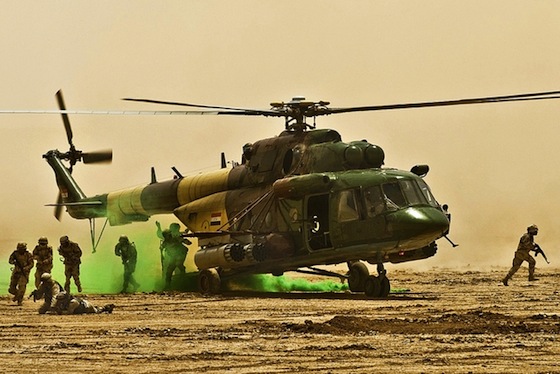
Iraqi soldiers Iraqi helicopter

Iraqi soldiers exiting Iraqi air force helicopter [Image credit]

Following the mass murder in Newtown, Connecticut last week our thoughts again turned to violence. Twenty children killed before they could even reach the prime of life, whatever that is. Correlations were made to abortion, and, in the view of this writer, rightfully so.

By no measure of divine justice will violence outside the womb outweigh violence inside it.

Childhelp.org reports five U.S. children die each day as a direct result of abuse while 6 million are abused and/or neglected annually. That equates to another Sandy Hook every four days.

According to the International Center for Assault Prevention more than “40 million children below the age of 15 are subjected to child abuse each year” (2001). In addition the World Health Organization estimates that 150 million girls and 73 million boys under 18 experienced forced sexual intercourse or other forms of sexual violence during 2002.

What about war? Statistics on war deaths are varied and cover different periods of time, but this site lists conflicts since the American Civil War:

1860-65: USA civil war (628,000)
1886-1908: Belgium-Congo Free State (8 million)
1898: USA-Spain & Philippines (220,000)
1899-02: British-Boer war (100,000)
1899-03: Colombian civil war (120,000)
1899-02: Philippines vs USA (20,000)
1900-01: Boxer rebels against Russia, Britain, France, Japan, USA against rebels (35,000)
1903: Ottomans vs Macedonian rebels (20,000)
1904: Germany vs Namibia (65,000)
1904-05: Japan vs Russia (150,000)
1910-20: Mexican revolution (250,000)
1911: Chinese Revolution (2.4 million)
1911-12: Italian-Ottoman war (20,000)
1912-13: Balkan wars (150,000)
1915: the Ottoman empire slaughters Armenians (1.2 million)
1915-20: the Ottoman empire slaughters 500,000 Assyrians
1916-23: the Ottoman empire slaughters 350,000 Greek Pontians and 480,000 Anatolian Greeks
1914-18: World War I (20 million)
1916: Kyrgyz revolt against Russia (120,000)
1917-21: Soviet revolution (5 million)
1917-19: Greece vs Turkey (45,000)
1919-21: Poland vs Soviet Union (27,000)
1928-37: Chinese civil war (2 million)
1931: Japanese Manchurian War (1.1 million)
1932-33: Soviet Union vs Ukraine (10 million)
1932: “La Matanza” in El Salvador (30,000)
1932-35: “Guerra del Chaco” between Bolivia and Paraguay (117.500)
1934: Mao’s Long March (170,000)
1936: Italy’s invasion of Ethiopia (200,000)
1936-37: Stalin’s purges (13 million)
1936-39: Spanish civil war (600,000)
1937-45: Japanese invasion of China (500,000)
1939-45: World War II (55 million) including holocaust and Chinese revolution
1946-49: Chinese civil war (1.2 million)
1946-49: Greek civil war (50,000)
1946-54: France-Vietnam war (600,000)
1947: Partition of India and Pakistan (1 million)
1947: Taiwan’s uprising against the Kuomintang (30,000)
1948-1958: Colombian civil war (250,000)
1948-1973: Arab-Israeli wars (70,000)
1949-: Indian Muslims vs Hindus (20,000)
1949-50: Mainland China vs Tibet (1,200,000)
1950-53: Korean war (3 million)
1952-59: Kenya’s Mau Mau insurrection (20,000)
1954-62: French-Algerian war (368,000)
1958-61: Mao’s “Great Leap Forward” (38 million)
1960-96: Guatemala’s civil war (200,000)
1961-98: Indonesia vs West Papua/Irian (100,000)
1961-2003: Kurds vs Iraq (180,000)
1962-75: Mozambique Frelimo vs Portugal (10,000)
1962-75: Angolan FNLA & MPLA vs Portugal (50,000)
1964-73: USA-Vietnam war (3 million)
1965: second India-Pakistan war over Kashmir
1965-66: Indonesian civil war (250,000)
1966-69: Mao’s “Cultural Revolution” (11 million)
1966-: Colombia’s civil war (31,000)
1967-70: Nigeria-Biafra civil war (800,000)
1968-80: Rhodesia’s civil war (?)
1969-: Philippines vs the communist Bagong Hukbong Bayan/ New People’s Army (40,000)
1969-79: Idi Amin, Uganda (300,000)
1969-02: IRA – Norther Ireland’s civil war (2,000)
1969-79: Francisco Macias Nguema, Equatorial Guinea (50,000)
1971: Pakistan-Bangladesh civil war (500,000)
1972-: Philippines vs Muslim separatists (Moro Islamic Liberation Front, etc) (150,000)
1972: Burundi’s civil war (300,000)
1972-79: Rhodesia/Zimbabwe’s civil war (30,000)
1974-91: Ethiopian civil war (1,000,000)
1975-78: Menghitsu, Ethiopia (1.5 million)
1975-79: Khmer Rouge, Cambodia (1.7 million)
1975-89: Boat people, Vietnam (250,000)
1975-87: civil war in Lebanon (130,000)
1975-87: Laos’ civil war (184,000)
1975-2002: Angolan civil war (500,000)
1976-83: Argentina’s military regime (20,000)
1976-93: Mozambique’s civil war (900,000)
1976-98: Indonesia-East Timor civil war (600,000)
1976-2005: Indonesia-Aceh (GAM) civil war (12,000)
1977-92: El Salvador’s civil war (75,000)
1979: Vietnam-China war (30,000)
1979-88: the Soviet Union invades Afghanistan (1.3 million)
1980-88: Iraq-Iran war (435,000)
1980-92: Sendero Luminoso – Peru’s civil war (69,000)
1984-: Kurds vs Turkey (35,000)
1981-90: Nicaragua vs Contras (60,000)
1982-90: Hissene Habre, Chad (40,000)
1983-: Sri Lanka’s civil war (70,000)
1983-2002: Sudanese civil war (2 million)
1986-: Indian Kashmir’s civil war (60,000)
1987-: Palestinian Intifada (4,500)
1988-2001: Afghanistan civil war (400,000)
1988-2004: Somalia’s civil war (550,000)
1989-: Liberian civil war (220,000)
1989-: Uganda vs Lord’s Resistance Army (30,000)
1991: Gulf War – large coalition against Iraq to liberate Kuwait (85,000)
1991-97: Congo’s civil war (800,000)
1991-2000: Sierra Leone’s civil war (200,000)
1991-2009: Russia-Chechnya civil war (200,000)
1991-94: Armenia-Azerbaijan war (35,000)
1992-96: Tajikstan’s civil war war (50,000)
1992-96: Yugoslavian wars (260,000)
1992-99: Algerian civil war (150,000)
1993-97: Congo Brazzaville’s civil war (100,000)
1993-2005: Burundi’s civil war (200,000)
1994: Rwanda’s civil war (900,000)
1995-: Pakistani Sunnis vs Shiites (1,300)
1995-: Maoist rebellion in Nepal (12,000)
1998-: Congo/Zaire’s war – Rwanda and Uganda vs Zimbabwe, Angola and Namibia (3.8 million)
1998-2000: Ethiopia-Eritrea war (75,000)
1999: Kosovo’s liberation war – NATO vs Serbia (2,000)
2001-: Afghanistan’s liberation war – USA & UK vs Taliban (40,000)
2002-: Cote d’Ivoire’s civil war (1,000)
2003-11: Second Iraq-USA war – USA, UK and Australia vs Saddam Hussein and subsequent civil war (160,000)
2003-09: Sudan vs JEM/Darfur (300,000)
2004-: Thailand vs Muslim separatists (3,700)
2007-: Pakistan vs PAkistani Taliban (38,000)
2012-: Syria’s civil war (14,000)

(Estimates are near 100,000,000 direct war deaths, government sponsored deaths and civilian casualties in the 20th century.)

Malcolm X is quoted saying, “Sometimes you have to pick the gun up to put the Gun down.” He might, on occasion, be sadly accurate. The Bible does say to live peacefully with everyone as much as it depends on us. That is to say Christ’s followers should view the sword as the very last resort.

God’s people, who are encouraged to be “peace makers,” should, more than most, long for the re-appearing of the Prince of Peace. We should be wary of those who would rush to war, the first to weary of war itself, and aware of the toll violence–in all its forms–takes on men, women, boys and girls the world over in every generation. Even when war is absolutely necessary we should be the first to critique its excesses and encourage its end. Until the Prince of Peace shall come.

‘Waking the Dead,’ by Matthew Perryman Jones

Monday night we were blessed to see and hear Andrew Peterson and friends at the Ryman Theater in Nashville performing Behold the Lamb of God. One of Peterson’s friends who he’s “known for many, many years” is Matthew Perryman Jones. Jones, an accomplished musician in his own right, sang a couple of songs on his own and participated in the larger BTLOG performance.
Land of the Living Matthew Perryman Jones
One of the songs Perryman Jones did was ‘Waking the Dead’ from his project Land of the Living. You can listen to it below. The entire project is very good and can be purchased through the Amazon link.

After giving it a listen, tell me in the comments other artists you think Matthew Perryman Jones resembles stylistically.

Waking the Dead by Matthew Perryman Jones on Grooveshark

Can we have a civil gun discussion or not?

The Daily Beast thinks so.

The well known site asked its readers to weigh-in on the issue. Gun owners and non-owners alike responded with over 600 reasonable comments (DB discarded an unknown number considered “misguided attempts at humor—from both sides of the fence. Others were downright puerile”).

Comments included:

Readers from rural areas said that they own guns for practical concerns, like personal safety in homes located far from law enforcement, or as a necessary tool for their livelihoods.

“We target shoot. We live in a rural area with livestock,” LP from Colorado said. “We have to be able to defend ourselves from aggressive wildlife, put an animal out of its misery if it is severely injured, and defend ourselves in our isolated environment. People are responsible with their guns here.”

A respondent from New Mexico said he or she owns a “.22 pistol to shoot rattlesnakes only in my yard.”

Hunters, not surprisingly, represented a good number of gun owners who responded to our survey. “I grew up in a family that hunted and fished,” said Jeff from Minnesota. “However, I do believe that private ownership of semi-automatic and automatic guns and handguns should be totally prohibited. I am perfectly willing to give up all of my guns for the greater good.”

A third group of gun owners was made up of hobbyists. An anonymous reader from Minnesota wrote that he or she owns a gun “because the hunting and shooting culture I grew up in taught me to respect life, my elders, and firearms. The relationship between me and my father that developed out of firearms and hunting is incredibly meaningful and the most positive one in my life.”

[…]

“Shooting sports are fun, and legitimate,” Andy from Texas wrote of why he chooses not to own a gun. “But the anxieties of the self-defense crowd are just too much for me. I refuse to believe there are that many bogeymen in the world.”

“I don’t need one today, but would want the option to buy one if I change my mind. I could agree with special, renewable permits/licenses and required annual safety training for owners,” wrote one anonymous reader.

Other respondents wrote that they see no need to put the fearsome power of a firearm in the hands of civilians, outside of controlled circumstances like hunting. Christina from California wrote that “the purpose of a gun is to kill someone or something. God is the judge of people’s actions, not me. You don’t need an assault weapon to kill a deer or pheasant. If your life feels threatened, you are in the wrong place.”

“I have curious kids,” wrote Matt from Maryland in a post that summed up many respondents’ feelings about the unreliable hands even a legally purchased weapon might fall in to. “I might lose my job or my wife and have a nervous breakdown.”

If this anywhere resembles a cross-section it appears most Americans are not opposed to gun ownership, but support more restrictions than are currently in place.

I was raised in a gun owning family and am a gun owner. My wife and kids are familiar with firearm use. They will soon become even more proficient.

Personally, I have never seen or felt the need for owning a hundred round ammo drum. I do not know of anyone who hunts with them either. It is true assault-style rifles are not used for hunting quail; but neither are .22s or a .40 Glock. And neither is a chef’s knife or a baseball bat.

I have been to firing ranges with and without someone in charge. Danger never felt near even though every other person was unknown to me. Pay attention when the range is hot and keep your gun pointed toward your target. I have been hunting when the person who knew the least about what was going on was me. Made it through.

I’ve known of one person who was killed because he did not unload his gun before he started to clean it. If fell off the table, discharged and fatally wounded him. I also read of a woman who turned around in her kitchen while holding a knife and fatally wounded a family member. I went to the home of a man whose car had slid of the jack stands and crushed him to death in his own yard. Accidents do happen and they involve guns, knives, cars, rocks, construction, the old and the young.

People even die having sex. I’ll move to Canada when someone tries to outlaw that.

If you are a complete pacifist and refuse to engage violence in any way, then it really should not matter to you whether I choose to defend myself with a firearm, a length of 2×4 or 3 feet of tire chain. I respect your right to allow yourself to be killed. I even respect your right to allow your family to be brutalized while you do nothing. I will defend mine with every ounce of strength and by all available means. Defending the defenseless is not only about abortion.

(As an aside, it amuses me when people decry gun ownership, yet when faced with violence themselves, call the police who come to the rescue…with billy-clubs, pistols, body armor and, if need be, assault weapons. As an aside within an aside, it is a little-known fact that a large number of accidental shootings come from…wait for it…the police shooting themselves and each other. Also, waiting for the police is not recommended in the face of evil people with guns. Check these interesting stats.)

As I perceive the issue of guns, a few things jump out to me. First, if there is a problem with mentally imbalanced people going on rampages it could be a different discussion than the gun discussion. Frankly, we cannot say of every person who goes on a rampage they are mentally challenged or emotionally damaged. This is the easy, lazy way out and is an insult to the millions of mentally challenge or depressed people who never commit a crime.

That said, if weapons that allow for mass or spree murders are falling into the hands of the mentally ill tightening a few processes is the least we can do to protect our friends, family and ourselves until we can get the other issues in society addressed. As a gun owner I confess it makes little sense that I must pass an eye test every time a driver’s license renewal is needed, but have to pass a range test only once.

Second, while the Second Amendment provides the right to keep and bear (“carry”) arms, it does not necessitate the right to own any armament the mind of man can create. I’m not in favor of my next door neighbor having a cache of white phosphorous rounds in his basement. Even if we are attacked by aliens. (Anyone whose ever seen Independence Day knows we need a nerdy code-writer before any weapons will do any good anyway.)

The flip side of this is the musket argument, and that being a poorly conceived one. The 2nd was written during a time that our arms were equal to or superior to those of our enemies. That they were single shot rifles and manual reloads is completely irrelevant. If the constitution was being written today with the same intent we still would be addressing a situation where our choices should be what allows for practical defensibility. As weapons became more advanced–and that before the NRA–the 2nd Amendment was not modified.

Third, the problem of evil is real. Demonic possession is real. The hearts of people are blackened with hurt, hate, cruelty and violence. I do not expect our congress to engage this part of the conversation, but followers of Christ must do so. We cannot legislate away evil but we can recognize and give ministry to those who are being overcome by it. Jesus changes hearts and lives.

Fourth, lawbreakers do not need permission or permits. One reason we have drive-by shooting deaths is gangsters are apparently bad shots while in moving vehicles. Why should they not be? When you are under-aged, have an illegal firearm, and are intending to kill people, you cannot exactly go to a range and practice. (“Hey Harold, how much to access the urban setting firing range for some practice today? Could you set some cardboard kid cutouts on front porches and such? I hit too many last time.”)

Many gun deaths are a result of not one, but a large number of accumulated broken laws. Though an old axiom, “If guns are outlawed only outlaws will have guns,” is very true. Gun crime is again on the rise in England where citizens do not own or carry. Things have degenerated in some areas to the point *gasp* the police have once again started packing.

In a free country law abiding people should be able to defend themselves against aggression, point for point. Those who abide by the law should never be faced with defending themselves against a 9MM using a rolled up magazine. I’m not Jason Bourne. Neither is anyone I know.

Will we be able to have a rational discourse on this? Given that my definition of rational my differ from yours and everyone else’s?