Category Archives: Culture

Test post number 3

Everywhere you turn people are talking about social media. Whether Facebook, Twitter, Google +, Pinterest, Path or any of the others, these services are now foundational to the social landscape. Facebook claims over 1 billion users worldwide, while Twitter claims some 200 million. I read just today that Google +, which is sometimes scorned, claims more than 100 million unique users a month. Not too shabby.

A primary reason social media has taken of is the breadth of usability. Do you want to reconnect with old friends? You can. Create work relationships? You can. Report breaking news? You can. Let complete strangers have the recipe you tried for dinner (and your opinion of it)? You can. Build your business, run a sales campaign, complain about bad service, call out someone in front of God and everybody, compliment your spouse publicly, show photos of Junior’s first haircut?

Test, test, test.

All that and more.

Ultimately social media is about influence. What you write can influence the decision of one or many. Where you shop, your thoughts on the crab legs at your local restaurant, the traffic heading to the big game. Your comments on these sometimes mundane events may affect anyone or everyone who sees them.

With that in mind, here are a few books on the subject of social media. Most are in some way related to business, but even those refer to principles of influence that could benefit a casual blogger, for instance.

The title of each is a link to Amazon.com. All purchases help support this blog, though you pay the same low price.

Renegades Write the Rules: How the Digital Royalty Use Social Media to Innovate

If an earlier adopter or power user of social media exists than Amy Jo Martin, let them speak now. A former employee of the NBA’s Phoenix Suns, this self-proclaimed “renegade” is responsible for bringing Shaquille O’Neal, Dwayne “The Rock” Johnson, and UFC guy into the fold of social media users. This easy to read and understand book is filled with personal stories and helpful hints.

Platform: Get Noticed in a Noisy World

There are few if any CEOs who have the blogging inluence to match, much less surpass, that of former Thomas Nelson CEO, Michael Hyatt. This is the thought leaders’s blog that is read by other thought leaders. His book, Platform, made the NYT Bestseller List almost before it was released. It is a thorough manual for building an influential presence (platform) in a world filled with competing voices.

Socialnomics: How Social Media Transforms the Way We Live and Do Business

Now in its secon edition…

Return On Influence

I received this book free as a Klout perk. Schaefer uses Klout as an example of return on influence. Positing a thesis that social media is still too new to worry about return on investment, he offers ideas to help understand return on influence instead.

Optimize: How to Attract and Engage More Customers by Integrating SEO, Social Media, and Content Marketing

A huge name in social media and marketing is Lee Odden. In Optimize he shows how and why your social media, online content and search engine optimization can work together to increase you brand’s visibility and, ultimately, your bottom line.

PyroMarketing: The Four-Step Strategy to Ignite Customer Evangelists and Keep Them for Life

Recommended by my co-worker, John Cade, Pyromarketing looks at marketing efforts through the scientific filter of what makes and fuels fire.

Until the Prince of Peace shall come

War must be, while we defend our lives against a destroyer who would devour all; but I do not love the bright sword for its sharpness, nor the arrow for its swiftness, nor the warrior for his glory. I love only that which they defend.

J.R.R. Tolkien, The Two Towers

Of all the promises of Christmas one seemingly stirs our hearts above all others: that the Prince of Peace has come. The Old Testament prophet Isaiah, in one of the earliest writings about the Advent of the Messiah, indicated He would be “named Wonderful Counselor, Eternal Father, Mighty God, Prince of Peace” (9:6).

Most people would readily acknowledge such a hope has yet to be realized.
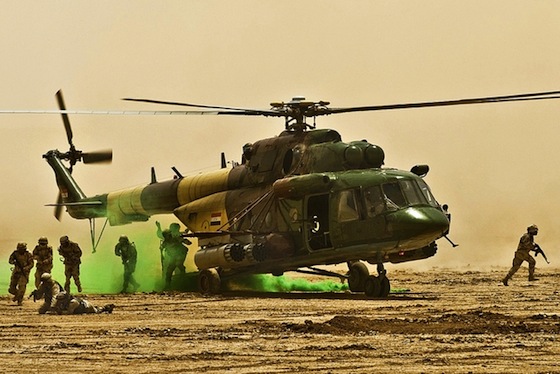
Iraqi soldiers Iraqi helicopter

Iraqi soldiers exiting Iraqi air force helicopter [Image credit]

Following the mass murder in Newtown, Connecticut last week our thoughts again turned to violence. Twenty children killed before they could even reach the prime of life, whatever that is. Correlations were made to abortion, and, in the view of this writer, rightfully so.

By no measure of divine justice will violence outside the womb outweigh violence inside it.

Childhelp.org reports five U.S. children die each day as a direct result of abuse while 6 million are abused and/or neglected annually. That equates to another Sandy Hook every four days.

According to the International Center for Assault Prevention more than “40 million children below the age of 15 are subjected to child abuse each year” (2001). In addition the World Health Organization estimates that 150 million girls and 73 million boys under 18 experienced forced sexual intercourse or other forms of sexual violence during 2002.

What about war? Statistics on war deaths are varied and cover different periods of time, but this site lists conflicts since the American Civil War:

1860-65: USA civil war (628,000)
1886-1908: Belgium-Congo Free State (8 million)
1898: USA-Spain & Philippines (220,000)
1899-02: British-Boer war (100,000)
1899-03: Colombian civil war (120,000)
1899-02: Philippines vs USA (20,000)
1900-01: Boxer rebels against Russia, Britain, France, Japan, USA against rebels (35,000)
1903: Ottomans vs Macedonian rebels (20,000)
1904: Germany vs Namibia (65,000)
1904-05: Japan vs Russia (150,000)
1910-20: Mexican revolution (250,000)
1911: Chinese Revolution (2.4 million)
1911-12: Italian-Ottoman war (20,000)
1912-13: Balkan wars (150,000)
1915: the Ottoman empire slaughters Armenians (1.2 million)
1915-20: the Ottoman empire slaughters 500,000 Assyrians
1916-23: the Ottoman empire slaughters 350,000 Greek Pontians and 480,000 Anatolian Greeks
1914-18: World War I (20 million)
1916: Kyrgyz revolt against Russia (120,000)
1917-21: Soviet revolution (5 million)
1917-19: Greece vs Turkey (45,000)
1919-21: Poland vs Soviet Union (27,000)
1928-37: Chinese civil war (2 million)
1931: Japanese Manchurian War (1.1 million)
1932-33: Soviet Union vs Ukraine (10 million)
1932: “La Matanza” in El Salvador (30,000)
1932-35: “Guerra del Chaco” between Bolivia and Paraguay (117.500)
1934: Mao’s Long March (170,000)
1936: Italy’s invasion of Ethiopia (200,000)
1936-37: Stalin’s purges (13 million)
1936-39: Spanish civil war (600,000)
1937-45: Japanese invasion of China (500,000)
1939-45: World War II (55 million) including holocaust and Chinese revolution
1946-49: Chinese civil war (1.2 million)
1946-49: Greek civil war (50,000)
1946-54: France-Vietnam war (600,000)
1947: Partition of India and Pakistan (1 million)
1947: Taiwan’s uprising against the Kuomintang (30,000)
1948-1958: Colombian civil war (250,000)
1948-1973: Arab-Israeli wars (70,000)
1949-: Indian Muslims vs Hindus (20,000)
1949-50: Mainland China vs Tibet (1,200,000)
1950-53: Korean war (3 million)
1952-59: Kenya’s Mau Mau insurrection (20,000)
1954-62: French-Algerian war (368,000)
1958-61: Mao’s “Great Leap Forward” (38 million)
1960-96: Guatemala’s civil war (200,000)
1961-98: Indonesia vs West Papua/Irian (100,000)
1961-2003: Kurds vs Iraq (180,000)
1962-75: Mozambique Frelimo vs Portugal (10,000)
1962-75: Angolan FNLA & MPLA vs Portugal (50,000)
1964-73: USA-Vietnam war (3 million)
1965: second India-Pakistan war over Kashmir
1965-66: Indonesian civil war (250,000)
1966-69: Mao’s “Cultural Revolution” (11 million)
1966-: Colombia’s civil war (31,000)
1967-70: Nigeria-Biafra civil war (800,000)
1968-80: Rhodesia’s civil war (?)
1969-: Philippines vs the communist Bagong Hukbong Bayan/ New People’s Army (40,000)
1969-79: Idi Amin, Uganda (300,000)
1969-02: IRA – Norther Ireland’s civil war (2,000)
1969-79: Francisco Macias Nguema, Equatorial Guinea (50,000)
1971: Pakistan-Bangladesh civil war (500,000)
1972-: Philippines vs Muslim separatists (Moro Islamic Liberation Front, etc) (150,000)
1972: Burundi’s civil war (300,000)
1972-79: Rhodesia/Zimbabwe’s civil war (30,000)
1974-91: Ethiopian civil war (1,000,000)
1975-78: Menghitsu, Ethiopia (1.5 million)
1975-79: Khmer Rouge, Cambodia (1.7 million)
1975-89: Boat people, Vietnam (250,000)
1975-87: civil war in Lebanon (130,000)
1975-87: Laos’ civil war (184,000)
1975-2002: Angolan civil war (500,000)
1976-83: Argentina’s military regime (20,000)
1976-93: Mozambique’s civil war (900,000)
1976-98: Indonesia-East Timor civil war (600,000)
1976-2005: Indonesia-Aceh (GAM) civil war (12,000)
1977-92: El Salvador’s civil war (75,000)
1979: Vietnam-China war (30,000)
1979-88: the Soviet Union invades Afghanistan (1.3 million)
1980-88: Iraq-Iran war (435,000)
1980-92: Sendero Luminoso – Peru’s civil war (69,000)
1984-: Kurds vs Turkey (35,000)
1981-90: Nicaragua vs Contras (60,000)
1982-90: Hissene Habre, Chad (40,000)
1983-: Sri Lanka’s civil war (70,000)
1983-2002: Sudanese civil war (2 million)
1986-: Indian Kashmir’s civil war (60,000)
1987-: Palestinian Intifada (4,500)
1988-2001: Afghanistan civil war (400,000)
1988-2004: Somalia’s civil war (550,000)
1989-: Liberian civil war (220,000)
1989-: Uganda vs Lord’s Resistance Army (30,000)
1991: Gulf War – large coalition against Iraq to liberate Kuwait (85,000)
1991-97: Congo’s civil war (800,000)
1991-2000: Sierra Leone’s civil war (200,000)
1991-2009: Russia-Chechnya civil war (200,000)
1991-94: Armenia-Azerbaijan war (35,000)
1992-96: Tajikstan’s civil war war (50,000)
1992-96: Yugoslavian wars (260,000)
1992-99: Algerian civil war (150,000)
1993-97: Congo Brazzaville’s civil war (100,000)
1993-2005: Burundi’s civil war (200,000)
1994: Rwanda’s civil war (900,000)
1995-: Pakistani Sunnis vs Shiites (1,300)
1995-: Maoist rebellion in Nepal (12,000)
1998-: Congo/Zaire’s war – Rwanda and Uganda vs Zimbabwe, Angola and Namibia (3.8 million)
1998-2000: Ethiopia-Eritrea war (75,000)
1999: Kosovo’s liberation war – NATO vs Serbia (2,000)
2001-: Afghanistan’s liberation war – USA & UK vs Taliban (40,000)
2002-: Cote d’Ivoire’s civil war (1,000)
2003-11: Second Iraq-USA war – USA, UK and Australia vs Saddam Hussein and subsequent civil war (160,000)
2003-09: Sudan vs JEM/Darfur (300,000)
2004-: Thailand vs Muslim separatists (3,700)
2007-: Pakistan vs PAkistani Taliban (38,000)
2012-: Syria’s civil war (14,000)

(Estimates are near 100,000,000 direct war deaths, government sponsored deaths and civilian casualties in the 20th century.)

Malcolm X is quoted saying, “Sometimes you have to pick the gun up to put the Gun down.” He might, on occasion, be sadly accurate. The Bible does say to live peacefully with everyone as much as it depends on us. That is to say Christ’s followers should view the sword as the very last resort.

God’s people, who are encouraged to be “peace makers,” should, more than most, long for the re-appearing of the Prince of Peace. We should be wary of those who would rush to war, the first to weary of war itself, and aware of the toll violence–in all its forms–takes on men, women, boys and girls the world over in every generation. Even when war is absolutely necessary we should be the first to critique its excesses and encourage its end. Until the Prince of Peace shall come.

‘Waking the Dead,’ by Matthew Perryman Jones

Monday night we were blessed to see and hear Andrew Peterson and friends at the Ryman Theater in Nashville performing Behold the Lamb of God. One of Peterson’s friends who he’s “known for many, many years” is Matthew Perryman Jones. Jones, an accomplished musician in his own right, sang a couple of songs on his own and participated in the larger BTLOG performance.
Land of the Living Matthew Perryman Jones
One of the songs Perryman Jones did was ‘Waking the Dead’ from his project Land of the Living. You can listen to it below. The entire project is very good and can be purchased through the Amazon link.

After giving it a listen, tell me in the comments other artists you think Matthew Perryman Jones resembles stylistically.

Waking the Dead by Matthew Perryman Jones on Grooveshark

Can we have a civil gun discussion or not?

The Daily Beast thinks so.

The well known site asked its readers to weigh-in on the issue. Gun owners and non-owners alike responded with over 600 reasonable comments (DB discarded an unknown number considered “misguided attempts at humor—from both sides of the fence. Others were downright puerile”).

Comments included:

Readers from rural areas said that they own guns for practical concerns, like personal safety in homes located far from law enforcement, or as a necessary tool for their livelihoods.

“We target shoot. We live in a rural area with livestock,” LP from Colorado said. “We have to be able to defend ourselves from aggressive wildlife, put an animal out of its misery if it is severely injured, and defend ourselves in our isolated environment. People are responsible with their guns here.”

A respondent from New Mexico said he or she owns a “.22 pistol to shoot rattlesnakes only in my yard.”

Hunters, not surprisingly, represented a good number of gun owners who responded to our survey. “I grew up in a family that hunted and fished,” said Jeff from Minnesota. “However, I do believe that private ownership of semi-automatic and automatic guns and handguns should be totally prohibited. I am perfectly willing to give up all of my guns for the greater good.”

A third group of gun owners was made up of hobbyists. An anonymous reader from Minnesota wrote that he or she owns a gun “because the hunting and shooting culture I grew up in taught me to respect life, my elders, and firearms. The relationship between me and my father that developed out of firearms and hunting is incredibly meaningful and the most positive one in my life.”

[…]

“Shooting sports are fun, and legitimate,” Andy from Texas wrote of why he chooses not to own a gun. “But the anxieties of the self-defense crowd are just too much for me. I refuse to believe there are that many bogeymen in the world.”

“I don’t need one today, but would want the option to buy one if I change my mind. I could agree with special, renewable permits/licenses and required annual safety training for owners,” wrote one anonymous reader.

Other respondents wrote that they see no need to put the fearsome power of a firearm in the hands of civilians, outside of controlled circumstances like hunting. Christina from California wrote that “the purpose of a gun is to kill someone or something. God is the judge of people’s actions, not me. You don’t need an assault weapon to kill a deer or pheasant. If your life feels threatened, you are in the wrong place.”

“I have curious kids,” wrote Matt from Maryland in a post that summed up many respondents’ feelings about the unreliable hands even a legally purchased weapon might fall in to. “I might lose my job or my wife and have a nervous breakdown.”

If this anywhere resembles a cross-section it appears most Americans are not opposed to gun ownership, but support more restrictions than are currently in place.

I was raised in a gun owning family and am a gun owner. My wife and kids are familiar with firearm use. They will soon become even more proficient.

Personally, I have never seen or felt the need for owning a hundred round ammo drum. I do not know of anyone who hunts with them either. It is true assault-style rifles are not used for hunting quail; but neither are .22s or a .40 Glock. And neither is a chef’s knife or a baseball bat.

I have been to firing ranges with and without someone in charge. Danger never felt near even though every other person was unknown to me. Pay attention when the range is hot and keep your gun pointed toward your target. I have been hunting when the person who knew the least about what was going on was me. Made it through.

I’ve known of one person who was killed because he did not unload his gun before he started to clean it. If fell off the table, discharged and fatally wounded him. I also read of a woman who turned around in her kitchen while holding a knife and fatally wounded a family member. I went to the home of a man whose car had slid of the jack stands and crushed him to death in his own yard. Accidents do happen and they involve guns, knives, cars, rocks, construction, the old and the young.

People even die having sex. I’ll move to Canada when someone tries to outlaw that.

If you are a complete pacifist and refuse to engage violence in any way, then it really should not matter to you whether I choose to defend myself with a firearm, a length of 2×4 or 3 feet of tire chain. I respect your right to allow yourself to be killed. I even respect your right to allow your family to be brutalized while you do nothing. I will defend mine with every ounce of strength and by all available means. Defending the defenseless is not only about abortion.

(As an aside, it amuses me when people decry gun ownership, yet when faced with violence themselves, call the police who come to the rescue…with billy-clubs, pistols, body armor and, if need be, assault weapons. As an aside within an aside, it is a little-known fact that a large number of accidental shootings come from…wait for it…the police shooting themselves and each other. Also, waiting for the police is not recommended in the face of evil people with guns. Check these interesting stats.)

As I perceive the issue of guns, a few things jump out to me. First, if there is a problem with mentally imbalanced people going on rampages it could be a different discussion than the gun discussion. Frankly, we cannot say of every person who goes on a rampage they are mentally challenged or emotionally damaged. This is the easy, lazy way out and is an insult to the millions of mentally challenge or depressed people who never commit a crime.

That said, if weapons that allow for mass or spree murders are falling into the hands of the mentally ill tightening a few processes is the least we can do to protect our friends, family and ourselves until we can get the other issues in society addressed. As a gun owner I confess it makes little sense that I must pass an eye test every time a driver’s license renewal is needed, but have to pass a range test only once.

Second, while the Second Amendment provides the right to keep and bear (“carry”) arms, it does not necessitate the right to own any armament the mind of man can create. I’m not in favor of my next door neighbor having a cache of white phosphorous rounds in his basement. Even if we are attacked by aliens. (Anyone whose ever seen Independence Day knows we need a nerdy code-writer before any weapons will do any good anyway.)

The flip side of this is the musket argument, and that being a poorly conceived one. The 2nd was written during a time that our arms were equal to or superior to those of our enemies. That they were single shot rifles and manual reloads is completely irrelevant. If the constitution was being written today with the same intent we still would be addressing a situation where our choices should be what allows for practical defensibility. As weapons became more advanced–and that before the NRA–the 2nd Amendment was not modified.

Third, the problem of evil is real. Demonic possession is real. The hearts of people are blackened with hurt, hate, cruelty and violence. I do not expect our congress to engage this part of the conversation, but followers of Christ must do so. We cannot legislate away evil but we can recognize and give ministry to those who are being overcome by it. Jesus changes hearts and lives.

Fourth, lawbreakers do not need permission or permits. One reason we have drive-by shooting deaths is gangsters are apparently bad shots while in moving vehicles. Why should they not be? When you are under-aged, have an illegal firearm, and are intending to kill people, you cannot exactly go to a range and practice. (“Hey Harold, how much to access the urban setting firing range for some practice today? Could you set some cardboard kid cutouts on front porches and such? I hit too many last time.”)

Many gun deaths are a result of not one, but a large number of accumulated broken laws. Though an old axiom, “If guns are outlawed only outlaws will have guns,” is very true. Gun crime is again on the rise in England where citizens do not own or carry. Things have degenerated in some areas to the point *gasp* the police have once again started packing.

In a free country law abiding people should be able to defend themselves against aggression, point for point. Those who abide by the law should never be faced with defending themselves against a 9MM using a rolled up magazine. I’m not Jason Bourne. Neither is anyone I know.

Will we be able to have a rational discourse on this? Given that my definition of rational my differ from yours and everyone else’s?

SNL almost gets it right

saturday night live graphicOver the weekend the iconic and well known comedy program, Saturday Night Live, used their “cold opening” in a memorable way. Rather than a sketch The New York Children’s Chorus sang two verses of Silent Night. It was poignant, well performed, and touching. Kudos to the SNL gang for sensitivity during a trying time.

Interestingly, the second verse brought substantially changed lyrics. Rather than “Christ our Savior is born, Christ our Savior is born” the singers repeated the phrase “sleep in heavenly peace” from the first verse.

Thought this is a day of pluralism I will not speculate as to why the lyrics were changed or who was behind it. But, it does substantially change the meaning of the song. Silent Night is not a generic holiday song like Santa Claus and Popcorn. It remembers the incarnation–the entrance of God Almighty into this world as a human. That is worth the specific lyrics the author intended.

(Apologies to Jay Sanders.)

My favorite Christmas art

Each year Hobby Lobby releases original artwork for certain holidays. From the mid-1990s until the mid-2000s these were published in major newspapers on Christmas and Easter. In 2006 Independence Day was added.

Especially in regard to the first two I always thought this was a great example of missional activity by corporate ownership. Run your business well, honor God with your income, and speak the gospel into culture as you can.

Below is the Christmas art from 2004. I remember seeing this for the first time. It was arresting.

Hobby Lobby Christmas art

The 2004 Christmas art from Hobby Lobby [Original]

I realize this may not be art in the classic sense. Da Vinci probably will not be brought to mind. But…

Most Christmas art focuses on Jesus and Mary. Even the recent postage stamps I purchased were Madonna and Child. At best you might get the “holy family” as all three are at the manger.

In this picture, though, the manger is secondary. The cattle may be lowing, but they are more doing what animals do when humans are around: sleeping or watching. The only thing better would have been a big cow with hay protruding from both sides of her mouth. Even Mary is asleep. After all, that is what women do after childbirth if they have a chance.

The scene is thus reframed as son and dad.

Often, I think, Joseph is not given enough credit. He stood with Mary when harsh rumors must have been swirling. We know the rumors of Mary’s sexual impurity were whispered about for years since even after Jesus was an adult He was still thought of by some as “one born from sexual immorality.”

Joseph was obedient to a heavenly vision that may not have made any more sense than how he must have felt when Mary first told him about Gabriel’s annunciation. “Joe, you might want to sit down for a second…”

He was a faithful provider for his family and, as was custom, taught his oldest, albeit adopted, son the trade of being a carpenter. At various times in his life Jesus was called both “the son of the carpenter” and “the carpenter from Nazareth.”

Joseph was a faithful Jew talking Jesus to Jerusalem for the feast. And like any other dad he lost his Son for a couple of days on the return and never missed him.

Men often get a bad rap in our culture. But there is hardly a dad at all who cannot identify with this scene. A young mom resting while first-time dad holds his squirming, stretching, sniffling, yawning, peeing, pooping, crying bundle of wonder.

And in this crowded stall a young Jewish dad held the greatest Wonder of all.

(You can see all Hobby Lobby holiday art here.)

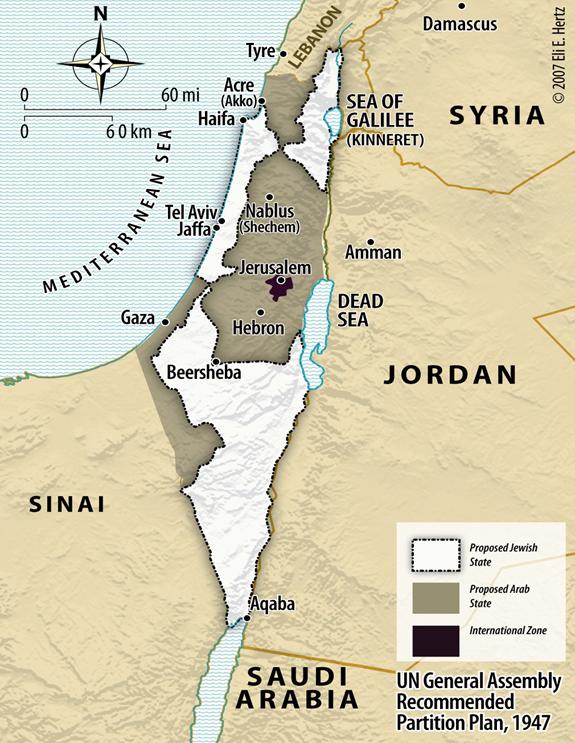
One Christ follower thinks about Gaza, Israel and Palestinians, Part 3

In the first two installments of this series we looked at some of the history of the Conflict between Israel and the Palestinian people. We also considered the current condition of Palestinians who are in Gaza and the West Bank. Those and this post are aiming to consider not whether Israel is always right or wrong, not whether the Palestinian people are completely without fault. I accept there is fault on all sides.

The purpose in this exercise is to consider whether Bible believers must support any action taken by the government of Israel. To put it in the form of a question, must followers of Christ affirm every political or military action taken by national Israel? Or, can the actions of Israel be critiqued biblically just like every other geo-political entity on Earth, including the United States?

The uniqueness of Israel throughout biblical history can hardly be overstated. Birthed from the beyond-her-prime-wife of a former pagan, Abram (then, Abraham), the descendants of Jacob (then, Israel) were the apple of God’s eye. Chosen to be a light to the nations and form the cultural cradle for the Savior of the world, God’s people–His wife–were unique among all ancient people.

With that privilege was a responsibility they often shirked in favor of more attractive, available, temporal gods, even those “requiring” acts of adherence the true God expressly forbade. A cycle of obedience, sin, enslavement and deliverance became the title page, closing comments and every chapter of the chosen nation. This lasted for centuries.
1947 UN partition map of palestine gaza west bank
The New Testament narrative opens with Israel enduring the occupation of a foreign army. That idea about carrying a cloak two miles after being asked to carry it only one? It was related to the occupying Roman army. That centurion at the foot of the cross? A member of the occupying Roman army. Even Jesus crucifixion needed the approval of the Roman procurator, Pontius Pilate. Israel had a measure of freedom, but the Jews were not free people.

Enter the Messiah, meek and lowly and riding on a donkey. Instead of a chariot, a four legged beast of burden. Rather than a cannonade, followers waved palm branches. Replacing the shout of the conqueror, we hear, “Hosanna! Blessed is He who comes in the name of The Lord!” Substituted for a victory over Rome was a mysterious kingdom “not of this world.”

There was nothing humanly militaristic about the coming of Christ. It was completely upside down from the expectation of His day.

When His disciples tried to pin Him down on Israel’s return to power, He shrugged off their concerns insisting that God knew, it was in His control and that was all that mattered. Then He went back to heaven and we have been awaiting His return ever since.

Before Jesus left, however, He pulled off a pretty major celestial coup de tat. Eternal, you could say. He destroyed death, and him who had previously held the power of death–Satan–dishing him a mortal blow, from the cross no less. Jesus most significant point of defeat was only apparent defeat. Turns out it was actual victory over sin, death and hell. Immediate, progressive and ultimate.

By this victory Jesus instituted a different group, called the church. His words were that the church would be of His own construction, empowered by His Spirit, commissioned to carry the gospel to all nations. In other words, the church–which would be transnational, transcultural, transgenerational, and timeless–would assume the assignment that once belonged to national Israel. An assignment they finally and thoroughly rejected with the cry, “Let the blood of this man be on us and our children!”

All the descriptions bestowed upon Israel in the Old Testament–chosen, washed, righteous, holy–were bestowed upon Christ’s followers in the New Testament. Additionally, the book of Hebrews makes it clear the priesthood unique to Old Testament Israel (still functioning at the time of Christ) was inferior to the new priesthood Jesus Himself introduced and headed. This was and is a priesthood inclusive of all believers.

I do not plan to argue the Replacement view of Israel and the church. These thoughts are being introduced primarily to demonstrate our dominant, accepted view is not the only biblical way of viewing Israel’s role in modern times.

For the sake of argument, though, let’s assume pre-tribulation, pre-mill, dispensational theology is correct. Let’s assume the church will be raptured at some point and God’s gospel spreading work will return to national Israel.

Would this mean the current government of Israel is beyond criticism and critique? I submit it does not.

If Christ followers do not demand from Israel the same justice we demand for Israel, we are being hypocritical. This hypocrisy will not only be tragic it will be noticeable. We will appear double-minded and unstable because we will be double-minded and unstable. The church does not receive its instruction from the descendants of Abraham; she receives instruction from the God of Abraham.

The history of the Old Testament is a chronicle of the critique and rebuke of Israel’s sinful behavior. Why should we believe this to have changed in an era when Israel has rejected her Messiah? The church is to be the voice of God’s kingdom, the light of truth to the world! Shall we hush our mouths from witness to His truth and justice simply because Israel would be rebuked?

Such biblically warranted correction is not bruising the apple of God’s eye; if anything, it is polishing it.

One Christ follower thinks about Gaza, Israel and Palestinians, Part 2

In the first part of this series we considered a little of the history of modern Palestine. A few things were noted most evangelicals may not know including a position in the Israeli government since pre-1948: that the Palestinians should be dispossessed.

If you have not read the above I encourage you to do so before continuing. Some context will be helpful. For reasons probably obvious let me state I am not against Israel, their right to exist as a sovereign nation, nor their right to self-defense. If my posts seem one sided it is due to my effort in providing needed balance within the evangelical community. In most cases I am not reiterating that which is commonly accepted as true; those arguments have been made many times. I also do not defend terroristic or militaristic threats from either side.

Israeli flag
Hatred flows both ways in this struggle. Much is made about Hamas’ platform that Israel should not exist, but little is made of Israel’s ongoing desire (and forced effort) to occupy as much of Palestine as possible. Remember the King-Crane commission found a mindset among the Jews to completely dispossess the non-Jewish residents of Palestine. This matched the desire of many in the Arab nations to have neither the Jews in Palestine nor the displaced Palestinians in their own country (though thousands ended up inside those borders anyway).

So what is really going on in Gaza? This from Diane Buttu, a Canadian attorney who has counseled both the PLO and Mahmoud Abbas:

Today, the people of Gaza suffer from a brutal blockade that has lasted for more than 6 years and isolation that has lasted for more than 20 years. Israel strictly controls imports into Gaza and exports are virtually non-existent. Palestinian life is so controlled by Israel that the Israeli government even sets policies on the minimum number of calories needed to prevent malnutrition. Access to the sea – one of their main sources of livelihood – is strictly curtailed and the water of the Gaza Strip is barely drinkable, with less than 5 per cent of their water supply fit for human consumption.

This via Wikileaks and published in the Israeli newspaper, Haaretz:

“As part of their overall embargo plan against Gaza, Israeli officials have confirmed to (U.S. embassy economic officers) on multiple occasions that they intend to keep the Gazan economy on the brink of collapse without quite pushing it over the edge,” one of the cables read.

Israel wanted the coastal territory’s economy “functioning at the lowest level possible consistent with avoiding a humanitarian crisis”, according to the Nov. 3, 2008 cable.

Note two of the objectives: to regulate the amount of food–down to the number of calories residents received–to avoid an official humanitarian crisis (ie, Darfur), and keep the economy on the brink of collapse. Note the source of the economic warfare is not a shrieking Palestinian terrorist, but an official diplomatic cable.

Water is needed for any people to survive as we all know. Prolific author and M.I.T. professor, Noam Chomsky, wrote in a November 9, 2012 article,

Sitting in a hotel near the shore, one can hear the machine-gun fire of Israeli gunboats driving fishermen out of Gaza’s territorial waters and toward land, forcing them to fish in waters that are heavily polluted because of U.S.-Israeli refusal to allow reconstruction of the sewage and power systems they destroyed.

The Oslo Accords laid plans for two desalination plants, a necessity in this arid region. One, an advanced facility, was built: in Israel. The second one is in Khan Yunis, in the south of Gaza. The engineer in charge at Khan Yunis explained that this plant was designed so that it can’t use seawater, but must rely on underground water, a cheaper process that further degrades the meager aquifer, guaranteeing severe problems in the future.

The water supply is still severely limited. The U.N. Relief and Works Agency (UNRWA), which cares for refugees but not other Gazans, recently released a report warning that damage to the aquifer may soon become “irreversible,” and that without quick remedial action, Gaza may cease to be a “livable place” by 2020.

Writing in the Boston Globe last week, Sara Roy addressed the issues of arable land and fishing, both of which have been curtailed by Israel’s government:

Gaza’s economic decline is seen in the near collapse of its agricultural sector. One factor is the destruction of around 7,800 acres of agricultural land during Cast Lead. Consequently, approximately one-third of Gaza’s total arable land is out of production. Furthermore, Israeli-imposed buffer zones — areas of restricted access — now absorb nearly 14 percent of Gaza’s total land and at least 48 percent of total arable land.

Similarly, the sea buffer zone covers 85 percent of the maritime area promised to Palestinians in the Oslo Accords, reducing 20 nautical miles to three, where waters are fouled by sewage flows in excess of 23 million gallons daily.

And it is not limited to Gaza. According to Pakistani reporter M. AQavi, writing in the Tribune, dispossession is still taking place in East Jerusalem. From March of this year, he writes,

Sheikh Jarrah, an Arab neighbourhood in East Jerusalem, is across the road from the American Colony Hotel where Mr Tony Blair and his staff have their offices. It is also one of the sites where a Jewish Settlers’ organisation is planning to build a 200 unit Settlement in place of the existing Arab housing.

Arab homes are being forcibly occupied by Settlers and their Arab occupants thrown out on the street…A Mr Al Kurd, who is one of the evicted Arabs, stands out and of course a swarm of children from the neighbourhood also gather around. The routine is to gather around the Sheikh Jarrah mosque holding banners in Hebrew, Arabic and English and clutching Palestinian flags. After 15 minutes or so, we march to visit each occupied house in turn, to remind the new occupants they are living in someone else’s house. Each occupied house is guarded by border police, video monitors, and at one of the houses I notice barbed wire as well. On the way back from visiting the last occupied house I see male members of a Settler family heading home for the Sabbath, all dressed in fine traditional dress with circular fir hats and all that.

In the last few days, a Israeli government official, in response to the U.N. granting non-member observer status to Palestine, confirmed “a report that Israeli Prime Minister Benjamin Netanyahu had decided build the 3,000 units in response to the Palestinians success at the UN…’It’s true – in (east) Jerusalem and the West Bank,’ without saying exactly where.”

In Israel possession continues to be 10/10ths of the law and dispossession is the means of keeping it.

After 6+ decades of dissension there is no end of examples, but Bob Roberts, Jr. can summarize the situation better than I. Theologian, missiologist, pastor and statesman, Roberts has friends in both Israel and among the Palestinians. He has been on the ground there. He is aware of the dire situation in Gaza. This is an excerpt from his blog on November 17, 2012. All emphasis is mine.:

First, each side overwhelmingly in every survey done wants a two state solution. From Jewish & Palestinian college students, cabbies, men, women, faith leaders, and yes – even governmental leaders on each side, I’ve heard the same thing.

[…]

Second, as one Palestinian scholar told me – the biggest problem is they are both “victim” cultures. The Jewish statement “never again” causes overreach on the part of the Jews in how they can be heavy handed with the Palestinians. The displacement of millions of Palestinians having been driven from their homeland after centuries and millennia prevents them from thinking about moving forward with where things are versus what they wish they could go back to.

[…]

Third, not just during this current crisis – but everyone who has been living in bunkers with sirens for the past 60+ years – this has got to be incredibly destabilizing for people as individuals and culture in general. Gaza is the most densely populated places in the world. Putting a wall around it with automatic movement operated machine guns, mines and trying to cut the people off from the world and daily necessities is a recipe for an explosion. People when forced to live in that animal environment become animals. Frankly, I’m amazed there hasn’t been more conflict – if it was Texas, speaking as a Texan – I assure you there would be. Ever heard of the Alamo?

[…]

Let’s be clear, there are Palestinian terrorist [sic] that don’t want to compromise, respect Israel, her right to exist and would circumvent any movement towards peace – this cannot be. Let’s be equally clear, it isn’t a fence or a barrier – it is a 30 foot concrete wall, with machine gun towers pointing down on the people that has been built around Palestinians in Gaza, Bethlehem, Ramallah, other cities – putting entire populations of millions in virtual “prison” – this is simply unsustainable.

I have thought often about the scenario Roberts references in his “Remember the Alamo?” statement. Unless you literally move to flatten every structure in Gaza and commit genocide on this race of people, the increases in pressure will result in eruptions. Whether a masked Hamas terrorist, a teenager throwing rocks or a kid making obscene gestures, there will be a response. And we should not be surprised when there is.

Why Ron Paul excels John McCain and Mitt Romney

Most people who know me are aware that I supported retiring Texas congressman Ron Paul for president. I did so in 2008 and 2012. All except those who have died in the mean time also know that he did not win, unless you count those eleven congressional terms.

Yesterday Ron Paul gave a final speech in the House chamber. Like most of his speeches it was a bit rambling, sounding warning bells on economic concerns, the gold standard of money, an overextended military and liberty. From his remarks:

In many ways, according to conventional wisdom, my off-and-on career in Congress, from 1976 to 2012, accomplished very little. No named legislation, no named federal buildings or highways—thank goodness. In spite of my efforts, the government has grown exponentially, taxes remain excessive, and the prolific increase of incomprehensible regulations continues. Wars are constant and pursued without Congressional declaration, deficits rise to the sky, poverty is rampant and dependency on the federal government is now worse than any time in our history.

All this with minimal concerns for the deficits and unfunded liabilities that common sense tells us cannot go on much longer. A grand, but never mentioned, bipartisan agreement allows for the well-kept secret that keeps the spending going. One side doesn’t give up one penny on military spending, the other side doesn’t give up one penny on welfare spending, while both sides support the bailouts and subsidies for the banking and corporate elite. And the spending continues as the economy weakens and the downward spiral continues. As the government continues fiddling around, our liberties and our wealth burn in the flames of a foreign policy that makes us less safe.

Through the campaigns Paul supporters (excepting a few flamers and morons) were a thoughtful and cogent–if not an odd–mix. It is safe to say no other single candidate in the last two elections has attracted such a wide variety in his or her base. Only Barack Obama’s supporters could touch Dr. Paul’s for passion.

In an insightful article entitled, “Who Killed Rudy Guiliani?”, W. James Antle III asserts that Ron Paul has restored the soul of conservatism’s future. In my way of thinking this would make Paul the true and better William F. Buckley, Jr. Writes Antle:

When Ron Paul leaves office in January, he will have been more successful than many of the legislators who spent decades maligning him. Paul’s ideas have gradually gone from marginal to mainstream, and his record shows how much even a single determined man of principle can do to change a movement. In foreign policy especially, the Texas congressman leaves behind a new generation of leaders, both libertarian and conservative, who challenge the disastrous bipartisan consensus.

Conor Friedersdorf chose not to actually engage the content of the speech, but, while questioning some of the questions posed by Paul, had to admit “the United States – and especially its most unjustly treated citizens – would be better off if more legislators were grappling with them.” Ron Paul asked,

-Why are sick people who use medical marijuana put in prison?
-Why does the federal government restrict the drinking of raw milk?
-Why can’t Americans manufacturer rope and other products from hemp?
-Why are Americans not allowed to use gold and silver as legal tender as mandated by the Constitution?
-Why is Germany concerned enough to consider repatriating their gold held by the FED for her in New York? Is it that the trust in the U.S. and dollar supremacy beginning to wane?
-Why do our political leaders believe it’s unnecessary to thoroughly audit our own gold?
-Why can’t Americans decide which type of light bulbs they can buy?
-Why is the TSA permitted to abuse the rights of any American traveling by air?
-Why should there be mandatory sentences–even up to life for crimes without victims–as our drug laws require?
-Why have we allowed the federal government to regulate commodes in our homes?
-Why is it political suicide for anyone to criticize AIPAC ?
-Why haven’t we given up on the drug war since it’s an obvious failure and violates the people’s rights? Has nobody noticed that the authorities can’t even keep drugs out of the prisons? How can making our entire society a prison solve the problem?
-Why do we sacrifice so much getting needlessly involved in border disputes and civil strife around the world and ignore the root cause of the most deadly border in the world-the one between Mexico and the US?
-Why does Congress willingly give up its prerogatives to the Executive Branch?
-Why does changing the party in power never change policy? Could it be that the views of both parties are essentially the same?
-Why did the big banks, the large corporations, and foreign banks and foreign central banks get bailed out in 2008 and the middle class lost their jobs and their homes?
-Why do so many in the government and the federal officials believe that creating money out of thin air creates wealth?
-Why do so many accept the deeply flawed principle that government bureaucrats and politicians can protect us from ourselves without totally destroying the principle of liberty?
-Why can’t people understand that war always destroys wealth and liberty?
-Why is there so little concern for the Executive Order that gives the President authority to establish a “kill list,” including American citizens, of those targeted for assassination?
-Why is patriotism thought to be blind loyalty to the government and the politicians who run it, rather than loyalty to the principles of liberty and support for the people? Real patriotism is a willingness to challenge the government when it’s wrong.
-Why is it is claimed that if people won’t or can’t take care of their own needs, that people in government can do it for them?
-Why did we ever give the government a safe haven for initiating violence against the people?
-Why do some members defend free markets, but not civil liberties?
-Why do some members defend civil liberties but not free markets? Aren’t they the same?
-Why don’t more defend both economic liberty and personal liberty?
-Why are there not more individuals who seek to intellectually influence others to bring about positive changes than those who seek power to force others to obey their commands?
-Why does the use of religion to support a social gospel and preemptive wars, both of which requires authoritarians to use violence, or the threat of violence, go unchallenged? Aggression and forced redistribution of wealth has nothing to do with the teachings of the world’s great religions.
-Why do we allow the government and the Federal Reserve to disseminate false information dealing with both economic and foreign policy?
-Why is democracy held in such high esteem when it’s the enemy of the minority and makes all rights relative to the dictates of the majority?
-Why should anyone be surprised that Congress has no credibility, since there’s such a disconnect between what politicians say and what they do?

A commenter at the Los Angeles Times derisively exclaimed: “Ron Paul; the answer to a question nobody asked.”

That may well be true. But maybe the problem is the wrong questions were asked over and over while the right ones were ignored.

ron paul texas a&m

Ron Paul speaks to a packed house at Texas A&M University


Did I think he could have won? Sure anything is possible. Did I think it probable? I guess I never did.

For me it was never about him winning. Though they are loathe to admit it history has already taught McCain and Romney supporters they were not about winning either. They could win neither the political nor idealogical campaigns.

For me it was about the conversation itself. Nothing is changed until the conversations is changed. McCain did not try to change the conversation unless you want to count from bad to worse. One hundred years in Iraq, an entirely new wing of government to deal with mortgages, and more military intervention. This was not upward movement; this was accelerated depreciation of ideas.

Romney could have changed the conversation several dozen times with only himself doing the talking. But, as the election demonstrated, people were too uncertain which Romney asked for their vote. In the end Romney was too much like Obama-lite to change the conversation. Romney was like Obama in an echo chamber on foreign policy, could not chart a believable path on domestic policy, and found a pretty much deaf ears on social policy.

Think about what we never heard from the top two in 2012 that Ron Paul talked about every chance he got: abuses by the Federal Reserve bank that both destroy the poor and middle class and allow for endless wars and interventions, a failed “War” on Drugs that has created an America with about as many people through prison and probation as the Gulags at their depths of depraved darkness, assassinations of American citizens without due process, abuses of government power through the Patriot Act, abuses of executive power through Executive Orders (aka “presidential directives”), the dangers of indefinite detention, and on and on we could go.

Ron Paul’s insistence that we adhere to the constitution was not only refreshing, for some people it was eye-opening and for others it was an absolute epiphany. Someone running for president acknowledging the power of the president is limited and war should be declared by Congress. Gasp! He showed a person did not have to be a card carrying member of the ACLU to care about civil liberties since civil liberties are constitutional, not preferential. He showed why and how it could and should be so.

Mitt Romney was not able to generate a single idea in his entire campaign that will still be talked about in another month. Ron Paul’s ideas have already spawned two movements, one official (the “Tea Party”) the other not (the Liberty Movement), created a trio of best selling books, contributed to a number of others being elected to congress, and drawn regular crowds of two to ten thousand people of all ages and socio-economic backgrounds.

For one, I’m thankful to have lived in the era when Ron Paul gained a national stage. He will never be elected again, and never be president. But while Barack Obama has found success with, “Ask what your country can do for you,” Ron Paul’s ideas are the ones whose time has come.

And, if those who call themselves conservative would stop merely adopting and modifying the thinking of the Left, they might just find these ideas unstoppable.

[Image credit]

Friedersdorf on the abject failure of conservative media

Rush Limbaugh

Conservative radio theater host, Rush Limbaugh [Image credit]

Over the last few weeks I have come to appreciate the writings of Conor Friedersdorf, columnist for The Atlantic. Following last night’s election results he addressed the failure of the conservative media to see the big pre-election stories, opting instead for conspiracy theories, and faux news.

The losers, according to Friedersdorf, were the “rank-and-file” conservatives who took Limbaugh, Hannity, et al, as authoritative and truthful casting a wary eye at all other outlets.

From the article:

Barack Obama just trounced a Republican opponent for the second time. But unlike 4 years ago, when most conservatives saw it coming, Tuesday’s result was, for them, an unpleasant surprise. So many on the right had predicted a Mitt Romney victory, or even a blowout — Dick Morris, George Will, and Michael Barone all predicted the GOP would break 300 electoral votes. Joe Scarborough scoffed at the notion that the election was anything other than a toss-up. Peggy Noonan insisted that those predicting an Obama victory were ignoring the world around them. Even Karl Rove, supposed political genius, missed the bulls-eye. These voices drove the coverage on Fox News, talk radio, the Drudge Report, and conservative blogs.

Those audiences were misinformed.

Outside the conservative media, the narrative was completely different. Its driving force was Nate Silver, whose performance forecasting Election ’08 gave him credibility as he daily explained why his model showed President Obama enjoyed a very good chance of being reelected. Other experts echoed his findings. Readers of The New York Times, The Atlantic, and other “mainstream media” sites besides knew the expert predictions, which have been largely born out. The conclusions of experts are not sacrosanct. But Silver’s expertise was always a better bet than relying on ideological hacks like Morris or the anecdotal impressions of Noonan. Sure, Silver could’ve wound up wrong, but people who rejected the possibility of his being right?

They were operating at a self-imposed information disadvantage.

[…]

You haven’t just been misinformed about the horse race. Since the very beginning of the election cycle, conservative media has been failing you. With a few exceptions, they haven’t tried to rigorously tell you the truth, or even to bring you intellectually honest opinion. What they’ve done instead helps to explain why the right failed to triumph in a very winnable election.

Why do you keep putting up with it?

Conservatives were at a disadvantage because Romney supporters like Jennifer Rubin and Hugh Hewitt saw it as their duty to spin constantly for their favored candidate rather than being frank about his strengths and weaknesses. What conservative Washington Post readers got, when they traded in Dave Weigel for Rubin, was a lot more hackery and a lot less informed about the presidential election.

Conservatives were at an information disadvantage because so many right-leaning outlets wasted time on stories the rest of America dismissed as nonsense. World Net Daily brought you Birtherism. Forbes brought you Kenyan anti-colonialism. National Review obsessed about an imaginary rejection of American exceptionalism, misrepresenting an Obama quote in the process, and Andy McCarthy was interviewed widely about his theory that Obama, aka Drone Warrior in Chief, allied himself with our Islamist enemy in a “Grand Jihad” against America. Seriously?

Conservatives were at a disadvantage because their information elites pander in the most cynical, self-defeating ways, treating would-be candidates like Sarah Palin and Herman Cain as if they’re plausible presidents, rather than national jokes who’d lose worse than George McGovern.

I encourage you to read the entire piece.

I’m sure some will say, “But what about Benghazi? What about Fast and Furious? What about socialism? What about Obamacare?”

To which I answer, “What about the boy who cried wolf?” As conservative media beats the birther drum, the Obama 2016 drum, and every other drum of suspiciousness, why should conservatives be surprised to find the wolf soundly dismissed even when loudly announced?

Conservative media, like liberal media, does not exist to tell the truth. It exists to relate a narrative. Each narrative fulfills–they hope–two functions: to sell ads and to make money. I really do not see this as cynicism. This is just reality.

The air inside any bubble eventually becomes toxic.

As long as Americans–conservative and liberal, Right and Left–eat pablum like it is a 5-star breakfast and drink muddy water like Italian roast, media sources will be content to serve it up as a never ending feast.