Category Archives: Blog

Exactly how much will some people lie? Jimmy Kimmel knows

Jimmy Kimmel has a segment on his show called “Lie Witness News.” It is similar to other person-on-the-street interviews with this caveat: the interviewer is asking completely bogus questions. Nothing about the questions is true because nothing about them can be true. “What did you think about the debate?” when the debate has not taken place. “Who are you voting for?” when no such office exists.

liar pinocchio

Image credit: Disney


As Kimmel wryly notes, “We found people who had strong opinions about these imaginary events.”

One thing this demonstrates is people will lie and sometimes continuously if it makes them looks smart. Or if they think it makes them look smart. While this is likely true everywhere, it is doubtless true on Hollywood Boulevard.

“Did you vote in today’s vice-presidential election?”

And then there is this one where one of the liars shows up on the studio audience. He does not escape Kimmel’s attention.

“Who Won Last Night’s First-lady Debate?”

To kill Americans

Let’s make this short and sweet.

senator rand paul

Kentucky Senator Rand Paul [Image credit]

For around 13 hours yesterday and into this morning, Kentucky senator Rand Paul (R) conducted a filibuster in the United States senate chamber. Ostensibly a delay to the probable confirmation of John Brennan as CIA chief, Paul allowed numerous times his main purpose was to draw attention to the targeted killing program operated by the Obama administration. Said program is primarily carried out by Unmanned Aerial Vehicles, commonly known as “drones.”

While some may argue the necessity of drones in wartime, even considering the differences of the “War on Terror” (I do not), Paul’s argument with the administration was different. Currently, the Obama administration, via Attorney General Eric Holder, holds to the position of possible killing of American citizens on American soil without due process, without charge, without trial.

The 5th Amendment to the U.S. constitution reads:

In ALL criminal prosecutions, the accused shall enjoy the right to a speedy and public trial, by an impartial jury of the State and district wherein the crime shall have been committed, which district shall have been previously ascertained by law, and to BE INFORMED OF THE NATURE AND CAUSE OF THE ACCUSATION; to be confronted with the witnesses against him; to have compulsory process for obtaining witnesses in his favor, and to have the assistance of counsel for his defense. [EMPHASIS ADDED.]

All of these rights are set aside in each and every case of targeted killing. The nature of targeted killing is secrecy, not openness. It’s a secret list, a secret process, secret decision making, secret rules, secret records, and secret secrecy.

To put it another way: There is no due process when the charge is on the business end of a missile in your morning latte.

The Constitution must protect the worst of us if it is to protect the rest of us. No matter how strong the evidence against a person, a “day in court” is a constitutional guarantee. It is this guarantee that has historically separated the Republic from banana republics. Violation of this right by any president or administration is not only unconstitutional, it is uncivilized.

I take issue with Bush, Rice, Obama and Brennan that drone warfare is legitimate or the “collateral damage” acceptable. I also take issue with Holder that Americans may be killed by the government based on little more than circumstantial evidence. Murder by suspicion is not a comforting thought.

The years since 9/11 bear witness to the hurricane force erosion of the 4th Amendment. It appears the shores of the 5th will be the next to wash away.

Don’t throw “The Bible” under the bus

Jesus walks on water The Bible

Jesus walks on water.


Tonight begins the showing of the highly anticipated mini-series The Bible. Produced by Mark Burnett (“Survivor,” “The Voice”) and Roma Downey (“Touched by an Angel”) I’m already seeing a tremendous amount of buzz on Facebook. Twitter also is seeing a lot of activity.

In fact, while I was looking at tweets more than 35 more dropped into the stream.

A few naysayers have popped up, primarily because they disapprove of some participants. This is to be expected, sad as it is, because there are always those who shoot first, aim second, and then determine whether they in fact had a reason to be firing at all.

Because this is an adaptation, I would expect some “storyteller’s license” though how much remains to be seen. Even if this is the case, it is still not a reason for concern. Here’s why:

There have been numerous adaptations of the Christmas Story, the Easter Story, indeed the entire Bible, over the years. None of them have halted the message of Christ. Even the scandalous Last Temptation of Christ did nothing to slow the spread, or diminish the power of the gospel.

If there are discrepancies in The Bible on HISTORY use those as further opportunities to point out the truth of the Bible. The Word has power and the Holy Spirit can use it to communicate the truth and convict of sin, righteousness and judgment.

So, even if there are a few minor issues, don’t throw The Bible under the bus.

To get a copy of the book A Story of God and All of Us, based on the mini-series, click here.

Fear not

Several years ago I was privileged to hear former professor Eugen Schoenfeld, a Holocaust survivor, address a north Atlanta audience. In the midst of telling a portion of his story he made a specific statement that stuck with me. Here is a paraphrase:

Always watch what your government does in times of fear. Hitler rose to power during a time of national calamity and fear in Germany: fear of the economy, fear of the impact of Versailles. In times of fear it is easy for the government to take civil liberties because we readily give them up.

Schoenfeld may have been referring to the Patriot Act, but I do not remember specifically. It would fit the bill.

The aftermath of 9/11 brought a period of uncertainty, vengefulness and fear. Our national disposition was one of disbelief. We expected a response and were rewarded.


In order to ensure 9/11 did not become the progenitor of many such events, the Department of Homeland Security was formed. Even though we should have known better, we gave away certain rights guaranteed us by the Constitution. If we did not give them away, we did little more than pout as they were take away from us. Warrantless wiretaps, secret courts, and expansive government powers have re-defined “the American Experience.” In some ways we have more commonality with banana republics of the 1970s than with the American Revolution of the 1770s.

None of this happened because we evaluated the ramifications. All of this happened because of fear. We gave up liberties enjoyed by generations of Americans before us because we feared for ourselves and the generations to follow.

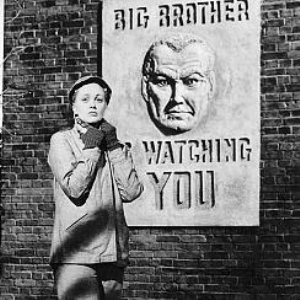
If you keep up with the news at all you know that we have consistently seen the Fourth Amendment of the Constitution eroded until almost nothing remains. “Probable cause” has become the humorless punchline to an inside joke of the police state. In 2013 America it’s closer to 1984 than ever.

In addition to the governmental overreach accelerated in the last decade, we have witnessed–from a New Testament perpective–a moral shift perhaps not seen since the 1960s. Gay marriage, which was a fringe issue a decade ago, now has the support of almost all Democrats and a new crop of leading Republicans. Within the year it could be legalized in all 50 states. Homosexual behavior, once was mentioned in hushed tones, if at all, is now the theme of movies, TV shows, and sympathetic news stories. At the current pace there will soon be no closet from which to “come out.”

The Democratic National Convention cheered abortion like a drunken pep rally might cheer another keg and barely voted in the most generic mention of God in the platform. The Republicans mention God, but could not define Him in a month of Sundays. Their most openly religious presidential candidate openly advocated for pre-emptive assassinations based on an Iranian person’s occupation.

Our concept of religious liberty, indeed the concept our country has held since the first feet left the boat, has been reinterpreted. Religious thought is as widely supported as ever…as long as it only affects your personal life. Try to bring it into the public square and voila it is branded “hate speech.”

These are times of extreme change, and nearly unbelievable societal morphing. The result seems to be a lot of fear and worry among Christ followers.

It is for times like these multiple scriptures were written. The Old Testament addresses fearful times: “Do not fear, for I am with you; do not be afraid, for I am your God. I will strengthen you; I will help you; I will hold on to you with My righteous right hand.” Isaiah 41:10

As does Jesus: “Do not be afraid, little flock, because your Father delights to give you the kingdom.” Luke 12:32

“Don’t fear those who kill the body but are not able to kill the soul; rather, fear Him who is able to destroy both soul and body in hell.” Matthew 10:28

As does Paul: “For God has not given us a spirit of fearfulness, but one of power, love and sound judgment.” 2 Timothy 1:7

As did an angel: “‘Don’t be afraid, Paul. You must stand before Caesar.'” Acts 27:24 (Note the governmental aspect.)

As did Peter: “But even if you should suffer for righteousness, you are blessed. Do not fear what they fear or be disturbed, but honor the Messiah as Lord in your hearts. Always be ready to give a defense to anyone who asks you for a reason for the hope that is in you.” 1 Peter 3:14, 15

So, in the familiar refrain of the King James Version: “fear not.”

Fear not is most applicable when fear is most actual.

Fear not means little when there is little to fear.

Fear not is most personal when fear is most probable.

Even though there may be much we can fear, we are still commanded to have no fear. I mean, really, what is the worst thing that can happen? Total economic and societal collapse ending in death. For followers of Christ death is a doorway to the presence of our savior, so what is to fear?

What might be worse? Jail? Torture? Suffering? All–ALL–of these things have been suffered by our brothers and sisters in Christ since He ascended to heaven. Not only that, for centuries Christians have learned to rejoice in that suffering.

The worst thing that could happen to me in all the universe would be something God could do to me. And the worst thing God can ever do to me, because of Jesus Christ, is show me mercy. An Paul asked:

Who can separate us from the love of Christ? Can affliction or anguish or persecution or famine or nakedness or danger or sword? As it is written: Because of You we are being put to death all day long; we are counted as sheep to be slaughtered. No, in all these things we are more than victorious through Him who loved us. For I am persuaded that not even death or life, angels or rulers, things present or things to come, hostile powers, height or depth, or any other created thing will have the power to separate us from the love of God that is in Christ Jesus our Lord! [Romans 8:35-39]

Who knows? We might even begin to live like the church again rather than cogs in political machinery.

All scripture from the Holman Christian Standard Bible.

I am going on a mission to Nicaragua. Can you help?

God has provided me with an awesome opportunity. He has opened a door for me to go on a mission trip this summer with the Highlands Mission Cooperative to Los Loma Del Nance, Nicaragua. My trip will be this summer, led by my good friend Dan Brothers.

Nicaragua

Almost never a shortage of kids. [Image]

One of the things my team will be doing is installing bio sand water filters. The village of Los Loma Del Nance currently receives clean water for 3 hours every 8 days. All of their drinking water must be stored in open containers. The bio sand filter will filter out particles, sediment, and bacteria and allow them to use alternate sources of water for drinking. Given that the number one health problem in the world is the lack of access to clean drinking water, this is a wonderful opportunity to show these people Jesus’ love.

In addition to the filter project we will be hosting Backyard Bible Clubs for the children in the community. We will end our week with a community gathering on Saturday with a time of fellowship, worship and sharing. There may also be an opportunity for me to participate in ministry training with some local leaders.

No less a blessing is this mission opportunity will be with my youngest daughter, Abigail.

I have two needs related to this trip. First, I need prayer. Would you consider praying for me to have faith in God for power, health, effectiveness and that I would be sensitive to any cultural challenges I might face? Pray that God not only moves in the lives of the Nicaraguan people (I would love to see some come to faith in Christ), but in my life as well as I fully expect God to change me during this trip.

Second, I am looking for financial supporters. Would you pray about being a financial partner with me? Travel costs are not cheap, and having friends (or strangers) help bear this burden will be crucial to my participation. However you decide to support me, whether financially, prayerfully, or both, I will be thankful. I will be publishing a specific prayer list as the mission date approaches.

The total cost for this trip (round trip from Nashville) is $2,200 which includes airfare, visa, immunizations, and accommodations.

I will need the money in these stages:

$250 before March 15th
$876 before May 1st
$174 before June 1
$900 before June 15th

Donations are 100% tax-deductible through Highlands Mission Cooperative. To donate online, please go to the Highlands Mission Cooperative donation page then follow the directions. Make sure to indicate “Marty Duren” in the “special instructions to seller” box during the payment process.

If you need to mail a check, make payable and mail to:

BIMA
P. O. Box 1155
Flowery Branch, GA 30542
ATTN: Highland Mission, Marty Duren

You will be issued a receipt from BIMA at the year’s end. Any amount received above $2,200 will either help cover unforeseen expenses or be given to support another team member.

Thank you so much for taking the time to read this letter. Even if you cannot participate in financial support, I would really appreciate your prayers for me and our team.

Fido, the police state and shredding the 4th amendment’s tatters

The following is a John W. Whitehead commentary.

The unspoken power dynamics in a police/civilian encounter will generally favor the police, unless the civilian is a local sports hero, the mayor, or a giant who is impervious to bullets.”—Journalist Justin Peters

~

From time to time throughout history, individuals have been subjected to charges (and eventual punishment) by accusers whose testimony was treated as infallible and inerrant. Once again, we find ourselves repeating history, only this time, it’s the police whose testimony is too often considered beyond reproach and whose accusations have the power to render one’s life over.

In the police state being erected around us, the police can probe, poke, pinch, taser, search, seize, strip and generally manhandle anyone they see fit in almost any circumstance, all with the general blessing of the courts. Making matters worse, however, police dogs—cute, furry, tail-wagging mascots with a badge—have now been elevated to the ranks of inerrant, infallible sanctimonious accusers with the power of the state behind them. This is largely due to the U.S. Supreme Court’s recent ruling in Florida v. Harris, in which a unanimous Court declared roadside stops to be Constitution-free zones where police may search our vehicles based upon a hunch and the presence of a frisky canine.

This is what one would call a slow death by a thousand cuts, only it’s the Fourth Amendment being inexorably bled to death. This latest wound, in which a unanimous Supreme Court determined that police officers may use drug-sniffing dogs to conduct warrantless searches of cars during routine traffic stops, comes on the heels of recent decisions by the Court that give police the green light to taser defenseless motorists, strip search non-violent suspects arrested for minor incidents, and break down people’s front doors without evidence that they have done anything wrong.

These are the hallmarks of the emerging American police state, where police officers, no longer mere servants of the people entrusted with keeping the peace, are part of an elite ruling class dependent on keeping the masses corralled, under control, and treated like suspects and enemies rather than citizens. Whether it’s police officers breaking through people’s front doors and shooting them dead in their homes or strip searching innocent motorists on the side of the road, in a police state such as ours, these instances of abuse are not condemned by the government. Rather, they are continually validated by a judicial system that kowtows to every police demand, no matter how unjust, no matter how in opposition to the Constitution.

The justices of the United States Supreme Court through their deference to police power, preference for security over freedom, and evisceration of our most basic rights for the sake of order and expediency have become the architects of the American police state.

In Florida v. Harris, for example, the Court was presented with the case of Clayton Harris who, in 2006, was pulled over by Officer William Wheetley for having an expired license tag. During the stop, Wheetley decided that Harris was acting suspicious and requested to search his vehicle. Harris refused, so Wheetley brought out his drug-sniffing dog, Aldo, to walk around Harris’ car. Aldo allegedly alerted to the door handle of Harris’ car, leading Wheetley to search the vehicle.

Although the search of Harris’ car did not turn up any of the drugs which Aldo was actually trained to detect, such as marijuana, Wheetley found pseudophedrine, a common ingredient in cold medicine, and other materials allegedly used in the manufacture of methamphetamine. Harris was arrested and released on bail, during which time he was again stopped by Officer Wheetley and again subjected to a warrantless search of his vehicle based upon Aldo’s alert, but this time Wheetley found nothing.

Harris challenged the search, arguing that the police had not provided sufficient evidence that Aldo was a reliable drug-sniffing dog, thus his supposed alert on Harris’ door did not give the officer probable cause to search the vehicle. The Florida Supreme Court agreed, ruling that police should be able to prove that the dog actually has a track record of finding drugs while in the field before it is used as an excuse for a warrantless search.

Unfortunately, the U.S. Supreme Court did not see it that way. In reversing the Florida Supreme Court’s ruling, the U.S. Supreme Court sided with police by claiming that all that the police need to do to prove probable cause for a search is simply assert that a drug detection dog has received proper training. As such, the Court has now given the police free reign to use dogs as “search warrants on leashes,” justifying any and all police searches of vehicles stopped on the roadside. The ruling turns man’s best friend into an extension of the police state.

The Supreme Court’s decision is particularly alarming when one considers that drug-sniffing dogs, even expertly trained dogs with reliable handlers, are rarely accurate. One study demonstrated that dogs were incorrect in drug identification up to 60% of the time. A 2011 study published in Animal Cognition involved a series of tests, some designed to fool the dog and some designed to fool the handler. The dogs in these tests falsely alerted 123 out of a total of 144 times. When a test was designed to fool the handler rather than the dog, the dog was twice as likely to falsely alert.

As the Animal Cognition study shows, dogs are heavily influenced by the behavior and biases of their handlers. If an officer thinks he is likely to find something, whether due to personal bias or because he finds the suspect suspicious, he often cues his dog—consciously or unconsciously—to alert on the area to be searched.

Despite being presented with numerous reports documenting flaws in the use of drug-detection dogs, the U.S. Supreme Court opted to ignore plentiful evidence that drug dog alerts are specious at best. Moreover, the justices also chose to interpret Aldo’s failure to detect any of the drugs he was trained to find during the two sniff searches around Harris’ car as proof of Aldo’s superior sniffing skills rather than glaring proof that drug-sniffing dogs do make mistakes. Incredibly, the Court suggested that the dog alert was due to Aldo having smelled an odor that was transferred to the car door after the defendant used methamphetamine—a supposition that is nearly impossible to prove.

Law enforcement officials have come up with a slew of clever excuses to “explain” the not uncommon phenomenon of dogs that alert but fail to uncover drugs. For example, in 2008, U.S. border patrol agent Christopher Jbara claimed that a dog alerted to a car containing no drugs because the car’s window “had been washed by a window washer on the street… and the water used to clean it could have been contaminated with bong water.” The real reason may be that the odors which dogs are trained to detect are simply chemical compositions found in a number of common products. For example, to a dog, perfume may smell like cocaine, glue may smell like heroin, and mosquito repellant may smell like the drug ecstasy.

Unfortunately, the Supreme Court’s decision is merely the latest in a long line of abuses justified by an institution concerned more with establishing order and protecting government agents than with upholding the rights enshrined in the Constitution. For example, in 2011, the U.S. Supreme Court ruled 8-1 in Kentucky v. King that police may smash down doors of homes or apartments without a warrant when in search of illegal drugs which they suspect might be destroyed. Despite the fact that police busted in on the wrong suspect in the wrong apartment, the Court sanctioned the warrantless raid, saying that police had acted lawfully and that was all that mattered.

In April 2012, a divided Supreme Court ruled in Florence v. Burlington that any person who is arrested and processed at a jail house, regardless of the severity of his or her offense (i.e., they can be guilty of nothing more than a minor traffic offense), can be subjected to a strip search by police or jail officials, which involves exposing the genitals and the buttocks.

This “license to probe” is being extended to roadside stops, as police officers throughout the country have begun performing roadside strip searches without any evidence of wrongdoing and without a warrant. For example, Angel Dobbs and her niece, who were pulled over by a Texas state trooper on July 13, 2012, allegedly for flicking cigarette butts out of the car window, were subjected to roadside cavity searches of their anus and vagina. The officer claimed to be searching for marijuana. No marijuana was found.

With case after case stacking up in which the courts empower the police to run roughshod over citizens’ rights, the Constitution be damned, the outlook is decidedly grim. In fact, the U.S. Supreme Court still has to rule on another drug-sniffing, dog-related case, Florida v. Jardines, which challenges warrantless searches of individuals’ homes based on questionable dog alerts. For those hoping that our rights will be restored or at least protected, you could have a long wait.

Indeed, the next decision from the Supreme Court might just take the Fourth Amendment down for the count.

Make sure you catch this part: Angel Dobbs and her niece, who were pulled over by a Texas state trooper on July 13, 2012, allegedly for flicking cigarette butts out of the car window, were subjected to roadside cavity searches of their anus and vagina. The officer claimed to be searching for marijuana. No marijuana was found. The cigarette flicking is only alleged. The police rape is actual.

Do not fear, but be very aware. You may not stop this ship from sinking, but you can at least recognize whose have driven it onto the rocks and where the leaks are located.

Oh, and five of the justices in these unanimous decisions were appointed by Republican presidents, so do not focus on Obama. He is only helping widen the path.

Whitehead’s original commentary here.

The Senior Adult Dilemma, Part 2

In my last post I explored a few issues involved with what I termed “The Senior Adult Dilemma.” I encourage you to read it first for context.

This response came from a friend via Facebook:

Consider that the Boomer generation was perhaps the first to see that government leaders often lied to them. The Sixties were radically different than anything this country had faced. Authority figures, music, sexual revolution, etc., etc. EVERYTHING changed rapidly.

I’ve read stats saying 1 out of 4 were sexually abused and we know that kind of abuse is often by someone in a place of authority in that person’s life. They were drafted into the first war (Vietnam) that was so unpopular that when coming home they were often met at airports and pelted with tomatoes. Even today one can walk in a VFW event and immediately tell the Vietnam vets. This generation was among the first to come out of college with massive student loans.

These folk (Boomers) have been told that they have spent the nation into oblivion, are guilted over abortion (the Supreme Court chief justices who wrote majority opinions were appt. by Republican Presidents Eisenhower and Nixon. Check out Republican Supreme Court appointees and their decisions. Not good. In fact, Ike said his appointment of Earl Warren was the “damnedest fool thing I ever did”.), and many are reduced to working two or three part time jobs to support themselves. One outlives early retirement. They have only know SBC live to be in turmoil their entire ministry life.

My point is that there is a lot of latent anger in almost every congregation among the seniors.

This friend spent more than a decade as a traveling evangelist, and has been nearly two decades in denominational work.

Two other friends, one via Twitter and another offline, also mentioned existing or potential issues with Baby Boomers in the Senior Adult Dilemma. As the oldest Boomers are just hitting retirement age, I think it remains to be seen. I hope, rather, to see Boomers go into their senior years pressing forward without looking back. In point of fact, I have been eyewitness to the Dilemma since before the oldest of the Boomers were out of their 40s.

While Boomers may fall to the same temptations current and past seniors have faced, this seems to be beyond a mere Boomer issue. Unless these issues are addressed, Boomers, Busters, Millennials and future generations may fall as well.

I should note I’m hardly an expert. I have been blessed with some fantastic relationships with senior adults. We loved, honored and respected each other, often in the midst of disagreements about “worship styles” or church direction. Then there were those who did not fit in that group ;^)

What I offer are thoughts as my old age grows larger in the windshield. Now let us consider a few possible solutions:

1. Seniors often feel left out, but need more than Branson, Missouri trips to help them continue to grow in Christ.
Which came first the chicken or the egg? Do churches lower discipleship expectations on seniors to little more than a travel club, or do seniors fail to respond to discipleship efforts requiring more than a travel club?

Another friend who has been in ministry for many years wrote this:

A friend of mine, a pastor and missionary of many decades reached his 70’s and told me this, “I have more time to give, more knowledge to share and a hearts desire to minister but no one wants and old man. If you are over 50-55 try and to get a position in a church, very difficult. I know there are older people who are like those in your article but there are many more who love God, love their church and desire to be in ministry but many times the church has turned them away or formed a “senior saints” group that basically takes trips for pleasure. The older generation needs to be challenged to press on just as every other generation in the church.

2. Aging entrenches routine as a form of comfort and certainty, but church leaders often miss this.
A former co-laborer on a staff once made this observation about his widowed, senior adult mother-in-law: “If a light bulb goes out at my mother-in-law’s house, she will call us every day until I can get over to replace it. Even if it is in a room or closet she rarely uses. She seems fixated on it until I can get it done.”

As we get older and more physically restricted from “adventures,” routines become places of comfort. If this is true of young people–and to some degree it is true of us all–with some it gets much worse with aging. Predictability becomes the groove through which life is comfortably lived. Like residents of The Shire many eschew the unknown and enjoy the serenity of sameness.

But, like nostalgia, routine is not a spiritual gift. Arguably, the desire for a “whole life routine” can work against spiritual growth: it is hard to invite God to break into your routine if you do not want God to break into your routine. Or fail to believe it is something He would even do.

When church leaders misunderstand the routine they multiply problems for themselves. You may not be able to change it; but you do well to take it into consideration in decision making.

3. Most people who come to Christ do so in their younger years and seniors should participate in their church’s efforts to reach them.
Every study I have ever known indicates most people who come to Christ do so while young. Youth pastors used to say the majority are saved before the age of 18. Barna says it is a “substantial majority” (2004) who do so.

If this is the case why would churches in their evangelistic attempts not focus a lot of energy in reaching those under 18? Further, why would senior adults not rejoice to be a part of leading young people to Christ?

One of the great blessings of my ministry was Mrs. Jessie Lancaster. Mrs. Jessie died several years ago. She was single for many, many years. Having no children or relatives in the community, she depended, more than most, on her church family. She was active in an intergenerational small group at our church, and prayed for me relentlessly. She once told me when I had a conflict between leaving for a youth camp and seeing her in the hospital, “Preacher, don’t you ever come see me if you have a chance to lead some young person to Jesus. That’s way more important.”

That is the outlook I want to have at 80.

4. Churches should view aging as a unique discipleship opportunity.
It is a little too easy to say, “You didn’t hear the Apostle Paul complaining while he was chained up in that dark Roman jail!!” I kind of doubt he is in your church. I kind of doubt he is in the pastor’s office, either. But, if we want to produce a different kind of senior adult believer, we might need to develop a different discipleship strategy for senior adults.

Esteemed professor, Howard Hendricks, who died February 20, 2013, described aging as a:

quiet, ill-defined blur that steals up on one with little advance warning. My body refuses to cooperate with my mind, as if it were a stranger. Mysterious little aches and odd moments of forgetfulness pop up. Birthdays become irrelevant. The surprise is that I no longer seem to be quite the ‘me’ I have always known.

It also rings true that you do not see in the mirror what everyone else sees when looking at you.

Perhaps one solution is for churches to implement “aging out” of age-graded small groups. For illustrative purposes let us say age fifty-nine. When reaching 60 members should join younger groups. That would be the only option since no senior adult groups would exist. This combats the feelings of isolation, opens the eyes of all involved to the needs of each age, and helps facilitate organic mentoring. It also helps disconnect the problem of complaints feeding on themselves.

I have heard people talk about “cradle to grave” ministry, but I have seen few ministries last that long.

One thing seems certain: if we want to reduce the amount of stress and heartache experienced both by church leaders and seniors a modified approach to discipleship is needed.

Despite all the challenges in the senior adult dilemma I have been blessed to know many seniors like Jessie Lancaster. Among them:

My Mom and Dad
My Mother began a writing ministry to women in prison after she was 65 years old. She continued ministry to them after they exited prison. For months she drove to Atlanta each Sunday to pick-up a lady and bring her to church. My Dad, in addition to never missing a work day at church, picks up a blind man for church every Sunday and takes him home after Sunday School and church are over. My Dad often takes this man to the doctor.

Their pastor, Chris, has told me on more than one occasion, “Your Mom and Dad are truly missional people.”

Frances and Waymon Lamb
The Lambs were longtime members at a church where I served on staff. They were members when the church was small enough that Frances sent get-well cards to every member who went into the hospital. The first time I ever met her she was hospitalized. When I entered her room, I noticed her leg standing in the corner of the room while she was occupying the bed. Over the course of several months I visited her so many times we joked about her trying out every room in the hospital. At the end of each visit, she had a list a names for which I was to pray…but never for her. God was taking care of her.

After she died, Waymon became a de facto chaplain for the hospital. He had spent so much time there it was like a home away from home. He had already begun visiting sick people when Frances was hospitalized, and continued returning to visit sick people after she passed away. This he did until he was too old to continue.

Waymon outlived almost all his friends, and died after I was no longer on staff at his church. His graveside service was so small, the pastor conducting the service and I had to serve as impromptu pallbearers.

Mr. and Mrs. Benson
Raynor and Lois Benson, with their adult son, Drew, volunteered in the office at my last pastorate. They were amazingly sweet, showing up every Sunday morning to do paperwork, answer the phones and the like while our secretary was completing the extra records from Sunday. They never asked for a thing, never expected a thing, and always were gracious and cheerful.

One week I got a phone call they had been in a car accident and Mrs. Benson had broken a bone; her arm, I think. They insisted that I not visit. I did anyway, for just a few minutes. As I was leaving, Mrs. Benson said, “I’m not going to tell anyone you came by. You didn’t have to come, and if I do tell people all the old people will expect you to come see them every time they get sick.” I could not believe what I was hearing, but was I ever thankful for her wisdom.

Oh, and those “old people” were her peers.

Myrl Kitchens
The “Adult Ladies” teacher in my very first church. She was a great encouragement, and faithful to teach those ladies for many, many ears. She was the first person to teach me what Genesis means by the sun and moon being given for signs.

Far from “callous disregard” for seniors’ concerns, those entrusted with spiritual leadership should help seniors see their true needs, learn to trust God instead of routines, and continue to press on toward the goal of the high calling of God in Christ Jesus.


“180” Movie [VIDEO]

I have never been much of a Ray Comfort fan. Perhaps it has to do with that sad, sad “disproving evolution with a banana” video, or perhaps it was a sad, sad debate performance I witnessed a few years back. Either way there was not much of a compelling reason to keep up with his stuff.

180 video ray comfort

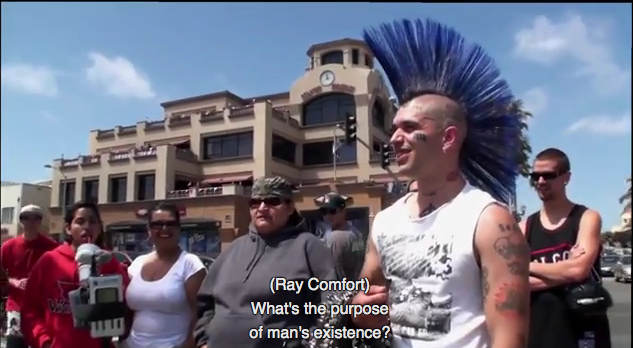
A screen grab from “180.”


A couple of weeks ago, my youngest daughter told me about a short documentary she had just seen, titled “180.” As I had just written on the Holocaust (here and here) she thought I would be interested. The movie, she said, featured this guy just talking to people on the street about the Holocaust and abortion. It was very persuasive, she said. I should watch it, she said.

Then she sent the link.

When I saw Ray Comfort at the very beginning I winced. But, since I promised to watch it and she was so adamant it was good, I let it roll.

And I was pleasantly surprised.

Filling the full breadth of his person-on-the-street interview style, Comfort takes his microphone to an area resembling Venice Beach. The subject is the Holocaust. Questions focus on personal responsibility and reasoning. Would you have followed orders? How far? Where would you draw the line? Why?

He then turns to abortion as the person-on-the-street realizes, slowly at times, the distinct and unarguable parallels.

A couple of times I thought Comfort was veering into politics, but he did not. He does during a section squeeze in his “Way of the Master” style of street evangelism. Like that part or loathe it, I will say the man is bold.

This is about half-an-hour. It is worth the time if for no other reason to be reminded of the inconsistencies we all face if we think incompletely about issues.

The Senior Adult Dilemma, Part 1

“When is the church going to budget as much for senior adults as for the youth or children’s ministry?”

“Why are we trying to reach primarily young families?”

“Does the preacher not remember who pays his salary?”

“What happened to the piano and organ?”

“We just feel forgotten.”

I call the issues arising from this mindset “The Senior Adult Dilemma.”

As the half-century mark stares me straight in the eyeballs, I am ever more befuddled by sentiments such as these. The Savior, from whom we hear “Deny self” and “Take up your cross daily,” seems extraordinarily at odds with them.

One would expect–or at least hope–wisdom comes with age. Often this is the case, but it is not assured by any means. What is any more sad than a decades-old-in-the-faith Christian who should have matured spiritually, yet remains an infant? A man or woman crowned with glory of gray hair should be helping grill bacon-wrapped filet mignon instead whisking a few ounces of powdered milk–spiritually speaking. This would jibe with Peter’s apostolic desire, it seems.

Everyone tends toward certain affinities. Some gravitate toward music from the 80s, others clothing styles from the 90s, some toward foods from childhood or travels. The problem comes when some try to promote those affinities as the right or only way of doing things, especially ministry in church. (More on this in Part 2.)

The truth is when we pursue God we must prefer the time in which we live. Right now. As it relates to time, we have only one culture we can reach: the current one. No amount of longing for a bygone era will cause it to return. Nostalgia is not a spiritual gift.

The senior adult dilemma is not universal in churches, but it is widespread enough to cause heartburn for many a leader. From changing Sunday School meeting rooms, to changing musical styles, to changing service times, it seems anything–no matter how trivial–can start waves of complaints. Not only is this grievous to watch, it is difficult for leaders to experience, as well as being thoroughly unbiblical. What accompanies constant complaining? Loss of influence among those who lead and loss of a hearing among those who will.

Here are a few observations after 46 years in churches, 30 years of salvation and 20 years of pastoral ministry:

1. Physical age neither guarantees nor predicts spiritual maturity.
After having walked with the Lord for nearly 30 years I have witnessed spiritual maturity–and immaturity–at every age. Although a constant growth track until death is desired, it does not always happen. Some of the most selfish and short sighted members of churches were not teenagers. They were people much older than I was then, even older than I am now.

Spiritual maturity is only gained through the obedience. It is not gained through mere participation in religious activities, no matter how noble or persistent. Spiritual maturity is not symbolized by a 142-year attendance pin. The youngest believer walking in faith exhibits more maturity than an 80-year old who has not exercised it in half-a-century.

2. Stubbornness is not a spiritual gift.
Too many senior adults seem to pride themselves on a mentality that is resistant to change. “I ain’t never used a _________ or owned a _________ or done _________ and I’m not about to start now.” While this attitude might be expected in some who are slow to learn, when championed by a full-facultied person it may reveal a disturbing lack of godliness.

To be used by God requires malleability. That whole “potter and clay” thing teaches us one is shaped as One is shaping. Pottery may have a purpose after receiving form, drying and experiencing a trip to the kiln. What it cannot be is further changed. If God must break a person to gain the simplest obedience, repeated usefulness is improbable.

3. Older is not necessarily better; often it is just older.
It never ceases to amaze me how many who complain about “new music” would never consider returning to days before electric power, indoor plumbing, automobiles, telephones, and store bought clothes. I have yet to see a senior adult walk out of a church restroom complaining about using toilet paper instead of pages from the Sears & Roebuck catalog.

Pining for hymns–as with most–has nothing to do with wanting to hear something with good theology. If that were the case, many newer songs (“modern worship music”) would suffice. Instead it is the comfort of the familiar. It can be hard to learn new things; that is true for all of us as we age. I am still trying to learn algebra.

I have heard, “We just need more hymn writers like Fanny J. Crosby.” Really? Fanny Crosby is reputed to have written about 20,000 hymns. We sing between 5 and 10 of them. By any measure that is more misses that hits.

Just because it is older does not mean it is better, and music is just one example.

4. Mentoring by seniors should be organic, not programmatic.
“We need to organize a way for seniors to mentor younger adults. They really have a lot to offer and younger people have a lot to learn.” Or something like that.

Here’s the problem: young people who are passionately seeking God are not interested in being “mentored” by a faithless grouch. What young believers seek is spiritual mentoring, not an hour-a-week of hearing about the failures of former pastors or the perceived shortcomings of the current shepherd.

My mentor, Al Autrey, was considerably older than the teenagers and young adults he mentored. But he was respected and trusted due to his faithfulness. In our late 40s Sonya and I befriended, were accepted by, and began mentoring a group of high-schoolers. This is a relationship that continues. We have young adult friends who ask us for advice and counsel. These are not relationships we have demanded, or expected because “we have a lot to offer.” Maybe we do. But, these relationships would never have blossomed had friendships not been planted first.

One thing we have learned is this: if we pursue God and make friends, mentoring happens. It is harder to stop than to start. This is why I say it should be organic. Programmed mentoring seems like programmed friendships–diametrically opposed to the concept itself.

None of this should be construed as being anti-senior adult, not even close. Like most who read this, I have known scores of solid, Jesus loving, kind, gentle, faithful seniors. But, none of those characteristics existed because they were old. The Fruit of the Spirit may exist in old age, but does not grow due to it. If you want to be a faithful senior adult, be a faithful, obedient younger person. Then, never quit.

In Part 2 we will explore some a few possible solutions to the Senior Adult Dilemma.

Meteor over Russia, with shockwave [VIDEO]

meteor over russia

Meteor as shot from a dashcam

Overnight in the U.S. was daytime in parts of Russia. The first video below, from Chelyabinsk, Russia, shows a meteor shooting an arc across the sky. The second shows the resulting shockwave beginning at about 12 seconds into the video. It is quite a marvel. Reports are that hundreds of people have been hospitalized. It is not hard to see–and hear–why.