Category Archives: Blog

One thing children of Christian parents need to see

Our culture places a lot of emphasis on education. Without it, we are told, we cannot succeed.

Our churches place a lot of emphasis on attendance. Make sure your kids are in children’s church, at camp, in youth group, on retreats.

Our families place a lot of emphasis on activities. Make sure little Johnny is playing sports, or has guitar lessons, or all of the above. Make sure little Suzy is cheering, or playing soccer, or on the debate team, or all of the above.

what kids need from parentsBoth our society and our churches place a lot of emphasis on moral behavior. Be a good citizen. Treat others well. Be patriotic.

Parents who are also followers of Christ are bombarded with thousands of messages all clamboring up the mountain of attention. Each strives for a space on the priority list.

Amid the commotion and noise of life, one thing children must see from parents who claim the name of Christ is an authentic, humble, ongoing pursuit of God.

Kids are smart enough not to expect perfection, which means they are smart enough to recognize fraud. Kids are experienced enough to expect failure, and wise enough to expect an apology. Kids have witnessed enough to know everything is not what it seems, and hungry enough to want to see someone making an authentic effort to live what they hear on Sunday.

After a lifetime in church I have become convinced the number one reason kids leave church after high-school has almost nothing to do with atheism they face in college or a pastor who believed in 6-day creationism. I am persuaded it is because kids so rarely see lived out what they hear preached week-in-and-week-out by anyone authentically and humbly in an ongoing way. This includes–especially includes–their parents.

Parent, kids hear the all-week arguing magically transformed into the Sunday morning glad handing, “Good morning, brother. Isn’t God good?” And they know it is hypocrisy. They hear church members being gossiped about at home, yet greeting with a smile and laugh at church. And they know it is hypocrisy. They hear the pastor talk about faith, trusting with God and walking with Him, yet see their own parents worry over bills every week. And they wonder why God cannot be trusted. They hear the pastor talk about the need for Bible reading in the home, yet they have never experienced it a single time. And they know it is disobedience. They know kids are supposed to be disciplined in love, yet are only ever disciplined in anger. And they suppose God to be the same way.

In short, kids learn at home first and foremost whether the whole “God thing” is even real.

After 18 years of such is it any wonder so many leave church never to return. They aren’t walking away from God. They are walking away from an lifelong game of Candyland.

Parents, you will never be perfect. You can, however, be authentic. You can be humble. And you can pursue God as a deer pursues the cool, refreshing creek. Your kids will see. They will learn. They will remember. And they just might believe.

Pastoral challenges in the next 20 years

Joel Rainey is Executive Director of the Mid-Maryland Baptist Association. He is on the adjunct faculty of two seminaries, and the author of two books: Planting Churches in the Real World and Sidestepping Landmines: Five Principles for Pastor Search Teams. Joel works closely with numerous pastors in a state not known for its evangelical values. He is a strategic thinker on many things related to the kingdom of God.


On his blog, themelios, he recently wrote on the nature of pastoral leadership in the next 20 years. Joel asked a question once posed to him, “Are we really up to this?” This post is adapted from his writing.

American society is morphing at an unprecedented rate. This means more for the church than perhaps any other area as we claim God’s unchanging truth in changing times. Rainey asks whether pastors are “up to this”? I wonder if churches are.

If Rainey’s thoughts are on target, I think three things will happen as it relates to churches (and denominations) in the United States. First is capitulation. Many will simply agree with the surrounding culture that truth is maleable, subjective and suggestive. These churches will become indistinguishable from other societal organizations whose purpose is “to make the world a better place.” They bother not with sin, judgment or a cross. Second is separation. As in every generation these are they who are not of the world, but neither are they in it. They have no actual influence and their loudly sounded trumpets of culture wars fall mostly on deaf ears. Third is contextualization as the remaining churches seek to exegete culture, relate to it and bring the uncompromised gospel to everyone in a way that both illuminates their need and introduces the remedy: Jesus Christ. For these, mercy truly triumphs over judgment.

From Joel Rainey:

Scenario One: A pastor is called to a church with the expectation that he will “help us reach the young families.” Problem is, everyone in the church is over the age of 60, and more than 50% of the community within 10 minutes of the church is also in that age range.

By 2030, it is estimated that more than half of the U.S. population will be over the age of 50. This “graying” of America is presently going almost completely unnoticed by most churches, who tend to go after the prized “young families with children” category. Yet 80% of those over 50 live in a multi-housing situation (“55 and older” apartments, duplex communities, retirement and assisted living communities), and 98% of all multi-housing residents are without a relationship to Jesus. Are you keeping pace with the generational shifts that are taking place around your church, and how your church should respond to those shifts?

Scenario Two: Multiple families visit the church who do not speak English, politely nod and smile, and never return.

By 2025, Hispanics will outnumber African Americans by 3 to 2, and will comprise approximately 40% of the U.S. population. Over a decade ago, Oscar Romo noted that America, “hardly the ‘melting pot’ described by history texts, has become a land marked more by diversity than homogeneity.” In no area is this fact more clear than in the area of language.

Scenario Three: A married homosexual couple with three adopted children visit your church.

This is one of those issues when if you are a pastor, you need to go ahead and check all your political arguments at the door. What we believe society should or shouldn’t do in this situation is of absolutely no consequence, because they are doing it anyway!

[…]

Truth is, we live in a nation and culture in which our understanding of marriage has been devolving for decades.

Now that this is a reality, how will we minister to the parents and their children? How should our children’s departments be equipped to minister to the kids? How are you equipping other couples in your church to interact with and minister to these precious souls? How can you uphold clear Biblical standards in love?

Scenario Four: A young person who has visited your church for a while repents of her sin and receives Jesus as Lord and Savior. As you prepare for her baptism, you discover through her testimony that she was born male, but had gender-reassignment surgery a few years ago.

Scripture has no category for an “androgynous Christian.” There are Christian men, and Christian women, and the discipleship models spelled out for us in the New Testament tend to be described in conjunction with one’s gender.

[…]

Are you prepared for the Biblical, moral, psychological and bioethics questions that will necessarily be part of that conversation?

Scenario Five: More and more people, it seems, are asking you to perform funeral ceremonies for their pets. You have noticed over time that the grieving process for a family losing a pet, as well as the elements of the funeral itself (pictures, memorials, poems, etc.) indicate a much greater value on animals than in the past.

We are already witnessing attitudes in our culture that betray a gravitation towards increased “equalizing” of animals and humans, and too many in the church have bought into this idea. Are you prepared to lovingly confront the false idea that “all dogs go to heaven,” and re-assert the essential distinction between human beings, who are created in God’s own image and likeness, and pets, who are not?

Scenario Six: Because of growth, your church starts a “video venue,” and begins live-streaming worship and sermons via the internet. You notice that you have a growing “online” audience, many of whom log in every Sunday, and who financially support the ministry. Through connections with these people on social media you discover that, although they may live hundreds or even thousands of miles away, they consider your church their “church home.”

Today’s advanced and inexpensive technology means that churches are asking questions that would never have been considered even 20 years ago, and one of the biggest questions today has to do with the legitimacy of the so-called “internet church.” In the future, how will your church ensure that the Biblical principles and practices commensurate with a covenant community are observed in this environment?

Scenario Seven: You discover through casual conversation that a yoga class has been started by leaders in the church, that participants freely greet one another with “namaste,” and that Christian meditation has been confused with the emptying of the mind that is endorsed in many Hindu communities.

Over the past decade, there has been a huge increase in ancient pagan practices, much like those that occurred in the days of the Old Testament. The digital age, among other things, presents opportunities for the “blending” of faiths that was unheard of even two decades ago. In what ways should you be prepared to bifurcate for your people between what can, and cannot, be part of the life of someone who follows Jesus according to Scripture?

Scenario Eight: You receive a call from a mainline church in town. The size of their congregation has dropped to less than 20 members. They are fearful for their future, and they ask for your help.

It is simply a statistical fact that theological liberalism kills churches. As such, expect the mainline protestant churches in your town to continue slowly bleeding to death. Yet, the people in those dying churches need someone to love them by ministering to their needs and reminding them of what their faith once stood for. Are you prepared to raise up leaders who can utilize those facilities to start a second campus for your church, or start a new church altogether?

Scenario Nine: Parents come to you for counseling regarding their son, who has been diagnosed with multiple “generic” disorders, but doctors have been incapable of specifying the problem, and the child has been largely un-treatable by psychiatrists. You suspect the presence of demonic activity.

I truly believe that we will see a sharp rise in obvious demonic activity in the west, and I believe it will unfortunately be mis-diagnosed as a solely medical or psychiatric problem. As a result, too many children will grow up expressing the personality of a psychotrophic drug unless wise and godly pastors in the west learn to recognize the presence of demonic activity.

Scenario Ten: In this “brave new world,” God continues to seek worshippers, and Jesus continues to save people from sin, Satan, death, and hell in miraculous ways.

What I’ve described above is a culture that is emerging, and that is filled with people Jesus died to save. And it is in this environment when I hear evangelical Christians having the dumbest arguments!

What would you add? Is Joel right in his assertions?

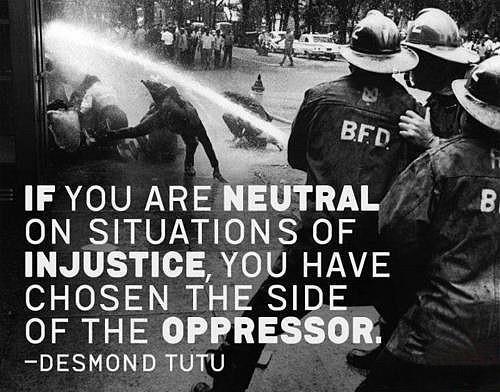
The priority of biblical justice

Woe to you, scribes and Pharisees, hypocrites! You pay a tenth of mint, dill and cumin, yet you have neglected the more important matters of the law–justice, mercy, and faith. These things you should have done without neglecting the others. (Matthew 23:23, HCSB)

A friendly exchange over the weekend addressed whether abortion is “the human rights issue of our day.” It will be obvious to most that I believe abortion to be a human rights issue. My challenge concerned the use of the word the. Can we rightly hold the position that abortion is the human rights issue of our day? I contend abortion is an incredible injustice carried out not only in the United States, but worldwide. But I am not persuaded it is any greater moral evil than human trafficking, slavery in its various forms, governmental “disappearing” of those who resist injustice, or other types of oppression.

Since 1973 many Christians have elevated one injustice, abortion, to a level above all others. Emphasizing the “right-to-life” for unborn babies is important, but we have understood it less within a framework of biblical justice than as a constitutional right. As many Christians cannot articulate a fully biblical view of justice we have watched abortion become a political rallying cry for our two party system of mutual antagonism. Failure to declare the biblical breadth of God’s justice allows “woman’s right to privacy”–which should be discarded as a non-sequitur–to guide the conversation.
injustice engraved

Worse, the dearth of a justice framework has allowed some to reduce biblical justice issues as “social justice” or “economic justice” to mere politics. Both fit within the Bible’s call for justice, but neither sociology nor economy completely wrap their arms around biblical justice.

Calls to help the poor and disadvantaged are sometimes derided as left-wing distractions from the church’s primary role of evangelism. However, even a cursory search of scriptures reveals more than 130 uses of justice. It is used of God’s character, as a basis for asking for His intervention, as commands to His children, as expectations and examples. Justice is used in the context of helping the poor, taking care of business affairs, how orphans are treated, and judgments “in the gate,” ie, legal decisions. Consider this sampling:

Psalm 106:3-“Blessed are they who observe justice, who do righteousness at all times.”
Psalm 112:5– “It is well with the man who deals generously and lends; who conducts his affairs with justice.”
Proverbs 21:3-“To do righteousness and justice is more acceptable to the Lord than sacrifice.”
Proverbs 21:15-“When justice is done, it is a joy to the righteous but terror to evildoers.”
Isaiah 1:17-“Learn to do good; seek justice, correct oppression; bring justice to the fatherless, plead the widow’s cause.”
Isaiah 59:14, 15-“Justice is turned back, and righteousness stands far away; for truth has stumbled in the public squares, and uprightness cannot enter. Truth is lacking and he who departs from evil makes himself a prey. The Lord saw it, and it displeased him, that there was no justice.”
Hosea 12:6-“So you, by the help of your God, return, hold fast to love and justice, and wait continually for your God.”
Amos 5:24-“But let justice roll down like waters, and righteousness like an ever-flowing stream.”
Micah 6:8-“He has told you, O man, what is good; and what does the Lord require of you but to do justice, and to love kindness, and to walk humbly with your God?”
Hebrews 11:32, 33-“And what more shall I say? For time would fail me to tell of Gideon, Barak, Samson, Jephthah, of David and Samuel and the prophets–who…enforced justice,” (all ESV)

In scripture justice does not supplant the character of God, it flows from it. Calls for justice do not obscure the gospel, they bear witness to it. If justice is a left-wing, commie pinko plot the only alternative is to call the Bible a left-wing, commie pinko book.

It is to the discredit of American Christians that we have so readily and uncritically embraced our political system. We join the rancor of the powerful and gorge ourselves on the rewards of an earthly throne. We are reticent to “speak truth to power” because our team may be back in power after the next election. We have swallowed worldly systems hook, line, sinker, rod, reel and boat. Thus, care for the poor, to use a single example, with its clear biblical imperative, is bounced about as a Democrat-Republican debate.

God forbid.


Surely the prophet Nathan scratches his head at what passes for prophetic these days. Preaching against abortion to a TV audience is not prophetic. Mother Teresa speaking against abortion before the president of the United States is.

The Holy Spirit is yet quenched if we create a ranking system for justice based merely on what tugs on our heart strings, rather than what offends God’s character. And it is this–offending God’s character–that reveals injustice.

A few months ago I mused on a broad expression of injustice:

Injustice is the deprivation of basic human rights, dignity or freedoms by those in authority through oppressive or unfair laws, customs or mores that allow the physical, sexual, or economic exploitation of men, women or children who lack power, position or voice, affecting individuals and groups, whether unique or systemic, hidden or known, all of which grows from contempt toward or ignorance of God’s standard of righteousness.

If this is a fair enough description, what follows is what it would mean to “do justice” or “enforce justice.”

Doing justice is using all righteous means to restore basic human rights, dignity and freedom to men, women or children everywhere, becoming their voice to address, rebuke or replace those abusing power so God’s standard of righteousness is recognized and reflected as much as it is possible within the fallen systems of this world until Christ brings the kingdom of God in its fulness.

To “do” or “enforce” justice is a clear call to God’s people. The extensive Old Testament groundwork is affirmed in the New. Where power is abused, and when the established authority, ie, government, is either complicit or ignorant, justice must be pursued.

We are not given the option to pick and choose between preferable justice issues. Doing justice is shining light in the darkness. It is being a city on a hill. It is the kingdom of God displayed on earth. And only a full framework of biblical justice prepares us to do justice when and where the righteousness of God should most be on display.

Some of my other articles on justice and injustice:
Our Comfortable Injustice-Part 1 and Part 2.
The gospel to the poor
When injustice is enough justice: Parsing theology into nothingness

A prayer from St. Patrick

I arise today
Through a mighty strength, the invocation of the Trinity,
Through the belief in the threeness,
Through confession of the oneness
Of the Creator of Creation.

I arise today
Through the strength of Christ’s birth with his baptism,
Through the strength of his crucifixion with his burial,
Through the strength of his resurrection with his ascension,
Through the strength of his descent for the judgment of Doom.
20130317-061630.jpg
I arise today
Through the strength of the love of Cherubim,
In obedience of angels,
In the service of archangels,
In hope of resurrection to meet with reward,
In prayers of patriarchs,
In predictions of prophets,
In preaching of apostles,
In faith of confessors,
In innocence of holy virgins,
In deeds of righteous men.

I arise today
Through the strength of heaven:
Light of sun,
Radiance of moon,
Splendor of fire,
Speed of lightning,
Swiftness of wind,
Depth of sea,
Stability of earth,
Firmness of rock.

I arise today
Through God’s strength to pilot me:
God’s might to uphold me,
God’s wisdom to guide me,
God’s eye to look before me,
God’s ear to hear me,
God’s word to speak for me,
God’s hand to guard me,
God’s way to lie before me,
God’s shield to protect me,
God’s host to save me
From snares of devils,
From temptations of vices,
From everyone who shall wish me ill,
Afar and anear,
Alone and in multitude.

I summon today all these powers between me and those evils,
Against every cruel merciless power that may oppose my body and soul,
Against incantations of false prophets,
Against black laws of pagandom
Against false laws of heretics,
Against craft of idolatry,
Against spells of witches and smiths and wizards,
Against every knowledge that corrupts man’s body and soul.

Christ to shield me today
Against poison, against burning,
Against drowning, against wounding,
So that there may come to me abundance of reward.
Christ with me, Christ before me, Christ behind me,
Christ in me, Christ beneath me, Christ above me,
Christ on my right, Christ on my left,
Christ when I lie down, Christ when I sit down, Christ when I arise,
Christ in the heart of every man who thinks of me,
Christ in the mouth of everyone who speaks of me,
Christ in every eye that sees me,
Christ in every ear that hears me.

I arise today
Through a mighty strength, the invocation of the Trinity,
Through belief in the threeness,
Through confession of the oneness,
Of the Creator of Creation.

(HT: Klampert)

Three reasons we are eating organic food

Like most people raised in the suburbs of a metropolitan area, nearly all of our food growing up was a product of the industrialized food system. Neither my family’s nor my wife’s meals were dominated by McDonald’s or Burger King. But that really does not matter since most food in grocery stores is processed by the same companies in the same way.

Documentaries like Fresh and books by Joel Salatin convinced me we needed to begin the shift to organic food (although we still currently enjoy lots of processed sweets and desserts).

I’m using the word “organic” not in the same way the USDA uses it, which can be sketchy. In my use consider locally grown, as little chemical fertilizer as possible, as little insecticide as possible, as little transport as possible, as little processing as possible. Give me eggs from chickens walking around the pasture, beef from grass-fed cows rather than corn and carrion fed cows, pork from oinkers in the field rather than from a cage shot-up with anti-biotics from birth.

The first time we had organic chicken from a local butcher, Sonya had prepared a dish we had frequently eaten. After one bite of the chicken we are all looking at each other asking, “If this is chicken, what in the world have we been eating?”

It is the same with farm direct, organic eggs. First you notice how much harder the shell is than a store-bought, industrialized egg. Then a bright orange yolk is staring up at you instead of a pale-yellow something and you wonder, “If this is a real egg, what are those other things and what has been laying them?” You may not want to know.

So we are shifting toward organic. Here are three reasons to consider it.


(Compare the above “free range sow” to the sow in the video below.)

1. Organic food tastes better and is better for you.
Undertand the process of industrializing the food chain requires many rounds of anti-biotics to prevent diseases in the confined spaces. The medicine, stress, and often toxic-environment all contribute to the shrink-wrapped package cooly displayed at the local grocery store.

There are reasons E-coli originates in the industrial food system.

Then there is the taste. Unless your taste buds are on a permanent vacation the taste difference will be immediate. It will also be for the better.

2. Buying local supports local, small farms.
If the food tasted exactly the same–and it does not–buying local is still a better option, when the option exists. CSAs and farmer’s markets remain great locations to get locally grown produce and meat. It also allows you to meet the local farmer and possibly even visit the farm.

The industrialized food system has no interest at all in your health, unless your loss of it can be directly attributable to their product. As with all things capitalist the bottom line is the bottom line. Profit margins will trump health concerns every time. Agribusiness needs my dollars a lot less than Shady Farms.

3. Choosing organic is a means of honoring God’s covenant with the earth.
After the flood of Noah God promised never to destroy the earth and its inhabitants by water. Often overlooked is that God’s covenant is not only with humanity, but with the animals as well.

Then God said to Noah and his sons with him, “Understand that I am confirming My covenant with you and your descendants after you, and with every living creature that is with you–birds, livestock and all the wildlife of the earth that are with you–all the animals of the earth that came out of the ark. (Genesis 9:8-10, HCSB)

The verses immediately preceding affirm these animals are provided for food.

Proverbs says “The righteous care for the needs of their animals” (12:10, NIV). This does not only refer to dogs and cats (ie, pets) since pets were not the order of the Old Testament day. The reference is to productive animals like animals used in farming. If a mistreated dog is offensive to you, then mistreated pigs, chickens and cows should be offensive as well. Compassion should exist even if the heart strings are not strummed in the same way.

The following video shows the industrial food system as it works in one Asian country eventually reaching the fast food chains. The sublimity of the soundtrack is a vivid contrast to the processing taking place on screen.

Foodies, share and share some more through my social media buttons! (HT: Kottke)

Support Kingdom in the Midst when you purchase from Amazon. You get the same low price and I get a small commission.


The Backyard Homestead is on my wish list, hint, hint…

Comedian Russell Brand on addiction

In a recent piece for The Guardian British comedian Russell Brand pulled back the curtain on his struggle with drug and alcohol addiction. It is an troubling read, or I anticipate it will be to many. If my post yesterday was revealing to those for whom depression is not an issue, this will likewise be for those of us who have no struggle with addiction.

Brand’s piece is also surprisingly eloquent. He seems to write less to gain sympathy for himself than to gain empathy for those walking his path in his shoes.

Here are some excerpts:

The last time I thought about taking heroin was yesterday. I had received ‘an inconvenient truth’ from a beautiful woman. It wasn’t about climate change (I’m not that ecologically switched on). She told me she was pregnant and it wasn’t mine.

I had to take immediate action. I put Morrissey on in my car and as I wound my way through the neurotic Hollywood hills my misery burgeoned. Soon I could no longer see where I ended and the pain began. So now I had a choice.

russell brand

Russell Brand [Image Credit]


I cannot accurately convey to you the efficiency of heroin in neutralising pain. It transforms a tight white fist into a gentle brown wave, and from my first inhalation 15 years ago it fumigated my private hell. A bathroom floor in Hackney embraced me like a womb, and now whenever I am dislodged from comfort my focus falls there.

It is ten years since I used drugs or drank alcohol and my life has immeasurably improved. I have a job, a house, a cat, good friendships and generally a bright outlook.

But the price of this is constant vigilance, because the disease of addiction is not rational. Recently, for the purposes of a documentary on this subject, I reviewed some footage of myself smoking heroin. I sit wasted and slumped with an unacceptable haircut against a wall in another Hackney flat (Hackney is starting to seem like part of the problem), inhaling fizzy black snakes of smack off a scrap of crumpled foil. When I saw the tape a month or so ago, what was surprising was that my reaction was not one of gratitude for the positive changes I’ve experienced. Instead I felt envious of this earlier version of myself, unencumbered by the burden of abstinence. I sat in a suite at the Savoy hotel, in privilege, resenting the woeful ratbag I once was who, for all his problems, had drugs.

[…]

Drugs and alcohol are not my problem — reality is my problem. Drugs and alcohol are my solution.

If this seems odd to you, it is because you are not an alcoholic or a drug addict. You are likely one of the 90 per cent of people who can drink and use drugs safely. I have friends who can smoke weed, swill gin, even do crack, and then merrily get on with their lives. For me this is not an option. I will relinquish all else to ride that buzz to oblivion. Even if it began as a timid glass of chardonnay on a ponce’s yacht, it would end with me necking the bottle, swimming to shore and sprinting to Bethnal Green in search of a crack house.

I looked to drugs and booze to fill up a hole in me. Unchecked, the call of the wild is too strong. I still survey streets for signs of the subterranean escapes that used to provide my sanctuary. I still eye the shuffling subclass of junkies and dealers, invisibly gliding between doorways through the gutters. I see the abundantly wealthy with destitution in their stare. I have a friend so beautiful, so haunted by talent that you can barely look away from her, whose smile is such a treasure that I have often squandered my sanity for a moment in its glow. Her story is so galling that no one would condemn her for her dependency on illegal anaesthesia, but now, even though her life is trying to turn around despite her, even though she has genuine opportunities for a new start, the gutter will not release its prey. The gutter is within.

It is frustrating to love someone with this disease. A friend of mine’s brother cannot stop drinking. He gets a few months of sobriety and his family bask, relieved, in the joy of their returned loved one. His life gathers momentum, but then he somehow forgets the price of this freedom, returns to his old way of thinking, picks up a drink and Mr Hyde is back in the saddle. Once more his face is gaunt and hopeless. His family blame themselves and wonder what they could have done differently, racking their minds for a perfect sentiment wrapped up in the perfect sentence, a magic bullet. The fact is, though, that the sufferer must be a willing participant in their own recovery. They must not pick up a drink or drug. Just don’t pick it up — that’s all.

[…]

Even as I spin this web I am reaching for my phone. I call someone, not a doctor or a sage, not a mystic or a physician, just a bloke like me — another alcoholic, who I know knows how I feel. The phone rings and I half hope he’ll just let it ring out. It’s 4a.m. in London. He’s asleep, he can’t hear the phone, he won’t pick up. I indicate left, heading to Santa Monica. The ringing stops, then the dry-mouthed nocturnal mumble:

‘Hello. You alright, mate?’
He picked up. And for another day, thank God, I don’t have to.

Much of Brand’s writing is surprisingly biblical. “The gutter is within”? Whether Brand knows it or not, this is a paraphrase of Jesus. “Reality is my problem”? That is absolutely true; he simply does not seem to know how God defines that particular reality. “I see the abundantly wealthy with destitution in their stare.” Because we are not redeemed with silver or gold, but by the precious blood of Christ as a lamb without spot or blemish.

Both Brand and Craig Ferguson (below) allude to “self-medication,” to the use of drugs and/or alcohol to numb the realities of life. Sometimes I wonder if the church has not anesthetized herself against people like Brand and Ferguson. It is easier to rail against the evils of “demon liquor” than to be the person who will receive a phone call at 4:00am. It is self-medicating to my pride to keep a Russell Brand at arm’s length. We will not be the person who gets the call until we are the person who is the friend.

Several years ago late-night TV host Craig Ferguson opened up about his own addiction. This is incredibly open and personal. If you do not have time to watch the entire piece, skip ahead to about 3:30. (Two or three swear words.)

Depression: When the black dog howls

A version of this was first posted as a Facebook note in 2009. Nothing in this post should be construed as medical or medicinal advice.

The term “black dog” was used by Winston Churchill to describe depression and, though it predates the British prime minister, is the sum total of familiarity most seem have with it. Regardless of who coined it, “black dog” is as apt a descriptor of the frustrating experience of depression as there is. Ask anyone who deals with it regularly.

At this point in my life I cannot even remember when I started dealing with depressive episodes. (I do not use the phrase “suffering from depression”; it just does not seem to fit me.) I’m pretty certain that it has not always been a part of my life, though it may have been unrecognized earlier on. For the last few years, however, there are three or four times each year that it hits.

It is funny when you start talking about being depressed and experience the reactions of those around. The responses can range from the spiritual (“Pray more.”), to the physical (“Are you getting outside enough?”) to the ludicrous (“Just pull out of it.”)

One can no more “just pull out of” a depressive episode than they can “just pull” the moon out of its orbit.

This note is the result of my own observations and experiences over the last couple of years.


1. No one wants to be depressed. Nobody would choose it. It is not to get attention. There are easier and far more fun ways of getting attention.

2. Anything or nothing can trigger it. It can be turmoil on the job. Or not. It can be the kids growing older. Or not. It can be you growing older. Or not. It can be feeling inadequate on the job. Or not. All of the above, or none of it. Or anything else that you can put your finger on. It just shows up howling its blooming head off.

3. Sometimes you can be in it before you realize it. This is especially true with me. Sonya usually recognizes it before I do. I usually do not realize how depressed I am until I do not know if I can work another day, and that is even when things are good.

4. There are no easy steps out. Sometimes you just cannot tell if or when it will go away. I’ve awakened in the morning feeling pretty good only to have it return in half an hour leading to an entire day of “down” feelings.

5. Things may not be the same for every person with depression. It might be easier to relate to people in depressive episodes if they were all the same, but they are not.

What not to say to a depressed and why:

1. “Pray.” (Or these variants, “Pray more,” “Are you praying enough?” “Have you prayed about it?”) Depression is always a matter of prayer. If prayer was the solution there would not be any depressed Christians, since we all pray about it. Yes, I wish that God would always take it away for just the asking, but since Moses, Elijah and Paul dealt with it periodically, I don’t see that God will take it away just because He’s asked. It does bear remembering that prayer can actually make you more depressed since the tendency is to focus on the depression. This can be a tricky proposition.

2. “Cheer up.” Depression by nature is an emotional “out of whackedness.” A depressed person cannot simply get happy because they decide to do so any more than you can get from Nashville to Los Angeles by clicking your heels together. Although depression might be caused by various factors, in the end it is a feeling of sadness that usually seems impenetrable and, while you are in the midst of it, permanent. I’ve never been suicidal (or homicidal) during a depression, but I understand how some people can get that way. Just imagine the most sad you have ever been and then being convinced that it will never go away. The feeling of potential “lifelong sadness” is more than some can bear.

3. “Just trust God.” To do what, exactly? I do trust God and try to trust Him with every aspect of my life and depression still strikes. I trust Him to see me through it each time, but it does not make it go away immediately, though it always does with time.

4. “Don’t isolate yourself.” This one is actually true and helpful, but sometimes really hard to do. When depressed, there are few if any feelings of desire to socialize with ten or with one. Of course this exacerbates the situation but remains an issue. Depression can result from and cause a desire for isolation. It is not so much not wanting to be a wet blanket as it is not wanting to have to expend the emotional energy to carry on conversation. Any expenditure of emotion worsens the lack of emotional balance symptomatic of the depression itself. I have experienced great times of fun and laughter while depressed, then turned away and felt just as sad or “blue” as before. Laughter may be the best medicine, but it is not always the cure.

5. “Get some meds.” Some people are offended by the idea, since it is sometimes mentioned flippantly. I have not yet gotten a prescription, but I’m considering it. (Is it the purple pill, the blue pill or the hexagonal pill?) The thing that I am most working through is whether medication is necessary for something that happens three or four times a year.

What do to for a friend who is depressed:

1. If you deal with it, be open about it. Depression may be a black dog, but it should not be a dirty secret. Some men view it as weakness and thus it retains a hold on them. Bite the dog; don’t let it continue to gnaw on you. Be sensitive when you recognize that a friend is depressed, and be open when that friend is just realizing it for themselves. Sometimes depression makes you feel crazy; hearing from a friend who struggles through it and retains most of their sanity is an encouragement for others not to give up.

2. Don’t think that going to a ball game or a movie is “just what they need.” It may or may not be; depression is a tricky thing and when I am depressed, I often do not know what in the world I want to do. I do find that being in the company of another person, whether Sonya or a friend, who does not demand that I talk or interact can be helpful. Just hanging out. It takes a lot of energy to carry on conversation or “just be yourself” when there is no inner drive at all to do anything.

And on this note, don’t give a book, website, sermon, podcast, or other thing you think “might help.” The person typically feels broken already. Offers to “fix them” can serve to reinforce their feelings of inadequacy. Be friend enough to long time care without immediate repair.

3. Do pray because often your depressed friend finds little comfort in praying themselves. In addition prayer while depressed can be tricky. It is very easy for prayer itself to become depressing when depressed. I am not sure why.

4. Don’t judge the whys and wherefores, especially if you’ve never dealt with it. It’s very, very hard to explain; heck, it’s very, very hard to deal with emotionally, physically and spiritually. Depression may or not be spiritual and if it is not, then it is very frustrating to be given a simplistic answer revolving around a book, dvd or sermon series.

5. If the person begins to talk suicide or act suicidal to any degree, intervene; obviously, sadly some depressive episodes end in suicide. I knew a fellow many years ago who seemed for all the world to be ok. He woke up one morning to leave for vacation and saw that it was raining. Despondent over that particular situation, he went back into his house and killed himself. It was almost unbelievable to hear. At the time I thought, “How in the world…”

When writing this post originally I received a great amount of encouragement. I was steered to a natural product called St. John’s Wort available at almost any grocery store or drug store. It has proven to be very effective for me at both preventing and helping lift depression. I now take it only as needed which is infrequently.

All-in-all I see depression a result of the fall, not a part of God’s creation. As such Jesus died so that we might have ultimate deliverance from it. That may or may not happen in this life for me, but it gives me yet another reason to long for That Day.